
Dimona strike raises questions over Israel’s nuclear ambiguity amid Iran tensions

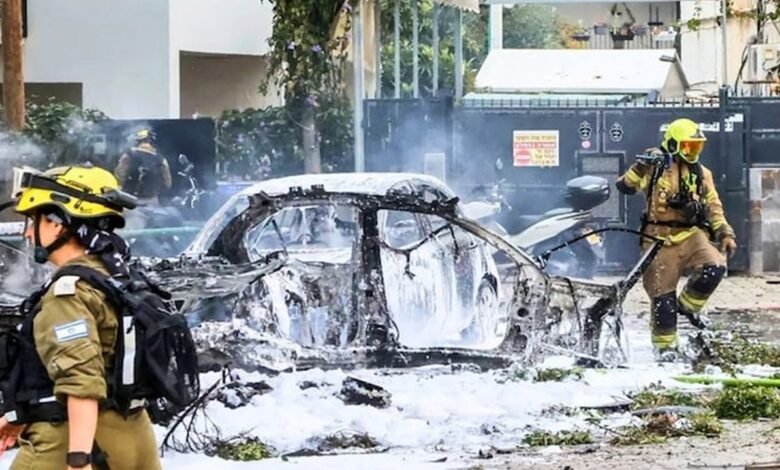
Tel Aviv: Israel’s long-standing policy of maintaining “nuclear ambiguity” has come under renewed global focus following reports of a strike near the sensitive Dimona region, believed to house key elements of its nuclear programme.
For decades, Israel has neither confirmed nor denied possessing nuclear weapons, a strategy often referred to as “nuclear ambiguity.” However, the spotlight has once again turned to Dimona, a town in southern Israel that is widely believed to be central to the country’s nuclear infrastructure.
At the heart of the controversy is the Shimon Peres Negev Nuclear Research Center, located on the outskirts of Dimona. Western intelligence assessments, academic research, and disclosures by Mordechai Vanunu in 1986 have all pointed to the facility as a key site for producing plutonium, a critical component in nuclear weapons.


Vanunu had famously smuggled photographs of the facility to a British newspaper, bringing global attention to Israel’s alleged nuclear capabilities. Despite such revelations, Israel has consistently avoided official confirmation, maintaining its strategic silence.
Notably, Israel is not a signatory to the Nuclear Non-Proliferation Treaty and does not permit inspections by the International Atomic Energy Agency at this facility. This lack of transparency has often drawn international scrutiny.
Reports of iran-linked strike
Recent reports suggest that Dimona was among the targets chosen by Iran in a retaliatory move. Tehran has indicated that the strike was in response to earlier attacks on its nuclear infrastructure, particularly the Natanz uranium enrichment facility, which has previously been targeted in sabotage operations, including a major incident in 2021.
While the Israel Defense Forces has not confirmed responsibility for past operations against Iranian facilities, it has also not clearly attributed the latest strike to Iran, leaving several questions unanswered.
Strategic messaging behind the target
Security analysts believe Iran’s choice of target carries strategic significance. Striking near Dimona—without reportedly breaching the core nuclear facility—may have been intended as a calculated signal rather than an attempt to trigger a catastrophic escalation.
The move is seen as a demonstration of Iran’s capability to reach one of Israel’s most sensitive and symbolically important locations. Reports also suggest that the missile managed to evade Israeli air defence systems, with the IDF acknowledging interception challenges in the incident.
Growing global concern
For years, Israel’s nuclear infrastructure was considered virtually inaccessible, protected by geography, layered air defence systems, and deliberate secrecy. However, the latest developments have raised concerns about vulnerabilities and the risks of escalation in an already volatile region.
The International Atomic Energy Agency has called for maximum restraint from all sides, warning against further escalation. According to initial reports, at least 47 people were injured in the incident.
As tensions between Israel and Iran continue to simmer, the Dimona episode underscores the fragile balance in the region and the increasing risks surrounding nuclear-linked flashpoints.