Student Develops Innovative Nail Polish That Could Turn Nails into Smartphone Styluses
Researchers are working on a special conductive nail polish that allows users with long nails to operate touchscreen devices efficiently, potentially transforming everyday smartphone use for millions.

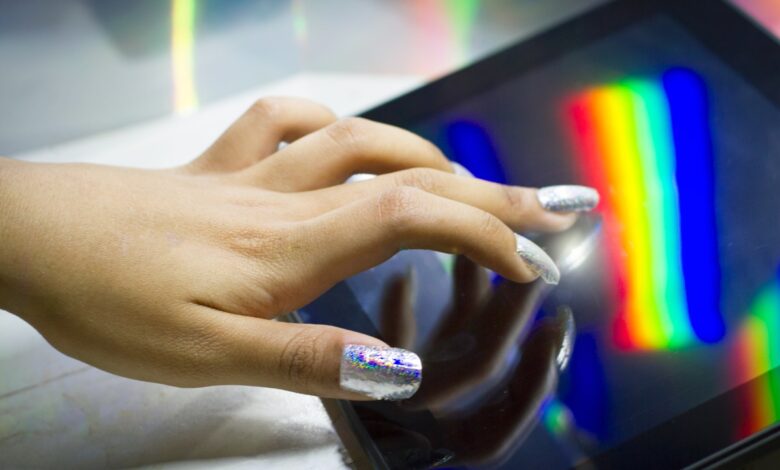
Using smartphones with long nails can often be frustrating, as capacitive touchscreens struggle to register contact with non-conductive nails. To address this challenge, a team of researchers is developing a specialized nail polish that could allow nails to function like tiny styluses.
The project, presented at the American Chemical Society Spring 2026 meeting, was initiated by Manasi Desai, a student at Centenary College in Louisiana, along with her advisor Joshua Lawrence. The idea emerged from observing a common everyday problem—people with long nails facing difficulty in interacting with touchscreens—and exploring whether chemistry could provide a solution. Conversations with medical professionals further confirmed the need for such innovation.
Capacitive touchscreens, which dominate modern smartphones, operate by creating an electric field on the screen surface. When a conductive object, like a fingertip, touches the screen, it alters the field and registers a touch. Since nails are naturally non-conductive, they fail to trigger this mechanism, making phone use tricky for long-nail users.
The researchers created a clear nail polish that looks ordinary but provides a small amount of conductivity. The formulation uses compounds like taurine and ethanolamine, which, in combination, allow the screen to register touch. The underlying mechanism involves acid-base chemistry at a microscopic level, enabling minor charge movement that the touchscreen interprets as a touch input.


Early results have been encouraging, but the technology is not yet ready for commercial use. One major challenge is that ethanolamine evaporates quickly, reducing the polish’s effectiveness to only a few hours. Further research is necessary to improve safety, durability, and overall reliability before it can reach consumers.
The research team is now experimenting with new compounds to create a safer, longer-lasting version of the polish. If successful, this innovation could benefit not only long-nail users but also individuals with calloused or less sensitive fingertips, opening the door to a more inclusive and convenient way to interact with modern touch devices.