NASA’s Artemis II Mission Set to Return Humans to the Moon After 53 Years
The Artemis II mission will send four astronauts on a lunar flyby, aiming to inspire future generations and mark a historic milestone in human space exploration

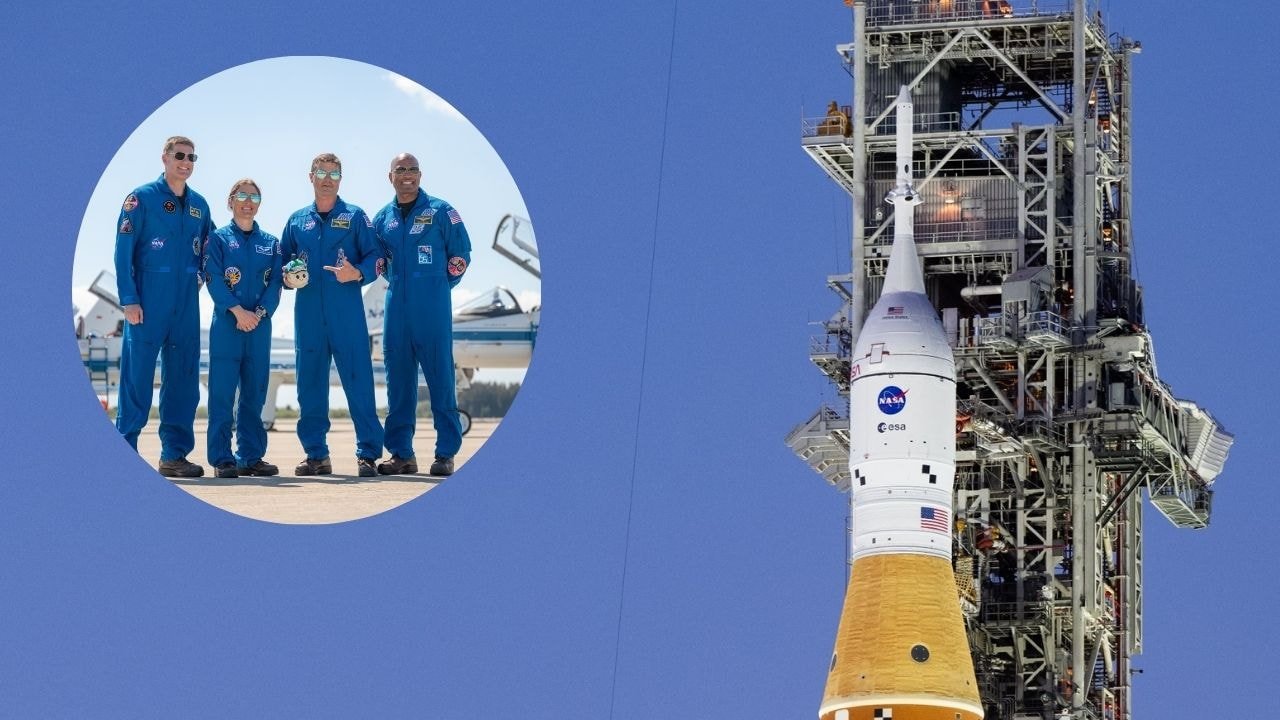
NASA has officially started the countdown for the Artemis II mission, which will take humans back toward the Moon for the first time in 53 years. The mission will be launched using the Space Launch System rocket and carry four astronauts, performing a lunar flyby without landing, before returning to Earth approximately ten days later.
The launch, scheduled for this week, comes after previous delays caused by technical issues including a hydrogen fuel leak and a problem with the helium pressurization line. Following repairs, the rocket has been moved back to the launch pad and the crew is now at the site, ready for liftoff. According to Launch Director Charlie Blackwell-Thompson, all systems are in optimal condition, and current weather forecasts are favorable for a timely launch.
Artemis II carries particular significance in multiple ways. This is the first mission since the Apollo program to send humans toward the Moon, and the crew includes a woman, an African American astronaut, and a non-American member, highlighting diversity and inclusion in space exploration. The mission represents more than a technological milestone; it is intended to inspire a new generation of explorers.
Pilot Victor Glover emphasized that the mission should serve as motivation for children dreaming of careers in science, technology, and space. He noted that future space exploration should be viewed not merely as a series of firsts, but as an ongoing chapter in human history.


NASA has a launch window in the first week of April, with a backup period extending to the end of the month. If all goes according to plan, Artemis II will mark the start of a new era in human space exploration, paving the way for future missions to the Moon and beyond.