Why Most People Wear Watches on the Left Hand The Hidden Logic History and Science Behind This Everyday Habit
From battlefield necessity to modern comfort and design convenience wearing a watch on the left wrist has deep historical roots and practical reasons that continue to influence how billions of people use time today

Most people never really question it. A watch slips onto the wrist almost automatically, and for the majority of individuals, it lands on the left hand without a second thought. Whether getting ready for office, attending an event, or simply stepping out for the day, this small habit feels natural. Yet behind this simple routine lies a surprising mix of history, practicality, and human behaviour that shaped how the world wears watches today.
The story goes back to the early evolution of timekeeping devices. Before wristwatches became common, people relied on pocket watches. Men typically carried them in coat pockets, while women often wore them as decorative accessories. Everything changed during wartime in the early twentieth century when soldiers needed quicker and safer access to time. Reaching into a pocket during battle was inconvenient and risky, so the idea of wearing watches on the wrist began to spread rapidly.
As most soldiers were right handed and actively used their right hand for weapons and tasks, the watch naturally moved to the left wrist. This allowed them to check the time without interrupting action. Over time, this practical choice became a global habit. Today, nearly ninety percent of the population is right handed, which further reinforced the tradition of keeping the dominant hand free for work while the other carries the watch.
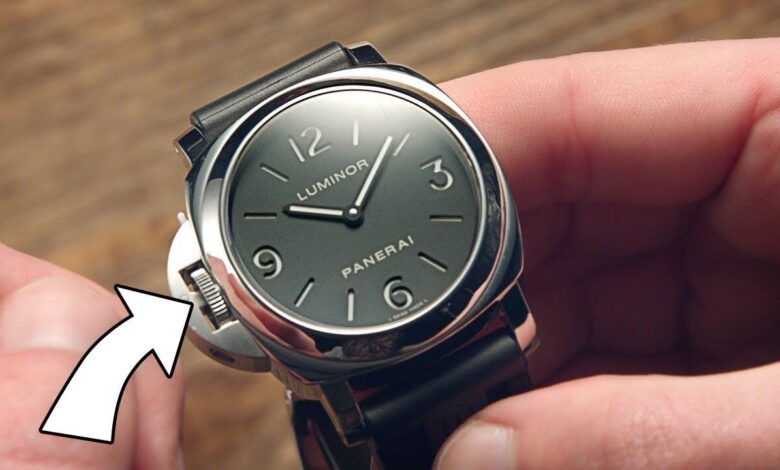
There is also a strong design reason behind this preference. Traditional analog watches come with a small adjustment knob known as the crown, usually placed on the right side of the dial. When the watch is worn on the left wrist, the right hand can easily adjust the time or wind the watch without discomfort. If worn on the right wrist, the process becomes awkward and less convenient, especially in older mechanical models.


In the modern era of smartwatches, the need for manual time setting has mostly disappeared, but the habit remains deeply rooted. Designers still optimise watches for left wrist use because it aligns with user comfort and natural movement patterns. Even health tracking sensors are often calibrated with this positioning in mind for better accuracy in readings.
Daily life also plays a role in keeping this tradition alive. While working on a computer or using a mobile phone, the right hand is usually busy with tasks like typing or using a mouse. The left wrist becomes the easiest place to glance at notifications or track time without breaking focus. Over time, what started as a battlefield solution has quietly turned into a global standard shaped by convenience and consistency.
What seems like a small personal choice is actually the result of decades of evolution. From soldiers in wartime to modern smartwatch users, the left wrist has become the natural home for time itself.