Namma Metro Purple Line Faces Long Queues Over Baggage Checks
Namma Metro Purple Line passengers are facing long queues for baggage checks during peak hours, with limited staff and screening machines causing delays at several busy stations daily across Bengaluru.


The daily commute on Bengaluru’s Namma Metro has become frustrating for many passengers using the Purple Line, as long queues are forming at station entrances for mandatory baggage checks.
Passengers travelling through busy stations say they are sometimes forced to wait for around 20 to 30 minutes before completing the security screening. During the busiest periods, the queue can stretch from the station entrance towards the skywalk, creating additional pressure for people trying to reach work, colleges and other destinations on time.
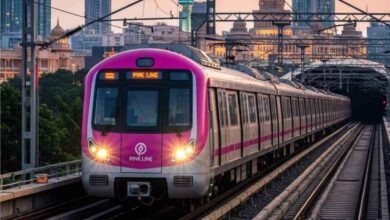
The Purple Line connects Whitefield with Challaghatta and serves several important areas of the city. It is widely used by office workers, students and other daily commuters who depend on Metro services to avoid Bengaluru’s congested roads.
For many passengers, the main attraction of Metro travel is the ability to make their journey more predictable. However, long queues before entering the station are now becoming an additional source of delay.

The problem is reportedly more visible at stations such as Baiyappanahalli, Benniganahalli and Whitefield, where passenger movement can rise sharply during busy hours. Commuters have raised concerns that the existing baggage checking arrangements are not sufficient to handle the number of people arriving at the stations at the same time.
Passengers have pointed towards two major issues behind the delays. One is the shortage of staff available to carry out baggage screening. The other is the limited number of screening machines at some busy stations.
When large numbers of passengers arrive within a short period, the checking process can slow down considerably. Even a small delay for each passenger can result in a much longer queue when hundreds of people are waiting to enter the station.
The situation becomes particularly difficult during the morning peak period. According to complaints from commuters, the rush is especially noticeable between 7 am and 10 am, when office workers and students are travelling towards their destinations.
A similar problem is reported during the evening peak period between 4 pm and 7 pm. As commuters return from offices and educational institutions, passenger numbers increase and the screening points can become crowded.
Some passengers say they are reaching Metro stations with enough time for their regular journey but are losing a significant part of that time while waiting at the entrance. For people with fixed office timings, college classes or scheduled appointments, a 20 or 30 minute delay can make a noticeable difference.
The long queues have also raised questions about whether security arrangements are keeping pace with the growing use of Metro services. Baggage screening is an important part of station security, but commuters say the process also needs to be organised in a way that can handle heavy passenger movement efficiently.
Passengers are now calling for additional staff to be deployed during peak hours. They have also asked authorities to increase the number of screening machines at stations where queues regularly become difficult to manage.
According to commuters, additional arrangements during the busiest periods could help reduce waiting time without affecting the security checks that are required before passengers enter the Metro system.
The issue has also drawn a response from the Bengaluru Metro Rail Corporation Limited. BMRCL senior public relations officer Yashwant Chouhan said the complaints from passengers had been brought to the attention of the authorities.
He said station controllers had been instructed to submit reports regarding the situation. After receiving the reports, the Metro authorities are expected to examine the requirement for additional staff and other arrangements at the affected stations.
The response indicates that the authorities are looking into the complaints rather than treating the queues as a normal part of daily operations. Further action will depend on the reports submitted by individual stations and the assessment of passenger movement.
The Purple Line has become an important part of Bengaluru’s public transport network, particularly for people travelling between the eastern and western parts of the city. The Whitefield side of the line also serves a large number of technology and business establishments, making efficient Metro access especially important during working hours.
As passenger numbers continue to remain high, managing the movement of people at station entrances is becoming just as important as maintaining train frequency. A smooth security screening process can help passengers enter stations without creating unnecessary congestion at the gates.
For regular commuters, the immediate expectation is simple. They want security checks to continue, but they also want enough personnel and equipment to ensure that passengers do not have to spend a large part of their journey waiting outside the station.
The complaints from Purple Line users now put the focus on how quickly BMRCL can respond at the busiest stations. If additional staff and screening equipment are provided during peak periods, the queues could become easier to manage and the daily Metro experience could improve for thousands of passengers.
Until further arrangements are made, commuters using the affected stations may need to keep additional time in hand during the morning and evening rush. The situation is expected to remain under observation as BMRCL reviews the reports from station controllers.