Karnataka College Tours Ban Selfies and Reels Under New Safety Rules
Karnataka has introduced stricter safety rules for college educational tours, including restrictions on selfies and reels, mandatory approvals, teacher supervision, police notification and limits on travel duration.

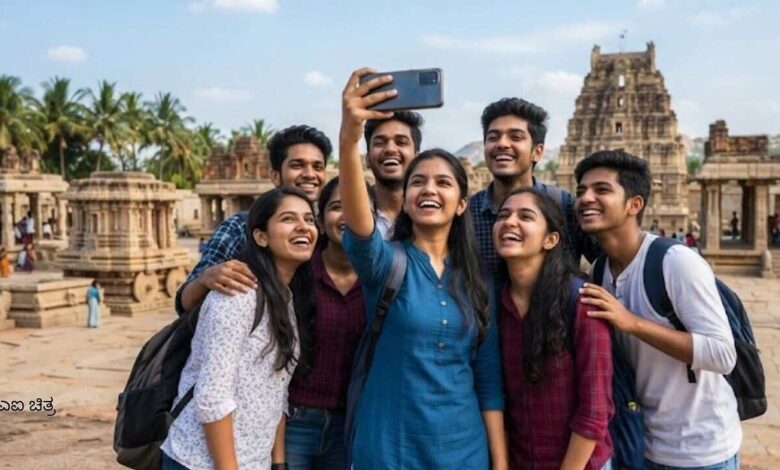
The Karnataka Department of Collegiate Education has introduced a fresh set of safety rules for educational tours organised by government first grade colleges. The move follows concerns over accidents and risky behaviour at tourist locations, particularly when students use mobile phones to take selfies or record social media videos.
Under the new guidelines, students will not be permitted to take selfies or shoot reels during educational tours. College principals have been instructed to explain the restriction to students before the journey begins, while accompanying faculty members have been asked to closely monitor the group throughout the trip.
The department has also placed limits on how colleges organise these trips. An educational tour cannot be arranged without obtaining prior written approval from the department. Colleges are required to submit details of the proposed journey, including the route and destinations, before receiving permission.
Once the itinerary is approved, colleges cannot simply change the plan during the journey or take students to locations that were not included in the approved programme. This requirement is intended to give institutions greater control over where students travel and to avoid unexpected visits to unsafe locations.
Parental consent is another mandatory requirement. Students travelling on an approved educational tour must submit the required undertaking, along with written consent from their parents. The documents have to be submitted as part of the tour approval process.
The department has also instructed colleges to inform the local police station about the proposed tour. Details of the route and places to be visited must be provided in advance so that local authorities are aware of the movement of the student group.
Teacher supervision has been given particular importance under the new rules. A tour cannot be supervised only by guest lecturers. At least one permanent lecturer must accompany the students. The number of teaching staff travelling with the group has also been restricted to four.
The guidelines include specific provisions concerning the presence of women lecturers. The accompanying team must include two women lecturers, while the rules also specify the involvement of a Group D employee. These arrangements are intended to strengthen supervision and provide additional support for students during travel.
The department has also introduced a five day maximum for educational tours, including travel time. Colleges have been advised against organising such trips during the monsoon season because weather conditions can create additional risks at several tourist and outdoor locations.
Special precautions have been prescribed for destinations such as rivers, waterfalls, the sea, dense forests and steep hills. These places can present additional safety challenges, so colleges have been told to make appropriate arrangements before taking students there.
If trekking or swimming is included in an approved tour, certified experts must be available and the required local safety clearances must be obtained. This means colleges cannot treat activities involving additional risk as ordinary sightseeing programmes.
The selfie and reels restriction is one of the most noticeable changes in the new guidelines. Officials have linked the decision to concerns about students becoming distracted while trying to create photographs or social media content at unfamiliar or hazardous locations.
The intention is not limited to controlling mobile phone use. The wider guidelines place responsibility on colleges to plan tours carefully, keep students within approved locations and maintain closer supervision throughout the journey.
The new rules are expected to change how colleges plan educational trips. Instead of treating a tour simply as an opportunity for students to travel together, institutions will now have to complete additional administrative and safety procedures before departure.
The restrictions also underline the importance of keeping educational tours focused on their academic purpose. Students can still visit approved destinations as part of their educational activities, but colleges must follow the safety conditions laid down by the department.
Reports on the new guidelines indicate that the measures were issued on September 11 and apply to educational tours organised by government first grade colleges. Some reports have also discussed their wider relevance to private and aided institutions, but the clearest current reporting specifically identifies government first grade colleges.
The department’s decision comes at a time when mobile phones and social media have become a regular part of student travel. The new approach places greater emphasis on supervision and advance planning rather than dealing with safety problems after an incident occurs.
For colleges planning future educational tours, the message is clear. Approval must be obtained beforehand, parents must provide consent, the itinerary must be followed, appropriate teaching staff must accompany students and additional safeguards are required for activities involving higher risk.
The new Karnataka college tour rules therefore combine restrictions on selfies and reels with broader requirements covering permissions, travel duration, supervision, police notification and destination safety. Colleges will now have to consider all of these conditions while planning educational trips for students.