Muddanahalli Land Dispute Sparks Tension Over Eviction Drive
A dispute over government land in Muddanahalli has intensified after officials moved to clear homes occupied by poor families, triggering strong protests from residents.

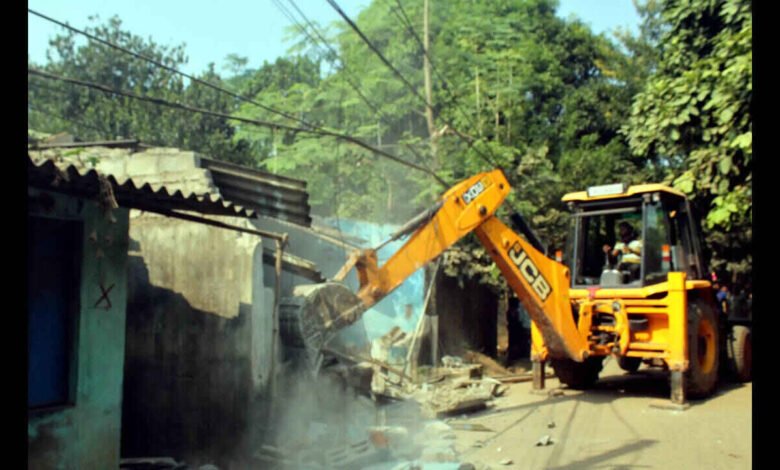
Tension rose in Muddanahalli village of Yelahanka taluk after officials of the Rajiv Gandhi Housing Corporation reportedly arrived to clear houses built on government land. Residents who have lived in the area for many years strongly opposed the move and questioned the manner in which the eviction was being carried out.
The situation became tense when a JCB was brought to the area for the proposed demolition. Several residents reportedly gathered at the site and demanded that the authorities stop the operation until the ownership and settlement claims were properly examined.
According to local residents, some families have been living on the land for decades and have applied for regularisation under the 94C provision. They alleged that instead of following a transparent procedure and giving affected families adequate notice, officials arrived with people whom the residents described as local troublemakers.
The allegations have added another layer to an already sensitive land dispute. Residents claimed that poor and Dalit families were being disproportionately affected by the proposed action, while other structures in the surrounding government land had not faced similar pressure.


The disputed property is located in Survey Number 1 of Muddanahalli. The survey area is reportedly spread across about 29 acres, of which around 13.5 acres has been allotted to the Rajiv Gandhi Housing Corporation for a housing project.
The corporation and its contractors are reportedly planning a G Plus 3 housing project on the allotted land. Officials have maintained that the land has been legally assigned to the corporation and that it has a responsibility to protect the property from encroachment.
Residents, however, have questioned the timing and manner of the clearance operation. They said their homes were not temporary structures that appeared overnight and insisted that they had been living there for many years.
The protest became particularly serious when some residents reportedly brought bottles containing diesel and a poisonous substance while threatening to take drastic action if their houses were demolished. Such threats highlight the distress caused by the uncertainty surrounding their homes and underline the need for authorities to handle the dispute carefully.
Rajiv Gandhi Housing Corporation official Hanumantha Reddy rejected the allegation that outsiders were being used to intimidate residents. He reportedly said the land had been allotted to the corporation and needed to be protected. He also described the people accompanying the officials as workers rather than local troublemakers.
The official also maintained that some people had constructed houses on the property recently and said those claiming rights over the land could approach the concerned revenue authorities. Residents, on the other hand, continue to insist that their long term occupation and applications for regularisation should be considered before any demolition takes place.
Following strong resistance from the villagers, the proposed demolition was reportedly stopped temporarily. The immediate pause has given residents some relief, but the underlying dispute remains unresolved.
The issue now requires a detailed examination by the revenue authorities and the taluk administration. Officials will need to verify land records, occupation claims, regularisation applications and the boundaries of the land allotted to the housing corporation before taking further action.
For the affected families, the dispute is not simply about a piece of government property. Their homes represent years of living in the area, making any eviction a deeply personal issue. A clear legal process, proper notice and a fair hearing could help prevent the situation from escalating further.