Karnataka revises government office timings in north Karnataka amid rising summer heat

Bengaluru : With summer intensifying across Karnataka, particularly in the northern districts, the Karnataka Government has announced a change in working hours for government offices to provide relief to employees and the public.
The decision comes in response to soaring temperatures that have made it increasingly difficult for people, especially the elderly, to step out during peak afternoon hours. Several districts in North Karnataka have been experiencing severe heat conditions, prompting concerns over public health and workplace efficiency.
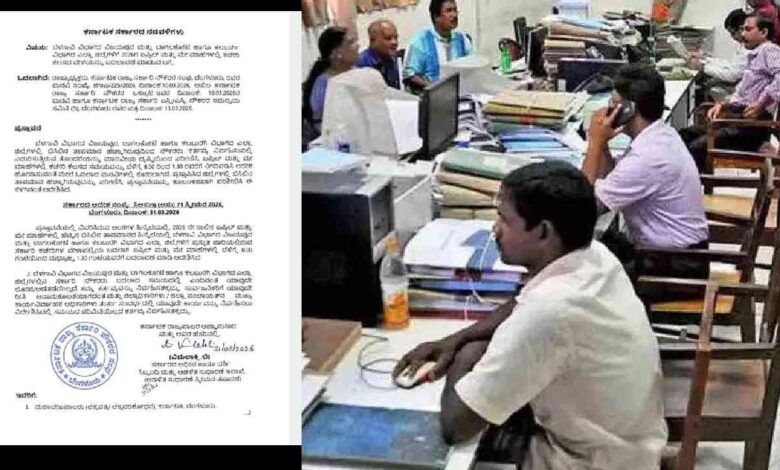
According to the official order, government offices in select districts will function from 8:00 AM to 1:30 PM instead of the regular schedule. The revised timings will be in effect for two months—April and May 2026.

The order applies to districts under the Kittur Karnataka and Kalyana Karnataka regions. In the Belagavi division, Vijayapura and Bagalkote districts are covered under the revised schedule. Similarly, all districts under the Kalaburagi division, including Bidar, Raichur, Yadgir, Koppal, Ballari, and Vijayanagara, will follow the new office timings.
Officials said the move was taken from a “humanitarian perspective,” considering the challenges faced by government employees in discharging duties under extreme heat conditions. The government also emphasised that the change aims to ensure that public services continue without disruption while safeguarding the well-being of staff.
Despite the reduced working hours, the government has instructed employees to carry out their duties efficiently without any lapse. It has also clarified that in case of emergencies, officials may be required to work beyond the stipulated hours as directed by Deputy Commissioners or Chief Executive Officers of Zilla Panchayats.
The order further highlights that district administrations must ensure that there is no inconvenience to the public due to the revised schedule. Necessary arrangements are expected to be made to maintain smooth functioning of essential services.
The decision has been welcomed by many, especially in districts where temperatures often cross extreme levels during peak summer. Experts believe such measures can help reduce heat-related stress and improve productivity during harsh weather conditions.
With temperatures expected to rise further in the coming weeks, the governments move is seen as a timely intervention aimed at balancing administrative efficiency with public health concerns.