Karnataka Reservoir Levels Raise Concern as KRS Stays Low While Almatti Nears Full Capacity
Karnataka faces growing water management challenges as KRS remains far below capacity despite monsoon season while Almatti Kabini and Harangi receive healthy inflows offering partial relief across regions today.

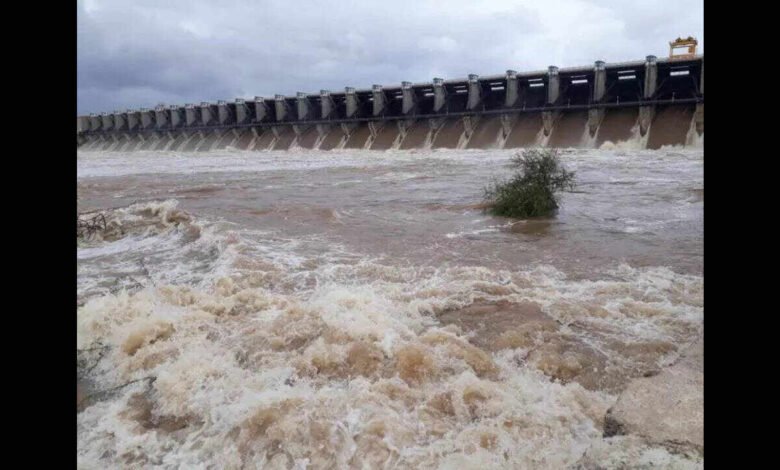
Karnataka’s reservoir situation has entered a crucial phase as water availability remains uneven across major river basins. While some dams are receiving encouraging inflows due to consistent rainfall, the state’s largest reservoirs in the Cauvery basin continue to face pressure. The latest water level data shows that the Krishna basin is in a much stronger position, whereas concerns remain over the Krishnaraja Sagar reservoir, which is yet to witness the kind of inflow usually expected during the peak monsoon season.
The latest figures have become particularly significant after directions to continue releasing Cauvery water downstream. With rainfall remaining inconsistent in several catchment areas, officials and farmers alike are closely monitoring reservoir storage levels. Water availability during the coming weeks will play a major role in determining irrigation schedules, drinking water supply and reservoir operations across the state.
Among all the reservoirs, Almatti has emerged as the strongest performer this season. Located in Vijayapura district, the reservoir is now almost full and continues to receive a massive volume of inflow every day. Authorities are releasing a substantial quantity of water downstream to maintain safe storage levels as the reservoir approaches its maximum capacity.
The Almatti reservoir currently stands at a water level of 519.10 metres against its maximum level of 519.60 metres. It is receiving an inflow of 82743 cusecs, while the outflow has been maintained at 111308 cusecs. The impressive storage position has brought relief to several districts of North Karnataka that depend heavily on the Krishna river system for agriculture and drinking water.


In contrast, the Krishnaraja Sagar reservoir continues to remain a point of concern. Although the water level has crossed the 90 foot mark during the past week, it has shown only marginal improvement and currently stands at 92.85 feet. Considering its maximum capacity of 124.80 feet, the reservoir still requires significant inflow before reaching a comfortable storage position.
The KRS reservoir currently receives an inflow of only 7058 cusecs while releasing 1706 cusecs. Its present storage is 17.708 TMC against a total capacity of 49.452 TMC. The comparatively lower storage has raised concerns because KRS serves as one of the most important sources of drinking water and irrigation for several districts, including Bengaluru’s surrounding regions and Mandya.
The pressure on KRS has increased following the requirement to release Cauvery water downstream. Water managers now have the difficult responsibility of balancing interstate water sharing obligations while ensuring sufficient reserves for Karnataka’s own agricultural and drinking water needs. Much will depend on rainfall over the next few weeks in the Cauvery catchment areas.
Kabini reservoir, however, has provided a much brighter picture. Continuous rainfall in the Wayanad region has significantly improved inflows into the reservoir. Officials believe that if rainfall continues at the current pace, Kabini could reach its full storage level within the next few days.
The reservoir currently stands at 78.38 feet against a maximum level of 84 feet. It is receiving an inflow of 9133 cusecs while releasing only 500 cusecs. The present storage has reached 16.12 TMC out of its full capacity of 19.52 TMC. With only a few feet remaining before the reservoir reaches its limit, water authorities remain optimistic about further improvement.
Harangi reservoir has also reported encouraging numbers. Located near Kushalnagar in Kodagu district, the reservoir is now very close to its maximum storage level. Healthy rainfall across Kodagu has ensured steady inflows, helping maintain comfortable water reserves.
Harangi currently records a water level of 2857.88 feet against its maximum level of 2859 feet. The reservoir receives 4008 cusecs of inflow while releasing around 3700 cusecs into the river system. This balanced operation allows authorities to manage storage efficiently while supporting downstream water requirements.
Hemavathi reservoir has also witnessed gradual improvement, though its storage remains lower compared to the same period last year. The reservoir currently holds 25.019 TMC of water against its total capacity of 37 TMC. Its present water level stands at 2907.75 feet compared with the maximum level of 2922 feet.
The dam receives an inflow of 5445 cusecs while releasing only 500 cusecs. Canal releases have not yet begun, allowing officials to conserve available water. Last year on the same date, Hemavathi had recorded a water level of 2921 feet with storage of 36.137 TMC. The comparison highlights that despite recent rainfall, this year’s storage remains noticeably lower.
Experts believe that the next few weeks will be critical for Karnataka’s reservoir network. Continued rainfall across Kodagu, Hassan, Mysuru and Wayanad could substantially improve storage in the Cauvery basin. However, if rainfall weakens, authorities may have to manage available resources more cautiously while meeting irrigation demands, urban drinking water requirements and interstate water release commitments.
Farmers are also keeping a close watch on reservoir updates as water availability directly influences sowing decisions and crop planning. Adequate storage during the monsoon season is essential not only for agriculture but also for ensuring uninterrupted drinking water supplies during the coming summer months.
Overall, Karnataka’s reservoir status presents a mixed picture. Almatti has almost reached full capacity, while Kabini and Harangi continue to show encouraging progress thanks to strong monsoon inflows. Hemavathi is improving steadily but remains below last year’s levels. The biggest concern continues to be the KRS reservoir, where storage remains significantly below capacity even as water release obligations continue. The coming days of monsoon rainfall are expected to determine whether the state’s major reservoirs can recover sufficiently before the end of the rainy season.