Karnataka Plans India’s First Quantum City at Hesaraghatta
Karnataka is positioning Bengaluru as a global quantum technology hub with a planned Quantum City, research facilities and stronger partnerships with American universities and technology centres.

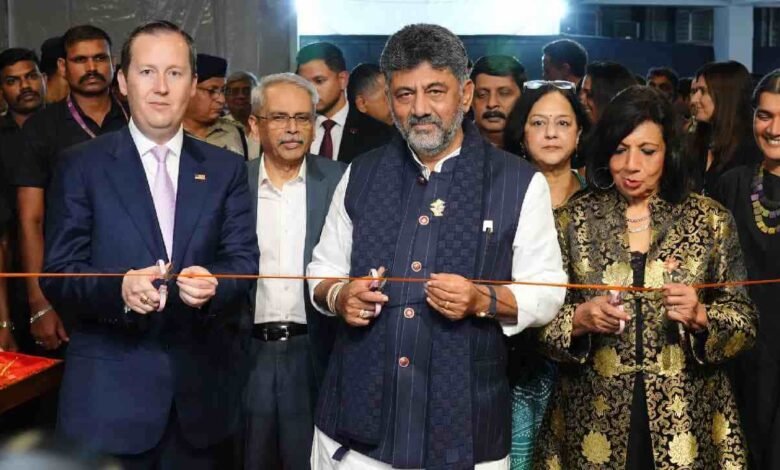
Karnataka is stepping up its ambitions in advanced technology with plans to establish what the state government describes as India’s first Quantum City at Hesaraghatta near Bengaluru. The proposed development is expected to become an important centre for quantum research laboratories and strengthen Karnataka’s position in emerging technologies.
Chief Minister D K Shivakumar announced the initiative while inaugurating a Quantum exhibition at the Science Gallery Bengaluru on August 7. The exhibition has been opened to the public, allowing people from Bengaluru, Karnataka and visitors to the city to learn more about a technology that is increasingly being viewed as important to the next generation of computing and scientific research.
Shivakumar said Karnataka’s quantum ambitions are not limited to Bengaluru. Under the state’s Local Economy Accelerator Programme, the government has established a Centre of Excellence for Quantum Artificial Intelligence and Computing at IIIT Dharwad. The initiative is intended to expand advanced technology capabilities beyond the state capital and create opportunities for students and researchers in other parts of Karnataka.
The proposed Quantum City at Hesaraghatta is expected to play a major role in this larger technology ecosystem. According to the Chief Minister, the project will provide a base for research laboratories and support Karnataka’s efforts to develop expertise in quantum science. The state is already promoting quantum technology through the Karnataka Quantum Mission, which aims to connect companies, startups, researchers and academic institutions.

Speaking about the importance of the sector, Shivakumar said quantum science could have a major influence on computing, communications, healthcare and advanced manufacturing. He acknowledged that he may not have extensive technical knowledge of quantum science himself, but stressed that the technology could shape several industries in the future.
The government wants young people to become active participants in this transformation. Shivakumar said it would be the responsibility of the state to ensure that students and young professionals have opportunities to understand and work with emerging technologies. The Science Gallery Bengaluru, he added, can play an important role by making complex scientific developments easier for the public to understand.
The Chief Minister also used the occasion to highlight Bengaluru’s growing relationship with the United States in technology and innovation. He called for the establishment of a full scale United States consulate in Bengaluru, arguing that the city has become an important centre for American technology companies, startups and skilled technology workers.
According to Shivakumar, more than 700 American companies and over 10,000 startups operate in Bengaluru, while the city has more than one million technology workers. He said Bengaluru’s role as a major technology and innovation partner for the United States makes a permanent diplomatic presence in the city increasingly important.
The state government, he said, is ready to provide the necessary approvals and support for establishing such an office. He also expressed confidence that stronger institutional ties between Karnataka and the United States could expand cooperation in areas including technology, innovation, research, defence, space and aviation.
Shivakumar further sought support from United States Ambassador Sergio Gor for developing stronger links between Karnataka and leading American academic and innovation institutions. The proposed partnerships could cover training programmes, research projects and new technology development.
The state is particularly interested in working with technology hubs, incubators, research parks and centres of excellence in the United States. Such collaborations could give Karnataka based startups access to international mentors, advanced research infrastructure, investment opportunities and overseas markets.
Education is another important part of the state’s technology strategy. Karnataka plans to encourage joint research between universities in the state and leading American universities. The proposed cooperation could also involve developing new academic courses and providing students with skills that match the changing requirements of the technology industry.
The government’s broader vision is to connect education with commercial innovation. Shivakumar said knowledge infrastructure would be as important as physical infrastructure in determining the future strength of an economy. Instead of focusing only on roads, buildings and other physical assets, the state wants to invest in research, education, technology and human capital.
The approach aims to create a continuous pathway from education to innovation. Classrooms would feed into laboratories, laboratories would support startups and successful startups would eventually reach global markets. This model could help Karnataka build a stronger technology ecosystem while creating new opportunities for students, researchers and entrepreneurs.
The Science Gallery Bengaluru is expected to contribute to this effort by bringing scientific concepts closer to ordinary citizens. The newly opened Quantum exhibition is part of that broader objective. By allowing the public to explore quantum technology, the initiative could help generate interest among students who may later pursue education or careers in advanced scientific fields.
The involvement of experts is also expected to strengthen Karnataka’s quantum initiatives. Quantum education adviser Professor Arindam Ghosh is associated with the Karnataka Quantum Task Force, while Dr Jahnavi Phalki is a member of the Q City advisory board. Their involvement reflects the state’s attempt to bring academic and technical expertise into its emerging quantum technology plans.
Karnataka’s strategy indicates that the state wants to compete for a larger role in the next wave of global technology development. Quantum computing and related technologies are still developing, but governments and technology companies around the world are investing heavily in research because of their potential applications across multiple sectors.
For Karnataka, the focus is not only on creating research facilities but also on building a complete ecosystem around them. The planned Quantum City, the Centre of Excellence at IIIT Dharwad, university partnerships and international collaborations are intended to work together to strengthen research and innovation.
The immediate public focus, however, will be on the Quantum exhibition at Science Gallery Bengaluru. The Chief Minister has announced that it will remain accessible to residents and visitors, providing an opportunity for a wider audience to understand the technology and its potential.
With Hesaraghatta being positioned for a major quantum technology development and Dharwad receiving a dedicated centre for quantum artificial intelligence and computing, Karnataka is attempting to spread its emerging technology network across the state. If these plans progress as outlined, the initiatives could give Karnataka a stronger presence in quantum research while creating new opportunities for education, startups and international collaboration.