Karnataka High Court Questions BJP MLC Over Remarks Against Former Kalaburagi DC
The Karnataka High Court has questioned BJP MLC N Ravi Kumar over alleged remarks against former Kalaburagi Deputy Commissioner Fouzia Tarannum, stressing restraint in public statements.

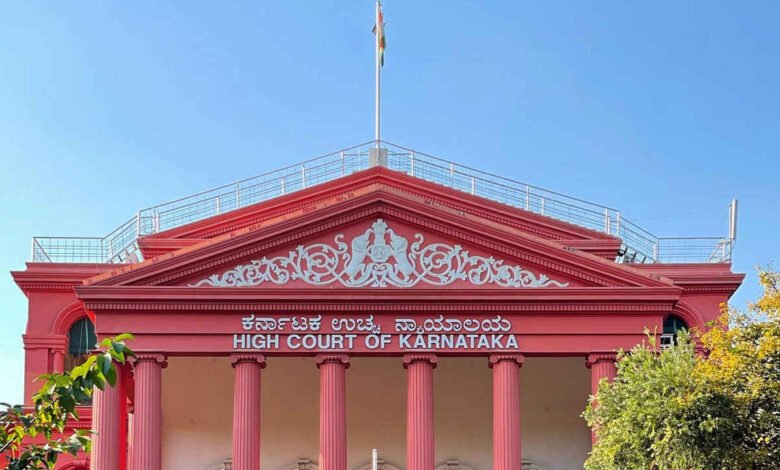
The Karnataka High Court has expressed strong displeasure over remarks allegedly made by Bharatiya Janata Party Legislative Council member N Ravi Kumar concerning former Kalaburagi Deputy Commissioner Fouzia Tarannum. The court was hearing Ravi Kumar’s petition seeking the cancellation of a criminal case registered against him in connection with the remarks.
During the hearing, the bench questioned whether elected representatives could make statements without considering their impact. The court observed that political leaders should concentrate on public issues, government programmes and matters affecting citizens instead of engaging in personal or politically charged exchanges.
Justice M Nagaprasanna’s bench heard arguments concerning the petition filed by Ravi Kumar. His counsel informed the court that the BJP leader had already apologised for the statement in question. However, the court questioned whether an apology alone would be sufficient to bring an end to a criminal case involving such remarks.
The court also raised concerns over comments that allegedly targeted an IAS officer on the basis of religion. The bench questioned how a public servant could be singled out because of religious identity and emphasised that public figures have a responsibility to exercise caution while speaking in public.

The matter has its roots in a political protest held in Kalaburagi. Ravi Kumar had alleged that the former deputy commissioner had prevented a Tiranga Yatra from proceeding and had acted according to the instructions of the Congress government. During the political gathering in May, he reportedly made a remark questioning whether the officer had come from Pakistan.
A complaint was subsequently filed against Ravi Kumar at the Station Bazaar police station in Kalaburagi on May 25, 2025. The case relates to the alleged remarks against the former district administration official.
Ravi Kumar later approached the High Court seeking the cancellation of the case. During the proceedings, arguments were also raised regarding the alleged restrictions placed on protesters who wanted to carry the national flag during the demonstration.
The court separately questioned whether there could be any objection to protesters carrying the national flag. It indicated that if demonstrators had been prevented from carrying the flag without proper justification, the issue could require judicial consideration. At the same time, the court made it clear that such circumstances could not be used to justify remarks directed at an individual official.
The bench reportedly told the petitioner’s side that if protesters were improperly prevented from carrying the national flag, appropriate legal action could be considered. The court also asked for documents relating to the permission sought for conducting the protest in Kalaburagi.
The issue has therefore developed into two separate questions before the court. One concerns the alleged restrictions imposed during the protest, while the other involves the remarks attributed to Ravi Kumar about the former deputy commissioner. The court indicated that one issue could not automatically be used to justify the other.
The bench also expressed broader concern about the nature of political discourse. It observed that elected representatives should maintain control over their language and focus on issues that matter to the public. According to the court, people are more concerned about welfare, development and essential public issues than political leaders trading accusations against one another.
The court further pointed out that courts already face a large number of cases and that prolonged litigation can affect the disposal of other criminal matters. The observations highlighted the importance of avoiding unnecessary legal disputes arising from statements made during political confrontations.
The court also reportedly remarked that politicians across political parties should avoid this kind of conduct. The observations were not presented as being limited to one political party, with the bench stressing the broader responsibility of public representatives to maintain a reasonable standard of public discourse.
Ravi Kumar’s counsel relied on the apology issued by the BJP leader while seeking relief from the proceedings. The court, however, indicated that the effect of an apology would have to be considered in the context of the allegations and the applicable legal provisions rather than treated as an automatic ground for ending the case.
The proceedings have drawn attention because the controversy involves a serving political figure and a senior administrative officer. Public officials frequently become part of political disagreements over government decisions, protests and administrative orders, but the court’s observations underline the distinction between legitimate political criticism and remarks that may be viewed as personally targeting an official.
The controversy also comes against the backdrop of political activity in Kalaburagi, where disagreements over protests and administrative permissions have contributed to tensions between political groups and the district administration.
The court has not brought the matter to an immediate conclusion. Instead, the hearing has been adjourned until August 20. The proceedings are expected to continue after the court receives the requested documents relating to permission for the Kalaburagi protest.
The High Court’s observations have therefore placed renewed focus on the responsibility of political leaders when making public statements. While political criticism and disagreement are part of democratic debate, the court has indicated that elected representatives must also consider the dignity of individuals and the possible consequences of their words.
For Ravi Kumar, the immediate legal question remains whether the case registered over the alleged remarks can be quashed. The court’s response suggests that the matter cannot be resolved solely on the basis of the apology cited by his counsel. The next hearing on August 20 is expected to provide further clarity on the petition and the documents sought by the bench.
The case has also brought wider attention to the relationship between political protest, administrative decisions and public accountability. As the proceedings continue, the court will examine the legal aspects of the allegations while the controversy remains part of the larger political debate in Karnataka.