Karnataka Congress sparks outrage by issuing official invitation in Urdu, ignoring Kannada

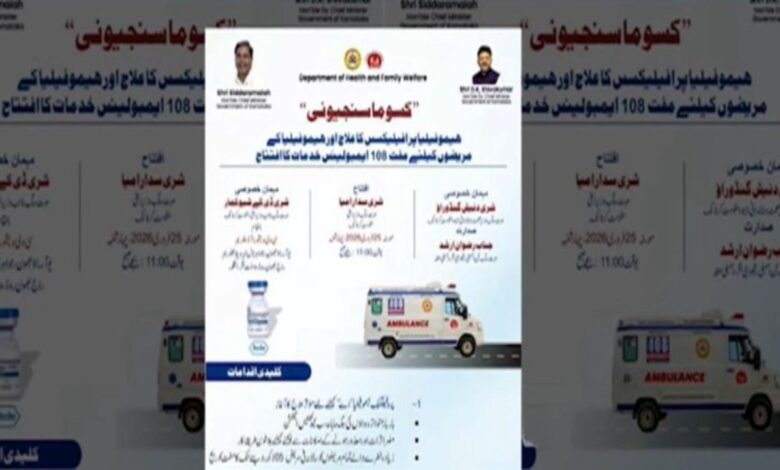
Bengaluru : The Karnataka Congress government has come under fire for issuing an official invitation for a state programme entirely in Urdu, overlooking the state’s official language, Kannada. The controversy arose ahead of an event organised by the Health and Family Welfare Department at Nehru Taralaya to launch haemophilia treatment and 108 ambulance services for patients.
The invitation was printed solely in Urdu, sparking widespread anger among Kannada advocacy groups and opposition parties. Citizens have questioned whether the government has deliberately sidelined Kannada or is engaging in politically motivated appeasement of a specific community.
Under the Karnataka Official Language Act, invitations and official communications are expected to be published in both Kannada and English. However, the Health Department’s decision has been widely seen as a violation of this protocol. Critics argue that the move sends a message of linguistic bias rather than inclusivity.


Health Minister Dinesh Gundurao defended the decision, questioning whether Urdu speakers exist in Karnataka. However, the state is home to speakers of multiple languages including Tulu, Tamil, Telugu, and Urdu. Many argue that the government should have issued invitations in all major languages, giving Kannada its due prominence.
Opposition parties have strongly condemned the step, accusing the Congress government of prioritising political optics over development and governance. This is not the first instance of Urdu-centric initiatives; critics point out that since coming to power, the government allocated ₹110 crore for Urdu development while Kannada received only ₹32 crore.
The incident has triggered heated debates in the public sphere about linguistic rights, cultural identity, and the political motivations of the state government. Kannada organisations are demanding that official communications strictly adhere to the state’s language laws to prevent further marginalisation of the local language.