Hassan Ambedkar Residential School Students Struggle In Tin Shed
For five years, 172 students at the Dr BR Ambedkar Residential School in Shanthigrama have reportedly been studying and living in a tin shed despite government spending on accommodation.

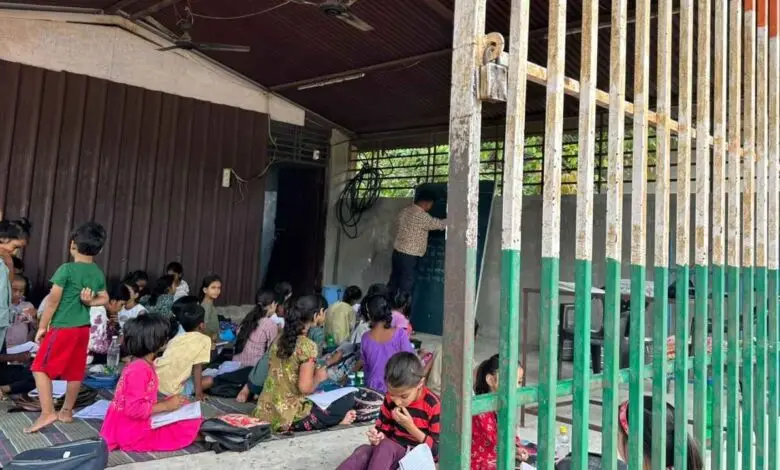
The condition of a government residential school in Hassan district has raised questions about the basic facilities being provided to students from disadvantaged communities. The Dr BR Ambedkar Residential School in Shanthigrama has reportedly been functioning from a tin shed for the past five years.
The school currently has 172 students from Classes 6 to 10. This includes 92 boys and 80 girls. Despite the number of students, the facility reportedly lacks adequate arrangements for classrooms, food and accommodation.
What has particularly drawn attention is the rent being paid for the premises. According to sources, the Social Welfare Department is spending around Rs 1.8 lakh every month to rent the shed. Even with this expenditure, students are reportedly being forced to manage with limited basic amenities.
The same shed is being used for several purposes. Classrooms, dining arrangements and sleeping areas have reportedly been accommodated within the premises. The situation has caused concern among parents and residents who believe students should have access to a proper residential school building.


Toilets are another major concern. The 92 boys reportedly have access to only five toilets. More seriously, the 80 girl students are said to lack adequate separate and secure toilet facilities.
Parents and local residents have raised objections over the situation, particularly because the institution is meant to provide education and residential facilities for children who depend on government support. They have questioned why a school with such a large number of students has continued to function in temporary premises for so long.
The Social Welfare Department has reportedly acknowledged the need for a better facility. Officials said they were looking for a suitable building to accommodate the students. However, according to the information available, shifting the school has not been possible because the owner of the existing shed has allegedly not permitted the authorities to move out.
There are also claims that the shed owner has close links with a senior leader of a political party. These claims have emerged locally, but they have not been independently established. Any connection between the property owner and political figures would need to be verified through an official inquiry.
The continued payment of Rs 1.8 lakh every month has added to the questions surrounding the arrangement. Residents and parents are asking whether public money is being used effectively when students are still without adequate accommodation and sanitation facilities.
The issue has now reached the attention of district authorities. When the matter was brought to the notice of district in charge minister KM Shivalingegowda, he reportedly called Social Welfare Department Deputy Director Doodh Peer and questioned him over the alleged lapse in providing proper facilities to the students.
The principal and warden of the residential school were reportedly unavailable for comment when a response was sought.
For the students, however, the issue is more immediate than the administrative questions surrounding rent or ownership. They are spending their school years in a facility that reportedly serves as their classroom, dining area and sleeping space, while concerns remain about sanitation and privacy.
The situation has also renewed questions about the implementation of residential education programmes for children from economically and socially disadvantaged backgrounds. Government spending on education is intended to provide students with a safe environment where they can study and live with dignity.
A proper building, sufficient toilets and separate facilities for boys and girls are among the basic requirements expected at a residential school. The authorities now face pressure to find a practical solution instead of allowing the students to continue in the same conditions.
Whether the school will be shifted to a suitable building or a permanent facility will be provided remains to be seen. Until then, the condition of the 172 students is likely to remain a matter of concern for their families and the local community.