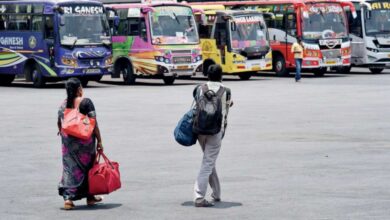
BMTC Faces Financial Pressure Over Shakti Dues and Diesel Payments
BMTC is facing financial pressure as pending Shakti scheme reimbursements, rising operating costs and reported diesel dues raise concerns about daily bus services for Bengaluru commuters and workers alike today.


Bengaluru Metropolitan Transport Corporation is facing renewed financial concerns, with pending reimbursements under the Shakti scheme and rising operating expenses putting pressure on its day to day operations. A transport employees leader has now claimed that the corporation has accumulated substantial unpaid diesel bills.
The claim has brought fresh attention to the financial condition of BMTC, which operates one of the most important public transport networks in Bengaluru. Thousands of passengers depend on its services every day, making the corporation’s financial stability closely connected to the city’s daily mobility.
According to the employee leader cited in the report, diesel suppliers have not received payments for several months and the outstanding amount is estimated at around Rs 600 crore. The leader has also urged the Karnataka government to release pending Shakti scheme reimbursements to ease the pressure on the corporation.
The reported diesel dues come at a time when Karnataka’s four state run transport corporations are already waiting for large payments under the Shakti scheme. A recent response by Transport Minister Byrathi Suresh put the combined outstanding amount at Rs 5,650.95 crore as of July 31, 2026.

The government has reimbursed Rs 15,305.01 crore against expenditure of Rs 20,955.96 crore incurred by the four corporations under the scheme between its launch in June 2023 and July 2026, according to the minister’s response.
BMTC is understood to account for a significant portion of the pending reimbursement. Earlier reports based on transport department information have also highlighted the corporation’s financial difficulties, including pressure related to fuel costs and other operational expenses.
The issue is particularly important because diesel remains a major operating expense for BMTC’s conventional bus fleet. The corporation has thousands of diesel powered buses, and regular fuel supplies are essential for maintaining scheduled services across Bengaluru.
The employee leader has claimed that BMTC requires several crore rupees worth of diesel each day. If payments to fuel suppliers are delayed for a prolonged period, there could be concerns about the continuity of supplies. However, the reported possibility of fuel companies stopping supplies should be treated as a claim unless confirmed by BMTC or the fuel suppliers.
Spare parts are another concern raised by transport employees. According to the allegations, shortages of essential components are affecting multiple BMTC depots. A shortage of parts can make maintenance more difficult and may affect the availability of buses if repairs cannot be completed on time.
The financial pressure on the transport corporation is not limited to diesel. Karnataka’s four public transport corporations have also been dealing with higher operating costs, employee related expenses and other liabilities. In June, reports said the corporations had sought a fare revision while pointing to increasing diesel and salary expenses.
The state government is also considering measures to strengthen public transport infrastructure. Recently, the Karnataka cabinet approved the induction of 4,500 electric buses into BMTC under the PM E DRIVE programme, with the state expected to provide annual viability gap funding.
The planned expansion of electric buses could eventually reduce BMTC’s dependence on diesel, but the immediate financial challenges remain. The corporation still needs to maintain its existing fleet while meeting fuel, maintenance, employee and other operating expenses.
The Shakti scheme has also changed the revenue pattern of state transport corporations. Women eligible under the scheme can travel free on specified state run bus services, with the government responsible for reimbursing the corporations for the associated cost. The Karnataka government continues to operate the scheme across the state.
Recent official figures show how large the scheme has become. The four transport corporations recorded 797.16 crore free journeys between June 2023 and July 2026, according to the Transport Minister’s legislative response.
For BMTC, timely reimbursement is therefore important for maintaining cash flow. Transport employee representatives have been calling for the pending amount to be released, arguing that delays make it harder for the corporation to meet routine expenses.
The corporation is also looking at additional revenue sources. BMTC has previously announced plans to increase non fare revenue through measures such as audio advertising on buses as it deals with rising costs and delayed government reimbursements.
At the same time, the state has been examining a possible revision of public transport fares. A regulatory committee recently invited suggestions and objections from the public on proposed fare changes for BMTC, KSRTC, NWKRTC and KKRTC. The four corporations have cited rising fuel prices, employee costs and increasing operating expenses.
For Bengaluru passengers, the financial situation matters because BMTC plays a central role in keeping the city’s public transport system running. Any prolonged shortage of fuel, spare parts or operating funds could create difficulties for services if the underlying financial issues are not addressed.
The immediate focus for the transport corporation is therefore likely to remain on securing pending reimbursements and maintaining regular operations. The reported diesel dues have added another concern to an already challenging financial picture, while longer term measures such as electric buses and additional revenue streams are being pursued.