Centre proposes ‘mahakal standard time’ to replace GMT in global timekeeping

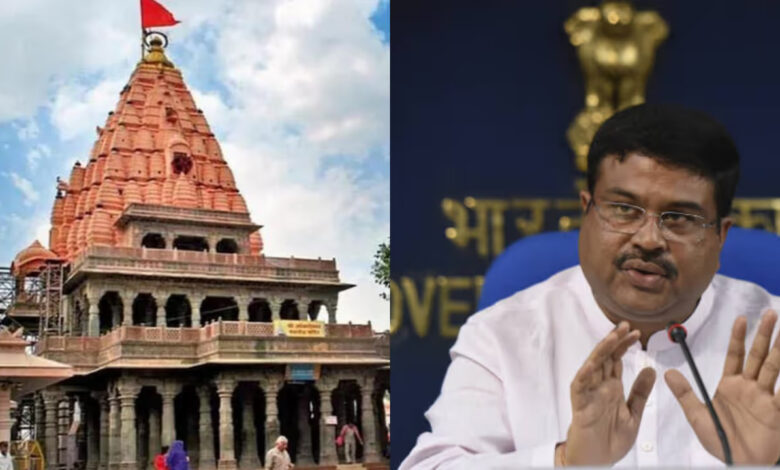
New Delhi : In a significant cultural and scientific proposition, the Union government has suggested replacing the globally used Greenwich Mean Time (GMT) with a new system called Mahakal Standard Time (MST), rooted in India’s ancient astronomical traditions. The proposal aims to reposition Ujjain as the central reference point for global timekeeping.
Currently, global time is calculated based on GMT, with countries like India following their own regional standards such as Indian Standard Time (IST). GMT was officially adopted during the International Meridian Conference of 1884, where Greenwich in London was designated as the prime meridian (zero longitude).
However, according to Indian scholars and historical records, Ujjain held prominence as a central reference point for time calculation long before the British-era standardization. The proposal, backed by Union Education Minister Dharmendra Pradhan, seeks to revive this ancient legacy.
The concept of MST draws inspiration from classical Indian texts such as the Surya Siddhanta, which is known for its precise calculations related to celestial movements and timekeeping. Historical accounts suggest that Ujjain was considered a key astronomical hub due to its geographical significance.


Experts point out that Ujjain lies close to the intersection of important geographical markers, including the Tropic of Cancer, which historically made it suitable for astronomical observations. Renowned ancient mathematician and astronomer Brahmagupta is believed to have used Ujjain as a base for his studies, further strengthening its relevance in early timekeeping systems.
The proposal to introduce Mahakal Standard Time is not just scientific but also cultural, aiming to re-establish India’s contribution to global knowledge systems. It seeks to highlight the country’s rich heritage in astronomy and mathematics, which predates many modern conventions.
However, experts note that replacing GMT at a global level would require widespread international consensus and coordination, making it a complex and long-term proposition. Timekeeping standards are deeply integrated into global systems such as aviation, navigation, and communication networks.
While the proposal has sparked interest and debate, it also raises questions about feasibility and global acceptance. Nonetheless, it marks an attempt to bring ancient Indian scientific achievements back into contemporary global discourse.