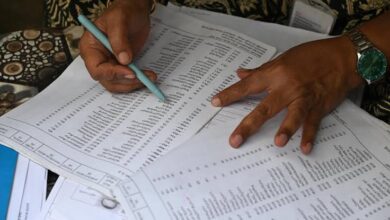
Iran war impact hits Gadag printing industry; costs surge, work declines


Gadag : The ongoing Iran War has cast a shadow even on the local printing industry in Gadag, with rising petroleum product prices severely affecting printers and publishers. The district, known for its vibrant printing sector, is now grappling with escalating costs and declining business.
Printing presses across the region are facing a sharp increase in the prices of essential raw materials such as paper, ink, and printing plates. These materials are largely dependent on Petroleum Products, and the global price surge has directly impacted production costs.
According to industry sources, the price of paper alone has increased by ₹8,000 to ₹10,000 per quintal. Even advance bookings are not ensuring timely delivery of materials, creating uncertainty for printers. The situation has particularly affected those involved in printing calendars, almanacs, and textbooks, where cost margins are already tight.


Adding to the burden is the 18% Goods and Services Tax imposed on printing raw materials. Industry stakeholders say they were still recovering from tax pressures when the global conflict triggered another wave of price hikes. Overall, the cost of raw materials has risen between 20% and 40%, making operations increasingly unsustainable.
Vinith Kumar, president of the Printing Welfare Association, said the situation is becoming critical. He urged the government to reduce taxes and provide relief measures to prevent the industry from collapsing. “If the current trend continues, many small and medium printing units may be forced to shut down,” he warned.
The crisis has also affected labourers working in printing presses. With reduced orders and irregular supply of materials, daily work has declined significantly. Workers who earlier had regular employment are now struggling to find work even for a few days a week.
There are also concerns about artificial shortages, with some stakeholders suspecting manipulation in supply chains. Since many raw materials are imported from Middle Eastern countries, disruptions due to the conflict have further worsened the situation.
n the printing sector are also bearing the brunt, as reduced workload has led to fewer working days. Many daily wage labourers are struggling to make ends meet due to lack of consistent employment.
Additionally, industry players have raised concerns about possible artificial scarcity, suspecting that supply chain disruptions are being exploited to inflate prices. With many materials imported from the Middle East, ongoing geopolitical tensions have only added to the uncertainty.
The situation underscores the vulnerability of small industries to global crises and highlights the urgent need for policy intervention to safeguard livelihoods.