Farmers Targeted in Subsidy Pipe Scam During Drought
Farmers facing drought conditions in Karnataka are now being targeted by callers promising subsidized sprinkler pipes, with victims losing money through fake transport and processing charges.

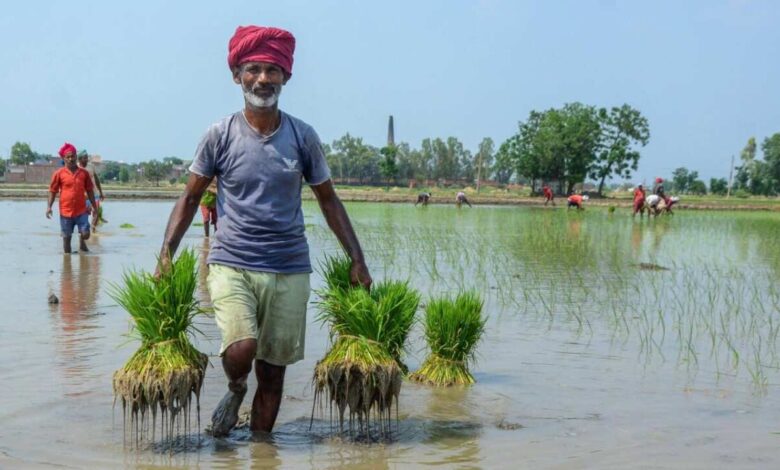
Farmers struggling with crop losses during drought are facing another problem, with a suspected fraud network allegedly targeting them with promises of subsidized agricultural equipment.
The scam involves callers claiming to represent an agency and telling farmers that sprinkler pipe sets have been approved for them through the Agriculture Department at a subsidized price. The callers then demand money in the name of transportation, rental charges or processing fees.
Several farmers in the Hubballi Dharwad region are reported to have received such calls. At least one complaint has now reached the cyber police after a farmer allegedly lost money to the fraud.
The case has raised concern because the callers reportedly knew personal details of farmers, including their names, mobile numbers and addresses. This has led to questions about how such information may have reached the people allegedly involved in the scam.


The Agriculture Department has clarified that it is not currently distributing sprinkler pipes through the arrangement described by the callers. Farmers have therefore been urged to verify such claims directly with the department before making any payment.
One reported victim is Shankargowda from Yarinayanapur village in Kundgol taluk of Dharwad district. According to the complaint, a person identified as Yallaling contacted him while claiming to be associated with an agency supplying the pipes.
The caller allegedly told the farmer that the equipment had been approved and that certain payments were required before it could be delivered. Money was reportedly collected in stages, with the caller citing expenses connected to pipe rental and RTGS charges.
After receiving the payments, the caller allegedly stopped responding and switched off the mobile phone. The promised equipment was never delivered, according to the complaint.
For a farmer dealing with drought and crop losses, the offer may have appeared particularly attractive. Sprinkler equipment can be useful where farmers are trying to make better use of limited water resources, and the promise of a subsidized set could make the offer appear genuine.
The fraud therefore appears to have relied not only on false claims but also on the difficult circumstances faced by farmers. A person hoping to protect a crop from water shortages may be more willing to make an urgent payment when told that an agricultural department benefit has already been approved.
The alleged use of accurate personal information has added another concern to the case. If callers are able to identify farmers by name and provide details about their location, victims may assume that the call is connected to a genuine government scheme.
However, knowing personal information does not prove that a caller represents a government department or an authorised agency. Farmers are advised to independently verify the source before sharing documents, banking information or making payments.
The Agriculture Department’s clarification that it is not currently providing the claimed sprinkler pipes is particularly important for farmers who receive similar calls. Any request for money in advance should be treated carefully, especially when the payment is described as a transport charge, registration fee or processing cost.
The complaint filed with the Dharwad cyber police is expected to help investigators examine how the alleged fraud was carried out and where the money was transferred. Investigators may also look into the identity of the caller and the source of the farmer information used during the calls.
The incident has also renewed concerns about the need for greater awareness of cyber fraud in rural areas. While online scams are often associated with banking customers and smartphone users in cities, fraudsters are increasingly using schemes linked to government benefits and agricultural services to approach rural residents.
Farmers should not rely solely on a phone call when someone claims that a government subsidy or agricultural benefit has been approved. Details should be checked through the concerned department or official government channels before any payment is made.
It is equally important not to share one time passwords, bank details, debit card information or other financial credentials with unknown callers. Genuine government assistance does not automatically require a farmer to transfer money to a private individual using an unfamiliar account.
The reported scam comes at a difficult time for farmers already dealing with drought related challenges. Losing money to a fraudulent scheme can add another financial burden to households that are already struggling with agricultural expenses.
The Dharwad complaint has now put the alleged network under the attention of cyber investigators. The investigation will be important not only for identifying those responsible but also for determining how the victims were approached and how their personal information was obtained.
For farmers, the immediate lesson is to verify every subsidy related claim before making a payment. A promise of government assistance should never be accepted as genuine simply because the caller knows personal details.