Karnataka Reservoir Water Levels Update for September
Karnataka reservoir water levels on September show varying storage across Almatti, Basava Sagar, KRS and Kabini, with inflows and outflows continuing to support agriculture and drinking water needs today.

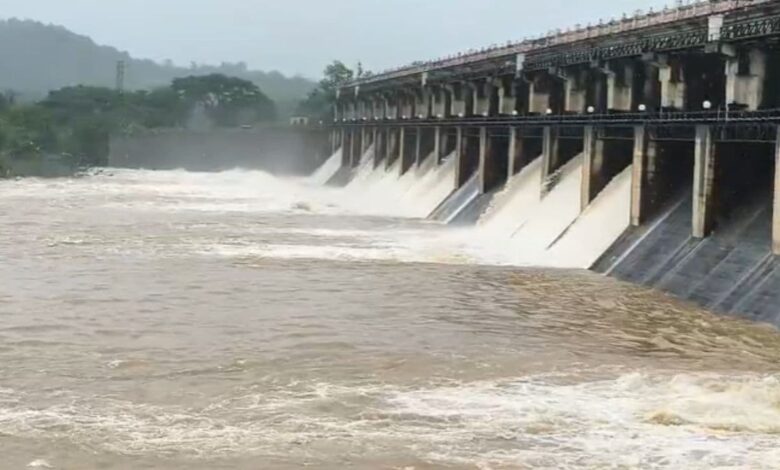
Water levels in several major Karnataka reservoirs continue to remain closely watched as the state depends on stored water for drinking water requirements and agricultural activities. The latest figures for September show different conditions across the Almatti, Basava Sagar, KRS and Kabini reservoirs.
The reservoirs are also seeing varying levels of inflow and outflow. Depending on the requirements of downstream areas, water is being released through rivers and canals from some of the major storage points.
The Almatti reservoir in Vijayapura district remains close to its maximum level. The Lal Bahadur Shastri Sagar has a maximum level of 519.60 metres, while the reported water level is around 519.01 metres.
There is currently no significant inflow reported into Almatti. At the same time, around 13,172 cusecs of water is being released into the river. The reservoir remains an important source for the Krishna basin and its water releases are closely monitored because of their impact on downstream areas.

The Basava Sagar reservoir near Narayanapura in Yadgir district is also receiving a substantial inflow. The reservoir has a maximum level of 492.25 metres, while the current level is reported at 490.76 metres.
Around 11,403 cusecs of water is flowing into Basava Sagar. A similar quantity of about 11,403 cusecs is being released from the reservoir into the river, indicating that the incoming water is currently being passed downstream.
The situation at KRS is different, with the reservoir holding a significant quantity of stored water while receiving a more moderate inflow. The Krishna Raja Sagara reservoir in Mandya has a maximum level of 124.80 feet.
The reported level at KRS is 105.90 feet. The total storage capacity is 49.452 TMC, while the current storage is around 27.797 TMC. The reported live storage is about 19.418 TMC.
KRS is currently receiving around 4,120 cusecs of water. The combined outflow for canal requirements and drinking water supply is around 3,984 cusecs.
The KRS figures are also broadly in line with recent public reservoir data showing storage of about 27.76 TMC and a water level close to 105.86 feet on September .
The Kabini reservoir in the Mysuru region is another important water source being monitored. The reservoir has a maximum level of 84 feet, while its reported current level is 68.63 feet.
Kabini has a total storage capacity of 19.52 TMC and the current storage is around 11.02 TMC. Inflow has reduced to approximately 646 cusecs, while about 500 cusecs of water is being released into the river.
Around 2 millimetres of rainfall has been recorded in the Kabini region, according to the latest figures provided for the reservoir.
Recent public reservoir data also puts Kabini storage at around 11.01 TMC, showing a similar level to the figures in the latest report.
The overall reservoir situation is important because water stored in these major dams supports several requirements, including drinking water supply, irrigation and downstream river management. Changes in rainfall and inflow can quickly affect the amount of water available for release.
Almatti and Basava Sagar are particularly important for the Krishna basin, while KRS and Kabini play a major role in the Cauvery basin. Their water levels are therefore watched by farmers, water management authorities and people dependent on these river systems.
Official reservoir monitoring is carried out through government water data systems, which track parameters such as water levels and daily observations. The National Water Data Portal lists Karnataka reservoir data collected from observation stations operated by the Karnataka Water Department.
The latest figures also show why reservoir levels cannot be judged only by the amount of water stored. Inflow and outflow provide an important picture of how quickly water is entering and leaving a reservoir.
For instance, Basava Sagar is receiving and releasing a substantial flow at the same time, while Almatti is currently releasing water despite having no significant inflow. KRS is receiving water while releasing a slightly smaller quantity for canal and drinking water requirements.
As rainfall patterns continue to vary across Karnataka, these daily changes will remain important. Farmers and local authorities will continue to watch reservoir storage closely as the water available in major dams influences irrigation planning and drinking water management.
The September figures therefore present a mixed picture across the four reservoirs. Almatti remains near its upper level, Basava Sagar is handling significant inflow, KRS has more than half of its gross storage filled, and Kabini continues to hold a substantial volume of water.