Karnataka School Admissions Fall Sharply As Four Lakh Students Missing This Year
Karnataka schools have recorded a sharp decline in admissions this academic year as age eligibility confusion rising private fees and delayed decisions affect thousands of families statewide

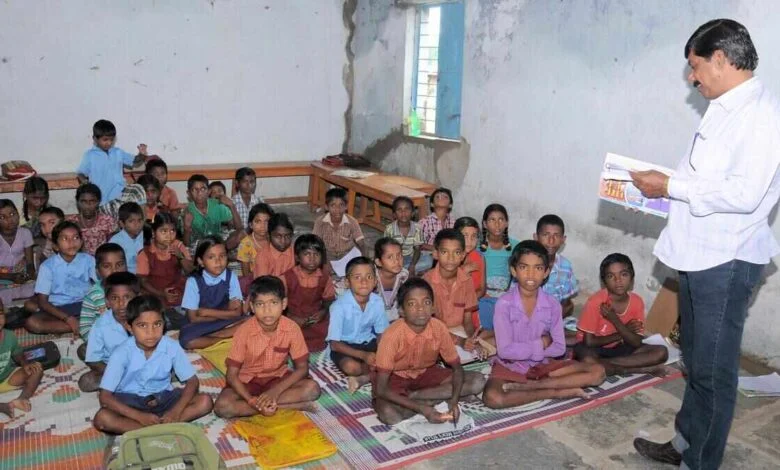
Karnataka has witnessed a significant decline in school admissions during the current academic year, with the number of students enrolled across the state reportedly falling by nearly four lakh compared with the previous year. The decline has been noticed across both government and private schools, creating concern among education officials, school managements and parents.
The sharp fall has emerged at a time when families are already dealing with several challenges related to school admissions. Changes in the age eligibility requirement for Class One admission created considerable uncertainty among parents, particularly those whose children had completed their preschool education and were preparing to enter primary school.
The government had initially moved toward enforcing a rule requiring children to have completed six years of age by June 1 for admission to Class One. While the rule was intended to bring greater uniformity to the admission process, its implementation created confusion for many families.
A large number of children who had completed their lower kindergarten and upper kindergarten education were affected by the age requirement. Many parents feared that their children would have to wait another academic year before entering Class One. The situation became especially difficult for families whose children were born around the period of the Covid 19 pandemic.


Following pressure from parents and various groups, the government later announced a relaxation of 60 days. Under the revised arrangement, children who had completed five years and ten months were also allowed to seek admission. However, the late clarification and uncertainty surrounding the rule appear to have affected the admission process.
For many parents, the issue was not simply about the age requirement. The repeated changes and delayed communication made it difficult to decide when and where to enrol their children. Some families reportedly postponed admission while waiting for clearer instructions from the authorities.
Education observers believe that the prolonged uncertainty may have contributed to the overall decline in school enrolments this year. Although the government eventually provided some relaxation, parents and education groups have argued that the measure did not fully address the difficulties faced by families.
Private school fees have added another layer of pressure. Several private institutions have increased their fees, with reports suggesting rises ranging between 10 percent and 20 percent in some cases. For families already managing higher household expenses, the additional cost of education has become a serious concern.
School admission expenses can include tuition fees, admission charges, books, uniforms, transportation and other expenses. When several of these costs increase at the same time, families with limited incomes may find it difficult to manage the overall financial burden.
The situation is particularly challenging for middle income and lower income households. Parents who were already planning their annual education expenses have had to reconsider their choices because of higher fees. Some families may be considering government schools or postponing admission decisions because they cannot immediately manage the expenses demanded by private institutions.
Parent organisations have also continued to seek a longer relaxation of the age requirement. They have argued that the 60 day concession may not be sufficient to address the difficulties faced by children and families affected by the earlier rule.
Some parent groups have demanded that the relaxation be extended to at least 90 days. Others have suggested that the government should consider the age of children as of December 31 rather than relying solely on the June 1 cutoff. Their argument is that a more flexible approach could prevent children from losing an entire academic year because of a small difference in age.
The decline of nearly four lakh admissions has therefore become an important issue for Karnataka’s education system. A reduction of this scale can have implications not only for individual schools but also for planning, teacher requirements, classroom utilisation and education budgets.
Government schools could also be affected if enrolment patterns change significantly between urban and rural areas. Private schools may face their own challenges if higher fees lead families to reconsider private education.
At the same time, education experts point out that admission figures can be influenced by several factors and should not be attributed to a single reason without detailed analysis. Age eligibility, fee increases, demographic changes, migration and differences in admission reporting can all influence the final numbers.
For parents, however, the immediate concern remains clear. They want predictable admission rules and sufficient time to make decisions regarding their children’s education. Sudden changes can create additional stress for families, especially when admission deadlines are approaching.
The government may now face pressure to review the current admission policy and provide clearer guidance for the coming academic years. A stable age eligibility framework could help parents plan their children’s schooling without facing repeated uncertainty.
The issue of private school fees may also require closer attention. While schools have operational expenses and financial commitments, parents are seeking greater transparency and affordability in the admission process.
With the current academic year already underway, the focus is likely to shift toward understanding why such a large fall in admissions has occurred and whether the decline can be reversed. The government will also need to examine whether the existing age relaxation is sufficient or whether further changes are necessary.
For thousands of families, the admission process is more than an administrative exercise. It directly affects when children begin their formal schooling and how parents plan their household finances. A clear and consistent policy could therefore play an important role in preventing similar uncertainty in the future.
The reported fall of nearly four lakh students has highlighted the need for Karnataka to carefully review its school admission policies. Parents and education stakeholders will now be watching closely for further decisions on age eligibility, fee regulation and measures to ensure that children do not miss educational opportunities because of policy confusion or financial difficulties.