Congress Begins Damage Control as Karnataka Cabinet Expansion Sparks MLA Discontent
Congress leaders have intensified discussions with unhappy Karnataka legislators after the cabinet expansion aiming to prevent resignations restore unity within the party and maintain political stability across the state.

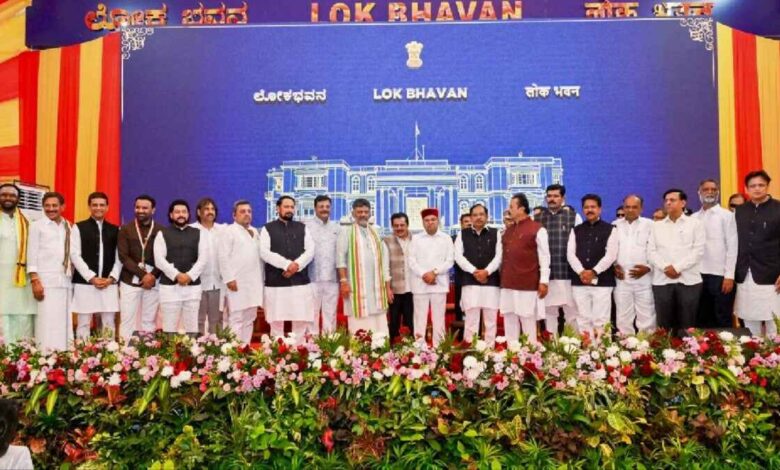
The Karnataka Congress leadership has launched an intensive effort to calm growing dissatisfaction among several party legislators following the recent expansion of the state cabinet. A number of senior MLAs who were expecting ministerial positions have openly expressed disappointment after being left out of the new cabinet, prompting the party’s top leadership to step in with a series of discussions and persuasion efforts.
The cabinet reshuffle, which was expected to strengthen the government, has instead triggered internal unrest within the ruling party. Several legislators reportedly felt overlooked despite their long political careers and contributions to the party. The situation has encouraged senior Congress leaders to begin direct communication with dissatisfied members in an attempt to prevent further escalation.
Chief Minister D K Shivakumar has personally taken the initiative to speak with several unhappy legislators. According to party sources, he has urged them to remain patient and respect the decisions taken by the party leadership. During these conversations, he reportedly explained that cabinet formation is a complex process and that every deserving leader cannot always be accommodated at the same time.
One of the most closely watched developments has been the outreach to senior MLA Dinesh Gundu Rao, who is believed to be disappointed after missing out on a ministerial berth. The Chief Minister reportedly held detailed discussions with him, stressing that decisions made by the party high command must be accepted in the larger interest of maintaining unity and ensuring the stability of the government.

The leadership has also reached out to Yashavanth Rayagouda. Reports suggest that the Chief Minister spoke with him over the phone and assured him that he would personally visit and discuss his concerns in detail. Such direct engagement reflects the seriousness with which the Congress leadership is treating the growing dissatisfaction among its legislators.
Apart from the Chief Minister, several senior ministers have joined the effort to pacify unhappy party members. Leaders including Laxman Savadi, Mahantesh Koujalagi, Vinay Kulkarni and B R Patil have reportedly spoken with disappointed legislators and appealed to them not to take any extreme decisions. Their primary objective is to ensure that internal differences do not affect the functioning of the government.
One of the most significant gestures reportedly came from Minister Laxman Savadi, who is said to have requested dissatisfied legislators to reconsider any resignation plans. Reports indicate that he even expressed his willingness to sacrifice his own ministerial position if doing so could help preserve party unity. Although such remarks are viewed largely as symbolic, they demonstrate the seriousness of the current political situation.
Meanwhile, Sagar MLA Belur Gopalakrishna is also believed to have met senior Congress leader B K Hariprasad as part of ongoing efforts to resolve internal concerns. These meetings are seen as part of a wider strategy by the party leadership to ensure that communication remains open with every dissatisfied legislator.
Attention has also shifted to the Congress legislators from Kolar district, where resentment over cabinet representation has reportedly become more visible. Party insiders suggest that senior leader G Parameshwara may be entrusted with the responsibility of speaking to legislators from the region. Although he is currently abroad, communication between the state leadership and senior party figures is believed to be continuing regarding the issue.
The Congress leadership appears determined to resolve differences through dialogue rather than confrontation. Instead of allowing frustration to grow, the party is encouraging face to face discussions and reminding legislators that opportunities may arise in the future. This approach is aimed at preventing internal divisions from becoming public controversies.
Home Minister Priyank Kharge has also spoken about the issue, emphasizing the importance of loyalty to the party. Without naming any individual, he reminded leaders that every elected representative entered public life with the support of the Congress organization. He stated that no individual is greater than the party and urged colleagues to avoid making statements that could damage the party’s image.
Kharge further observed that political leaders often forget the role the party plays in providing opportunities and electoral recognition. He stressed that respecting the party and its leadership is essential for maintaining discipline and unity, especially during challenging political situations. His remarks are being viewed as a message to those expressing dissatisfaction over not receiving cabinet positions.
Political observers believe that cabinet expansions frequently create disappointment because the number of available ministerial posts is limited while many experienced legislators aspire to join the government. Managing expectations has therefore become one of the biggest challenges for the Congress leadership after the latest reshuffle.
Despite the internal unrest, party leaders remain confident that the differences can be resolved through continued dialogue and mutual understanding. They believe that maintaining unity is crucial for delivering on governance commitments and avoiding unnecessary political instability. Over the coming days, more meetings between senior leaders and dissatisfied legislators are expected as the Congress works to restore complete harmony within its ranks.
The coming weeks will be crucial in determining whether these reconciliation efforts succeed. While dissatisfaction has become visible after the cabinet expansion, the leadership is hoping that regular communication, assurances for future opportunities and collective responsibility will help prevent the issue from developing into a larger political crisis.