Chigari BRTS Buses Continue to Drain NWKRTC Finances Despite Strong Passenger Demand
Hubballi Dharwad Chigari buses serve thousands daily but rising operating costs low revenue technical failures and unpaid dues continue to place severe financial pressure on the transport corporation.

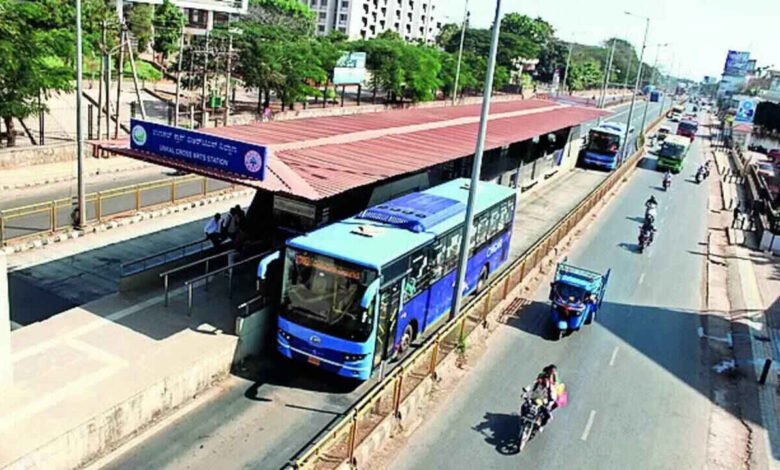
The Chigari Bus Rapid Transit System connecting Hubballi and Dharwad has become a vital mode of transport for thousands of daily commuters, but the service is reportedly creating a significant financial burden for the North Western Karnataka Road Transport Corporation. Despite attracting regular passengers, the AC bus service is said to be generating heavy monthly losses, raising fresh concerns over the long term sustainability of the project.
Officials familiar with the matter say the transport corporation is losing nearly Rs 2.5 crore every month due to the widening gap between operating expenses and revenue. The issue has reportedly been brought to the attention of senior officials in the Transport Department several times, but no concrete action has been taken so far to ease the financial pressure on the corporation.
The Chigari BRTS project was launched in 2018 at an estimated cost of around Rs 1000 crore and was widely recognised as the first Bus Rapid Transit System of its kind in South India. The service operates on a dedicated corridor stretching approximately 22.5 kilometres between Hubballi Railway Station and the New Bus Stand in Dharwad. The exclusive lane was designed to provide faster, safer and more reliable public transportation between the twin cities.
Every day, around 100 Chigari air conditioned buses operate along the dedicated corridor, carrying thousands of passengers who depend on the service for work, education and other daily travel. The system has become one of the busiest public transport networks in the region because of its convenience and frequency. However, while passenger numbers remain encouraging, financial performance continues to be a major concern.

According to estimates from the transport corporation, the operating cost of running a Chigari bus is nearly Rs 80 per kilometre. However, the average revenue earned per kilometre is only about Rs 50. This means the corporation is losing roughly Rs 30 for every kilometre the buses travel. Over thousands of kilometres covered every day, the cumulative losses have grown into a substantial monthly burden.
Corporation officials believe the financial imbalance cannot be addressed without support from the Urban Development Department. Since the BRTS infrastructure is part of a larger urban transport project, the North Western Karnataka Road Transport Corporation has repeatedly requested financial compensation to offset the operational losses. Officials argue that the current revenue model does not adequately cover the high operating expenses associated with maintaining an air conditioned rapid transit fleet.
The corporation has also stated that pending financial support from the Urban Development Department has added to its difficulties. Reports indicate that more than Rs 150 crore remains unpaid to the transport corporation since 2018. These outstanding dues have further strained the organisation’s finances, making it increasingly difficult to manage operating costs and maintain the quality of services.
Apart from financial challenges, the Chigari buses have also been facing growing technical issues in recent months. Several buses have reportedly developed mechanical faults during operations, leading to unexpected breakdowns along the route. Such incidents have inconvenienced passengers and occasionally disrupted scheduled services, creating frustration among regular commuters.
Frequent technical failures have also raised questions about maintenance standards and fleet reliability. Passengers who rely on the service every day have expressed concerns about buses breaking down unexpectedly, particularly during peak travel hours. Reliable maintenance has become an important issue as the fleet continues to age after several years of continuous operation.
In addition to breakdowns, reports of increasing road accidents involving Chigari buses have added to public concern. Although the BRTS corridor was designed to improve safety and reduce traffic conflicts, accidents involving buses have attracted attention in recent months. Residents have called for stricter safety measures, better driver training and more effective vehicle inspections to improve passenger confidence.
Under the existing arrangement, the BRTS authorities are responsible for maintaining the dedicated corridor and related infrastructure, while the North Western Karnataka Road Transport Corporation manages the operation of the buses. Transport officials believe closer coordination between the agencies is necessary to improve efficiency and reduce operational challenges affecting the service.
Public transport experts say the Chigari system remains an important asset for the Hubballi Dharwad region despite its financial difficulties. The dedicated bus corridor has helped reduce travel time, encouraged greater use of public transport and improved connectivity between two major urban centres. However, they also note that long term sustainability will depend on balancing operational costs with realistic revenue and ensuring timely financial support from the government.
Industry observers suggest that reviewing ticket pricing, improving operational efficiency, reducing maintenance costs and clearing pending payments could help improve the financial position of the corporation. They also believe investments in preventive maintenance could reduce technical failures and increase the reliability of the fleet.
For thousands of commuters, Chigari buses remain an essential part of daily life. Many passengers appreciate the faster travel time and dedicated corridor, but they also expect dependable services and safe operations. Addressing the financial and technical challenges will therefore be critical to protecting one of Karnataka’s most significant public transport projects.
As discussions continue within the Transport Department, stakeholders hope that a practical solution will be found to reduce recurring losses while ensuring uninterrupted service for passengers. Without timely intervention, the growing financial burden could place additional pressure on the transport corporation and affect the future expansion of the Bus Rapid Transit System.