E20 Petrol Reduce Mileage? Government Issues Official Clarification
According to the ministry, the use of E20 petrol may reduce fuel economy (mileage) by around 3% to 5% in certain compatible vehicles.

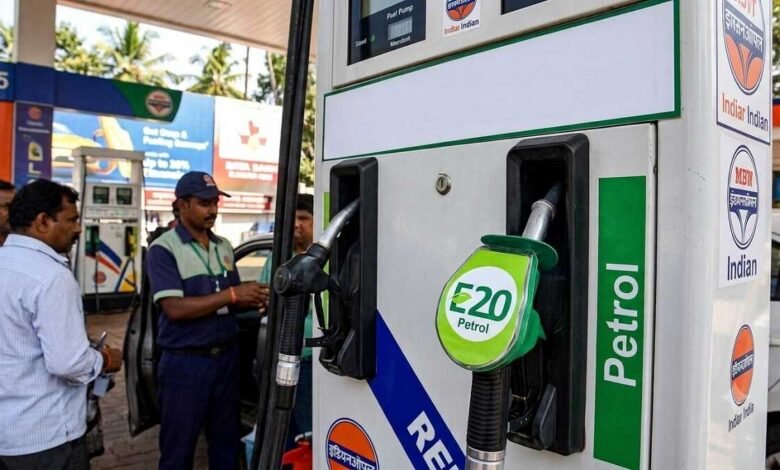
The Union Ministry of Petroleum and Natural Gas has released an important clarification on the use of E20 petrol (petrol blended with 20% ethanol), addressing concerns over its impact on vehicle performance and fuel efficiency. E20 Petrol Reduce Mileage? Government Issues Official Clarification.
According to the ministry, the use of E20 petrol may reduce fuel economy (mileage) by around 3% to 5% in certain compatible vehicles. However, the government emphasized that the long-term environmental and economic benefits of the ethanol blending programme far outweigh this minor reduction in mileage.
As reported by The Indian Express, E20 fuel offers several advantages, including a higher-octane rating, better engine performance, and more efficient combustion. These characteristics help deliver improved pickup, smoother acceleration, and significantly lower carbon emissions throughout the vehicle’s operating cycle. To address public concerns and misconceptions about ethanol-blended fuel, the Ministry of Petroleum and Natural Gas has published an official Frequently Asked Questions (FAQ) document.
The ministry stated that E20 is a cleaner, higher-quality, and more efficient fuel than conventional petrol. The government also rejected claims that the ethanol blending programme was implemented hastily. It explained that India’s ethanol blending initiative began as a pilot project in 2001. By 2006, the country had successfully introduced 5% ethanol-blended petrol in selected regions.


Until 2014, ethanol blending in India remained at just 1.5%. Following the introduction of the National Policy on Biofuels in 2018, the government significantly expanded ethanol production using not only sugarcane but also other agricultural feedstocks. As a result, India achieved its 10% ethanol blending target in 2022, ahead of schedule.
The ministry also addressed concerns that E20 fuel could damage older vehicle engines. It stated that extensive scientific testing on engine durability and corrosion resistance was conducted before the nationwide rollout of E20. According to reports from Maruti Suzuki and Hero MotoCorp, real-world testing found no evidence of engine damage or corrosion caused by E20 fuel.
The ministry further rejected demands to supply regular petrol and E20 separately at fuel stations. It said maintaining separate infrastructure at more than 100,000 retail fuel outlets would significantly increase transportation and operational costs. Additionally, since ethanol procurement prices are kept at levels that support farmers, E20 petrol is not expected to be cheaper than regular petrol.
The government clarified that reducing petrol prices is not the primary objective of the ethanol blending programme. Instead, the initiative aims to reduce India’s dependence on imported crude oil, strengthen the country’s energy security, and promote cleaner transportation.
According to the ministry, the programme has already helped India save over ₹1.97 lakh crore in foreign exchange by reducing crude oil imports by approximately 31.6 million tonnes. The ethanol blending initiative has also delivered major environmental and agricultural benefits.
The government said it has reduced carbon dioxide emissions by around 95.2 million tonnes while generating more than ₹1.66 lakh crore in direct income for Indian farmers. The ministry urged consumers not to believe misinformation or rumours regarding E20 petrol and reiterated that the fuel has undergone extensive testing and is safe for vehicles designed to use it.