Questions Raised Over Gruha Jyothi Verification Drive as Voter ID and Caste Data Collection Begins
The Karnataka government has launched a fresh verification of Gruha Jyothi beneficiaries, triggering debate after officials sought voter ID and caste details, leading to political questions over the exercise.

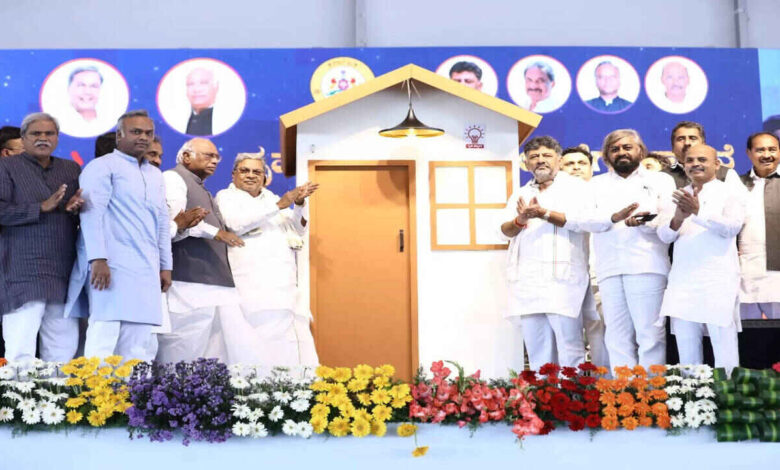
The Karnataka government has started a statewide verification drive for beneficiaries of its Gruha Jyothi free electricity scheme, with electricity supply company officials visiting households to update beneficiary records. While the exercise has been presented as a routine verification process, the collection of voter identification and caste information has sparked political debate and public scrutiny.
A major point of discussion is the requirement for beneficiaries to provide their EPIC card, commonly known as the voter ID. Since voter ID has not traditionally been a mandatory document for accessing welfare schemes, its inclusion in the verification process has raised questions about the purpose behind the data collection. Officials are also updating details related to caste and social categories, including Scheduled Castes, Scheduled Tribes, Other Backward Classes and minority communities.
The timing of the verification has added another layer to the debate. The exercise comes while the Election Commission is carrying out a Special Intensive Revision of electoral rolls across the state. This has led to speculation in political circles that the government could be attempting to build a more detailed database of voters through the welfare scheme, although no official confirmation has been given to support such claims.
According to discussions surrounding the verification, one possible objective could be to ensure that only genuine Karnataka residents continue receiving the benefits of the Gruha Jyothi scheme. The updated records may help authorities identify beneficiaries who are not eligible under the scheme’s guidelines, including people who are not permanent residents of the state.
There is also growing discussion that the verification may help the government identify financially well off consumers, including income tax payers, who may not qualify for subsidised electricity benefits. If such cases are detected, officials could review their eligibility and consider removing them from the list of beneficiaries in accordance with government rules.
Political observers believe the verification process may also encourage beneficiaries to ensure their electoral records are accurate during the ongoing voter list revision. Supporters of this view argue that updated beneficiary information could indirectly help people verify their voter registration status and avoid missing out during the electoral roll revision process.
Opposition leaders and sections of the public, however, have questioned whether the collection of voter and caste information goes beyond the stated objective of verifying electricity scheme beneficiaries. They argue that such data is not directly connected to the implementation of the welfare programme and deserves greater clarity from the government.
The government has maintained that the verification is intended to improve the accuracy of beneficiary records and ensure that welfare benefits reach only eligible households. However, with political parties closely watching the exercise, the verification drive has quickly become more than an administrative process and is expected to remain a key political issue in the coming weeks.