Traditional Village Style Chutney Wins Hearts With Rich Flavor and Simple Ingredients
This rustic homemade chutney combines roasted vegetables, spices and peanuts to create a flavorful side dish that pairs perfectly with rice, dosa and idli.

Traditional village style chutneys continue to hold a special place in many households despite the growing popularity of modern recipes. Prepared using simple ingredients and traditional grinding methods, these chutneys are known for their rich aroma, authentic taste and comforting homemade appeal.
One such popular recipe is the classic village style chutney made with tomatoes, green chilies, onions and roasted spices. Food lovers say its rustic flavor is difficult to recreate with modern kitchen appliances. When freshly prepared and served with hot rice and a spoonful of ghee, it delivers a memorable taste that reminds many people of countryside cooking.
The recipe begins with fresh vegetables and a handful of everyday pantry ingredients. Tomatoes, green chilies, onions, eggplants, garlic cloves, tamarind and salt form the base of the chutney. A small amount of turmeric, cumin seeds, mustard seeds, curry leaves and oil help enhance the overall flavor.
To prepare the dish, tomatoes and chopped green chilies are first cooked slowly over a low flame. This step allows the vegetables to soften and develop a slightly roasted flavor without burning. Once they turn lightly golden and release their aroma, they are removed from the heat and allowed to cool.


Meanwhile, onions can be finely chopped and kept aside. Some families also prefer adding roasted peanuts to the mixture for extra texture and a deeper traditional taste. If peanuts are used, they should be roasted separately and their skins removed after cooling.
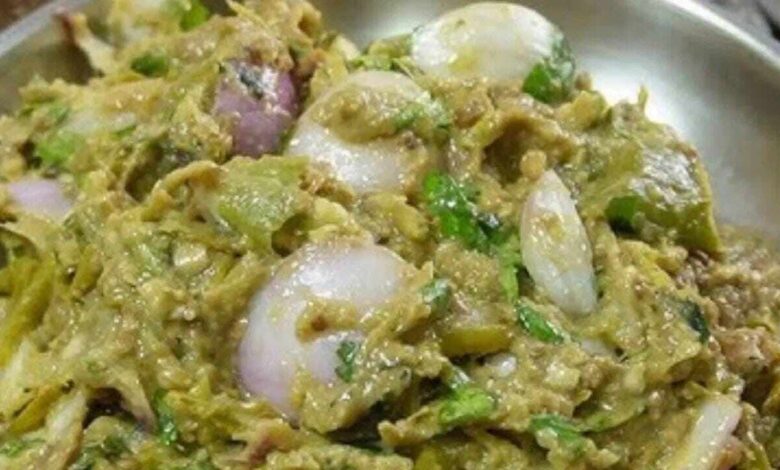
The heart of the recipe lies in the grinding process. The roasted vegetables are combined with tamarind, salt, cumin seeds and peanuts. Traditionally, the mixture is crushed using a stone mortar, which gives the chutney a coarse texture and distinctive village style character. A small amount of water may be added to help blend the ingredients into a thick and flavorful mixture.
Unlike smooth restaurant style chutneys, this version is intentionally rustic. The slightly chunky texture allows the natural flavors of the vegetables and spices to stand out. Every bite delivers a balance of tanginess from the tomatoes, heat from the chilies and earthy notes from the roasted ingredients.
Home cooks often serve this chutney with steaming rice, dosa or idli. Many believe that adding a little ghee on top elevates the flavor even further. Its versatility makes it a favorite accompaniment for both breakfast and lunch meals.
Traditional food enthusiasts say recipes like these showcase the beauty of simple cooking. Without complicated techniques or expensive ingredients, the chutney delivers a satisfying taste that continues to be appreciated across generations. The combination of roasted vegetables, spices and careful preparation creates a dish that is both comforting and deeply rooted in local culinary traditions.
As interest in homemade and traditional foods continues to grow, village style chutney recipes are finding renewed popularity among younger generations. With readily available ingredients and a straightforward preparation process, this classic dish remains a timeless favorite in many kitchens.