Shahpur Kandi Barrage Nears Completion; Pakistan Faces Fresh Water Stress


New Delhi : Pakistan could face an acute water crisis this summer as India moves to tighten its control over eastern rivers following the suspension of the Indus Waters Treaty.
The development comes in the wake of heightened tensions after the Pahalgam terror attack, prompting New Delhi to adopt a firmer stance on river water utilization.
With the Shahpur Kandi Barrage project nearing completion, India is set to stop the flow of excess water from the Ravi River into Pakistan. Officials indicate that the project is expected to be completed by March 31.
Until now, due to the absence of adequate storage infrastructure, surplus Ravi waters were flowing downstream into Pakistani territory. Jammu and Kashmir minister Javed Rana said the project is aimed at providing irrigation benefits to drought-prone Kathua and Samba districts.
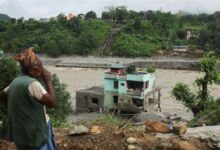

Once operational, the barrage will prevent unutilised water from crossing the border and ensure that it is diverted for agricultural and developmental use within India. The Shahpur Kandi project, conceptualised in 1979, has been in the pipeline for nearly 46 years.
An agreement between Punjab and Jammu & Kashmir provided for the construction of the Ranjit Sagar Dam and the downstream barrage to harness Ravi waters. The foundation stone was laid in 1982 by then Prime Minister Indira Gandhi.
However, inter-state disputes and political delays stalled progress for decades. The project regained momentum after 2018 under the Narendra Modi government. Under the 1960 Indus Waters Treaty signed between India and Pakistan, India has full rights over the eastern rivers — Ravi, Beas and Sutlej — while Pakistan primarily depends on the western rivers.
Agriculture contributes nearly 25 per cent to Pakistan’s GDP, with around 80 per cent of its farming dependent on the Indus river system. Experts warn that restricting excess Ravi flows could impact irrigation networks in Pakistan’s Punjab province and affect water supply to major cities such as Lahore and Multan.
Reduced water availability may lead to lower crop output, compounding Pakistan’s fragile economic situation and food security concerns. India has also accelerated work on hydropower projects on the Chenab river and revived the long-pending Wullar Barrage on the Jhelum, moves that could further regulate downstream water flows in the coming years.
Also Read: D.K. Suresh’s ‘loyal dog’ analogy sparks political reactions in Karnataka