Middle East tensions disrupt air travel as Iran shuts airspace, several India–US flights cancelled

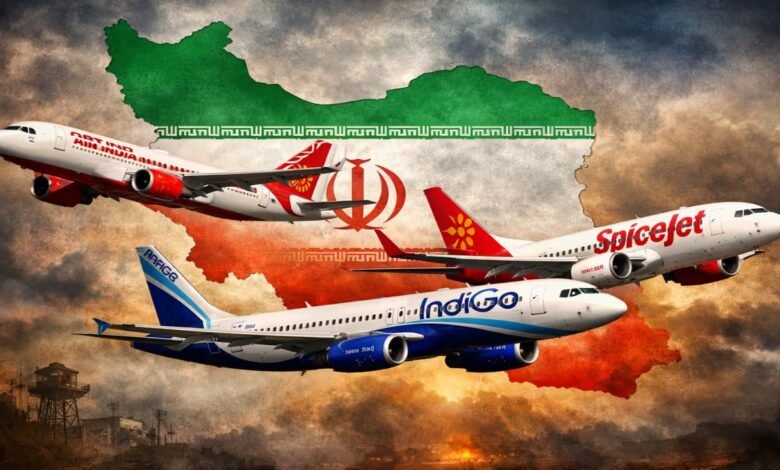
New Delhi:Escalating tensions in the Middle East following the United States’ declaration of military action against Iran have triggered widespread disruption to international air travel. Amid fears of an imminent conflict, Iran has abruptly closed its airspace, forcing airlines to cancel or divert several long-haul flights, including key services between India and the United States.
The sudden closure of Iranian airspace from Wednesday midnight has had a direct impact on flights operating from India to Western countries. Three major Air India flights — Delhi–New York JFK (AI 101), Delhi–Newark (AI 105) and Mumbai–New York JFK (AI 119) — were cancelled late Wednesday night due to the restriction. As a result, the return sectors of these flights were also called off, leaving hundreds of passengers stranded or forced to reschedule their travel.
India relies heavily on Iranian and Iraqi airspace for westbound international flights. Aircraft travelling from Delhi, Mumbai and other Indian cities to Europe and North America typically cross Iran and Iraq to ensure the shortest and most fuel-efficient routes. With both these airspaces now considered high-risk, airlines are facing limited alternatives.


In another incident early Thursday, an IndiGo flight operating on the Baku–Delhi route was forced to turn back mid-air and return to Azerbaijan’s capital within an hour of take-off, as its planned route required crossing Iranian airspace. Sources said several other flights may face similar diversions or cancellations if alternative routes are not operationally viable.
Airlines have warned that avoiding Iran and Iraq would mean detouring through much longer routes, often requiring technical stopovers in countries such as Jordan. This significantly increases flight duration, fuel consumption and operational costs. IndiGo is reportedly considering suspending services to destinations such as Almaty, Tashkent and Baku, as maintaining these routes without Iranian airspace would be logistically challenging.
Iran’s Civil Aviation Authority issued a notice late Wednesday night stating that entry into and exit from the Tehran Flight Information Region would be prohibited for all international civilian flights, except those with prior approval. Although a subsequent announcement claimed that the airspace had partially reopened, several global airlines have chosen to avoid the region entirely due to safety concerns.
Air India, in a statement posted on X, said its flights are currently using alternative routes to ensure passenger safety, warning that this could lead to delays. The airline added that some flights that cannot be rerouted safely are being cancelled and urged passengers to check flight status before heading to airports.
Major international carriers are also taking precautionary measures. The Lufthansa Group announced it will avoid Iranian and Iraqi airspace until further notice and operate only daytime flights to Tel Aviv and Amman between January 15 and January 19, citing crew safety.
With geopolitical tensions showing no signs of easing, aviation experts warn that prolonged airspace closures could severely disrupt global travel and supply chains in the coming days.