
Humanoid Robot Steals Spotlight at White House Event Alongside Melania Trump
A humanoid robot named Figure 03 drew global attention after appearing at a White House event, showcasing how artificial intelligence is rapidly moving from software into real world human like machines


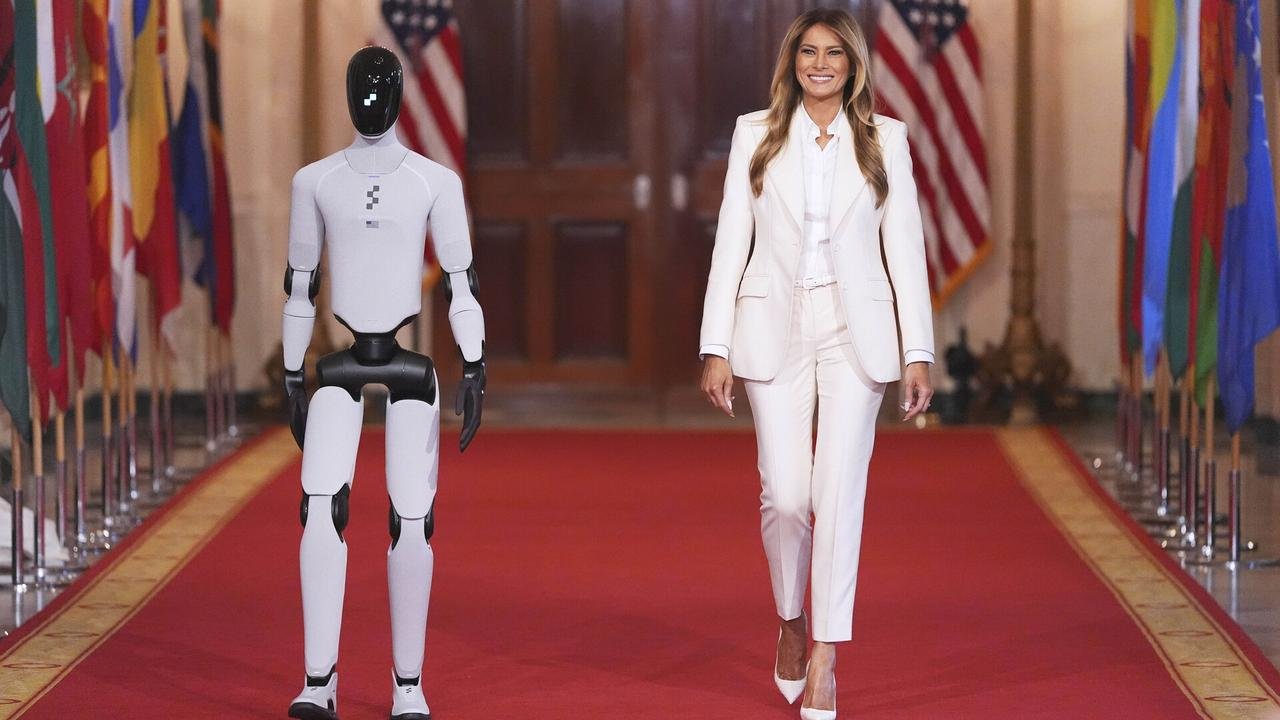
A humanoid robot walking confidently through a high profile event at the White House has sparked global curiosity about the future of artificial intelligence. The robot, known as Figure 03, became the center of attention as it accompanied Melania Trump during a major summit, marking a symbolic moment for emerging robotics technology.
The appearance took place during an event focused on future innovation, where the robot not only walked alongside guests but also interacted with attendees. It greeted people, communicated in multiple languages, and demonstrated capabilities that go far beyond traditional machines. For many present, it was a glimpse into a future where robots may become part of everyday human environments.
Developed by robotics company Figure AI, Figure 03 represents the latest step in humanoid robot evolution. Unlike earlier machines that were built mainly for industrial or research use, this model is designed for real world interaction. The goal is clear to create a robot that can assist in homes, workplaces, and public spaces while learning directly from human behavior.
One of the key technologies powering this robot is its advanced artificial intelligence system, which allows it to understand surroundings, respond to voice commands, and adapt in real time. Instead of relying on pre programmed instructions alone, the system enables the robot to make decisions based on context, making its behavior more flexible and human like.


The hardware also reflects a shift toward practicality and safety. Equipped with multiple cameras and sensors, the robot can navigate complex environments and handle objects with precision. Its hands are designed to gently grip items, allowing it to manage delicate tasks without causing damage. Engineers have also focused on making the robot lighter and more compact, ensuring it can operate safely around people.
Another notable aspect is its communication ability. Improved audio systems allow for smoother conversations, making interactions feel more natural. The addition of wireless charging further enhances convenience, allowing the robot to recharge without manual intervention.
Industry experts see this development as part of a broader trend. Companies are no longer treating humanoid robots as experimental prototypes but are preparing them for large scale production. By simplifying components and optimizing design, manufacturers aim to reduce costs and make such robots more widely available in the coming years.
The White House appearance also highlighted a larger vision. During the event, discussions touched on how robots like Figure 03 could one day assist in education, acting as personalized tutors that adapt to individual learning styles. The idea reflects a growing belief that artificial intelligence will not remain confined to screens but will take on physical forms that interact directly with people.
While the technology is still evolving, moments like this suggest a turning point. Humanoid robots are gradually moving out of laboratories and into public view, signaling a future where humans and intelligent machines may work side by side in ways that once seemed limited to science fiction.