Google Gemma 4 Brings Offline AI Power to Smartphones and Personal Devices
Google launches lightweight open AI model that runs directly on devices supports multiple languages advanced processing and enables developers to build customizable tools without constant internet connectivity requirements

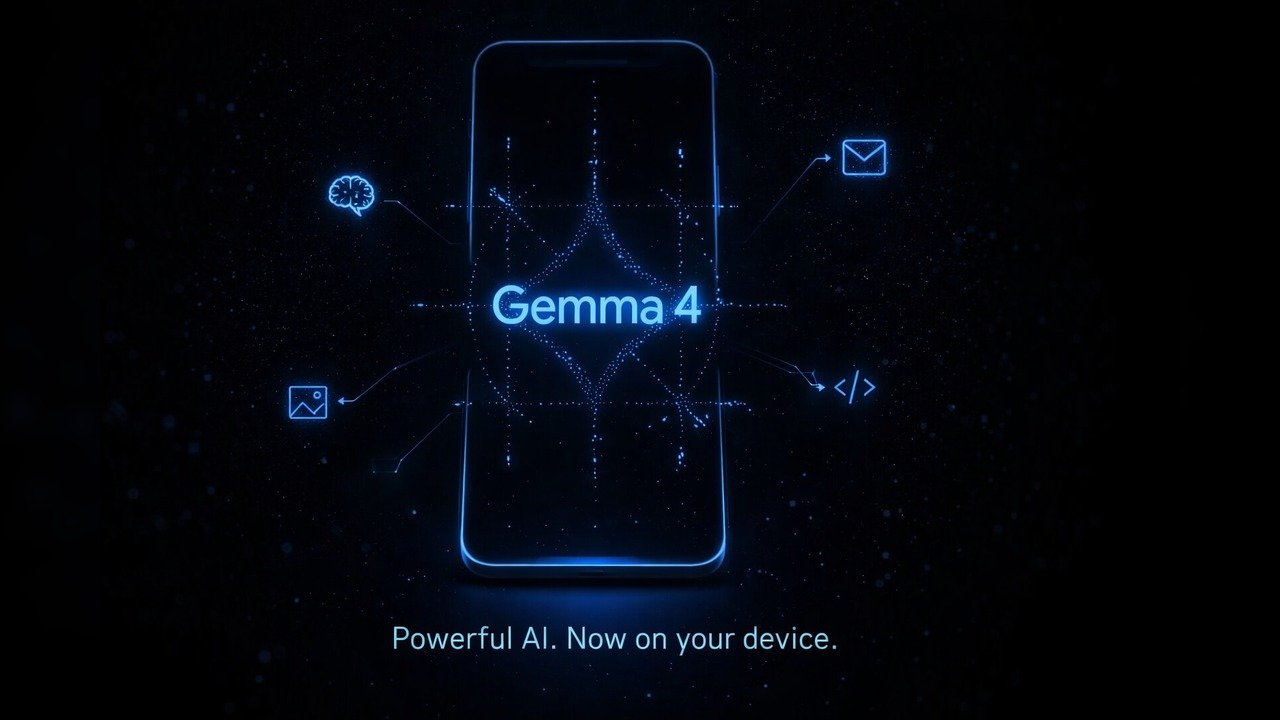
In a significant step toward making artificial intelligence more accessible, Google has introduced Google Gemma 4, a compact yet powerful AI model designed to run directly on personal devices including smartphones. Unlike many cloud dependent systems, this model can function even without an internet connection, opening new possibilities for users and developers alike.
One of the standout features of Gemma 4 is its ability to operate locally on devices. This means users can perform tasks such as coding, data analysis, and even multimedia processing without relying on external servers. From handling images and videos to processing audio inputs, the model is built to deliver strong performance despite its lightweight design.
Google has released the model under the Apache 2.0 license, making it open and highly customizable. Developers can download, modify and adapt the system according to their needs, encouraging innovation across industries. This flexibility has already contributed to a growing ecosystem, with hundreds of thousands of variations reportedly built on earlier Gemma versions.
The model is available in multiple configurations, catering to different levels of computing power. Smaller variants are optimized for mobile and edge devices, while larger versions are intended for high performance systems. This approach allows the same technology to scale from smartphones to advanced computing environments.


Another key advantage is its multilingual capability. Gemma 4 supports more than 140 languages, making it useful for global users and applications. It is also trained for advanced reasoning and agent driven workflows, meaning it can interact with other tools and perform tasks with minimal human intervention.
Compatibility is another area where Gemma 4 stands out. It can be used across platforms including Android devices and Windows systems, ensuring broad accessibility for both everyday users and professionals.
The launch also signals increasing competition in the AI space, where models like ChatGPT and Microsoft Copilot have already gained widespread adoption. By focusing on offline functionality and lightweight performance, Google is positioning Gemma 4 as a practical alternative for users who value privacy, speed and independence from constant connectivity.
As AI continues to evolve, tools like Gemma 4 highlight a shift toward more personal and device based intelligence. For users, this could mean faster responses, better data control and smarter devices that work seamlessly even without the cloud.