
Muslim women can enter mosques but cannot insist on specific entry: AIMPLB tells Supreme Court

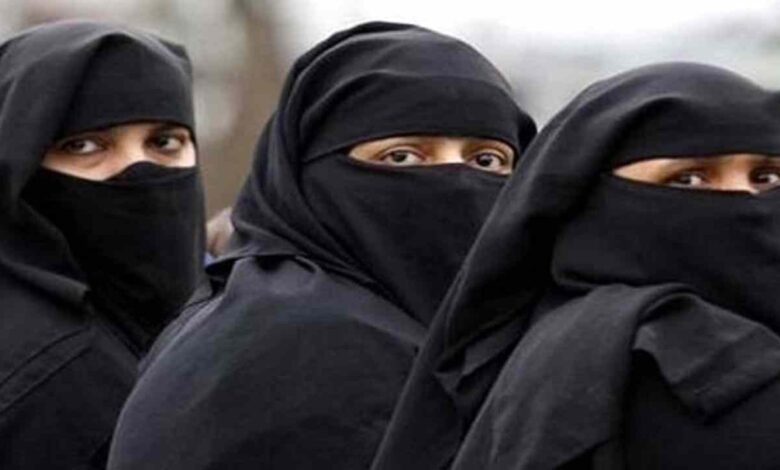
New Delhi: The All India Muslim Personal Law Board on Friday informed the Supreme Court of India that Muslim women are permitted to enter mosques and offer prayers, but cannot insist on entering through a particular gate or demand removal of barriers separating men and women.
The submission was made before a nine-judge Constitution Bench hearing issues arising out of the Sabarimala case reference. Senior advocate M.R. Shamshad, appearing for AIMPLB, argued that Islam is a well-documented religion with clearly defined practices regarding what is permitted, mandatory, or prohibited.
He told the bench that there is no dispute among Islamic schools of thought regarding women entering mosques for prayers. However, certain disciplines and practices must be followed. “There is no prohibition on women offering prayers in mosques, but religious norms and customs need to be respected,” he submitted.
Clarifying further, Shamshad stated that while Islam does not bar women from visiting mosques, they cannot insist on accessing the premises through the main entrance or demand structural changes such as removal of partitions meant to maintain separation between men and women during prayers.


The arguments were presented in response to a writ petition seeking a declaration that women should be allowed to offer prayers in mosques without restrictions. The counsel emphasised that mosques do not have a sanctum like temples, and therefore no individual can claim a right to a specific place within the premises for offering prayers.
Responding to queries from Chief Justice Surya Kant, the counsel reiterated that there is a consensus across Islamic traditions that women are allowed to enter mosques. Justice Ahsanuddin Amanullah also observed that historically, there has been no dispute regarding women’s entry into mosques and that such practices date back to the time of the Prophet.
Shamshad agreed, adding that Islamic teachings clearly state that women should not be prevented from visiting mosques. However, he pointed out that while congregational prayers are mandatory for men, they are not compulsory for women.
He further submitted that women praying at home is often considered preferable, as they receive equivalent spiritual benefits. Nonetheless, if a woman chooses to visit a mosque, she is permitted to participate in congregational prayers.
During the hearing, the bench also discussed practical considerations, with Justice Amanullah noting that historically, one of the reasons cited for women not attending mosques in large numbers was the need for someone to remain at home to take care of children.
The matter has once again brought into focus the balance between religious practices and constitutional rights, with the court examining the extent to which essential religious practices can be regulated.