Four minority candidates, including two Hindus, win in Bangladesh general elections

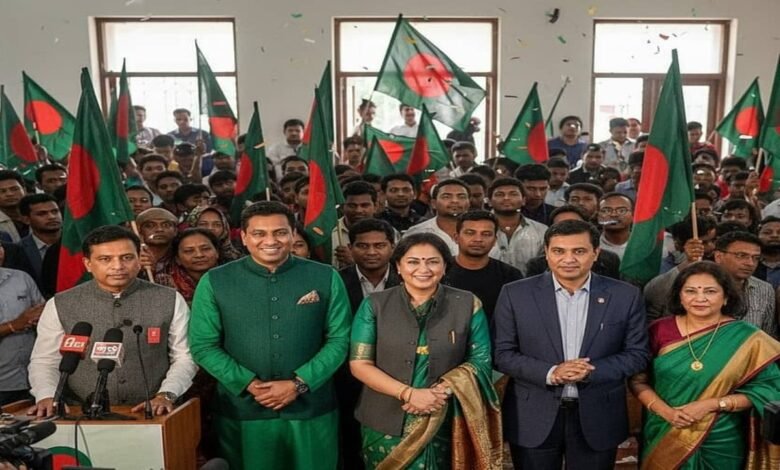
Dhaka: Four candidates belonging to minority communities, including two Hindus, have secured victory in Bangladesh’s general elections, marking a significant moment in the country’s parliamentary politics. The two Hindu leaders were elected on tickets from the Bangladesh Nationalist Party (BNP), which is set to form the government on Tuesday, February 17.
The victorious Hindu candidates are Goyeshwar Chandra Roy and Nitin Roy Chowdhury, both senior leaders of the Bangladesh Nationalist Party. Goyeshwar Chandra Roy won from a Dhaka constituency, while Nitin Roy Chowdhury emerged victorious from the West Magura seat. Both defeated candidates fielded by the Jamaat-e-Islami party.
Goyeshwar Chandra Roy is a member of the BNP’s policy-making standing committee and is considered a key strategist within the party. Nitin Roy Chowdhury serves as a vice-president and senior adviser in the party hierarchy. Their victories are being viewed as politically significant, especially in the context of minority representation in Bangladesh’s legislature.


In addition to the two Hindu leaders, two other minority candidates have also won seats. Sachin Prue, who belongs to the Buddhist faith and hails from the Marma tribal community of Bandarban district, was elected on a BNP ticket. He defeated a candidate from the National Citizen Party in his constituency.
Another winner, Dipen Dewan, belongs to the Chakma community, which traditionally follows Buddhism. He won from the Rangamati constituency in southeastern Bangladesh. However, Dewan identifies himself as a Hindu. He secured victory by defeating an independent candidate.
Bangladesh, with a population of nearly 170 million, has an estimated Hindu population of around 8 percent. Minority representation in parliament has often been a subject of debate in the country’s political discourse.
According to the Election Commission, 79 candidates from minority communities, including 10 women, contested the elections. Of these, 67 were fielded by political parties, while 12 contested as independents. The Communist Party of Bangladesh (CPB) had fielded the highest number of minority candidates, nominating 17 individuals.
The BNP’s electoral success and the inclusion of minority representatives in the new parliament are expected to draw both domestic and international attention as the party prepares to assume office and outline its governance priorities.