Toll hike from April 1 shocks commuters across Karnataka

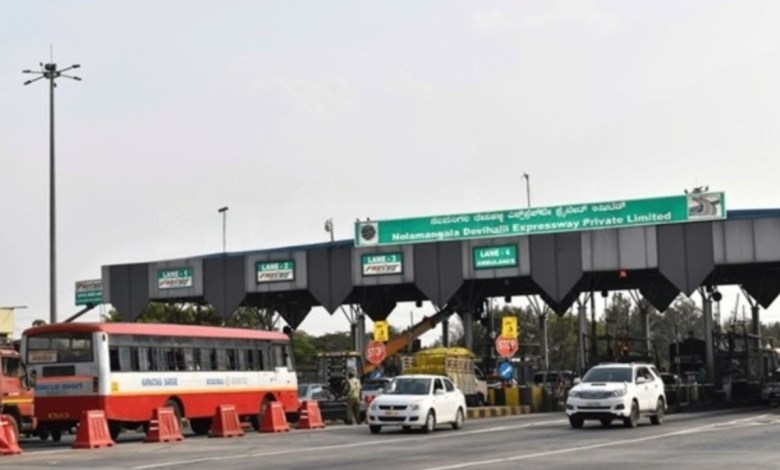
Bengaluru ; In a major development that will impact lakhs of daily commuters, the National Highways Authority of India (NHAI) has announced an increase in toll charges across national highways, effective from April 1. The decision, which coincides with the beginning of the new financial year, is expected to raise toll fees by 4 to 5 percent on key routes in Karnataka.
The revised toll rates will be applicable across nine major national highways, including the busy Bengaluru–Mysuru Expressway, Bengaluru–Tumakuru, Bengaluru–Hyderabad, and Bengaluru–Hassan corridors. These highways are considered crucial economic lifelines, connecting major cities and facilitating trade and passenger movement across the state.
As per the new rates, all categories of vehicles except two-wheelers and three-wheelers will be affected. Cars, buses, and heavy vehicles such as trucks will have to pay higher toll charges at plazas. In addition, the cost of the annual toll pass has also been revised. The pass, which earlier cost ₹3,000, will now be priced at ₹3,075, adding to the financial burden on frequent highway users.


The highways witnessing the toll hike include key stretches of National Highways 48, 275, 44, 75, 66, 50/52, 150A, and 766. These routes connect major economic hubs such as Mumbai, Mangaluru, Hyderabad, and Mysuru, making the impact of the hike widespread.
The decision has triggered strong reactions from commuters and transport operators. Many have expressed dissatisfaction over the annual increase in toll charges, questioning the rationale behind repeated hikes. “Our salaries increase by barely 1–2 percent annually, but toll fees go up by 5 percent every year. This is unfair,” said a vehicle owner.
Transporters have also raised concerns that the increased toll costs will ultimately be passed on to consumers through higher prices of goods and services. With inflation already affecting essential commodities, the additional burden of toll hikes is likely to worsen the situation.
Despite criticism, officials maintain that the annual revision is part of a standard policy linked to inflation and maintenance costs of highways. However, for the common man, the hike comes as yet another expense in an already strained economic environment.