Severe Drought Empties Bagalkot Village as Families Leave in Search of Work
A prolonged monsoon failure has forced hundreds of families from a Bagalkot village to migrate for livelihoods leaving locked homes silent streets and growing calls for urgent government relief and jobs.

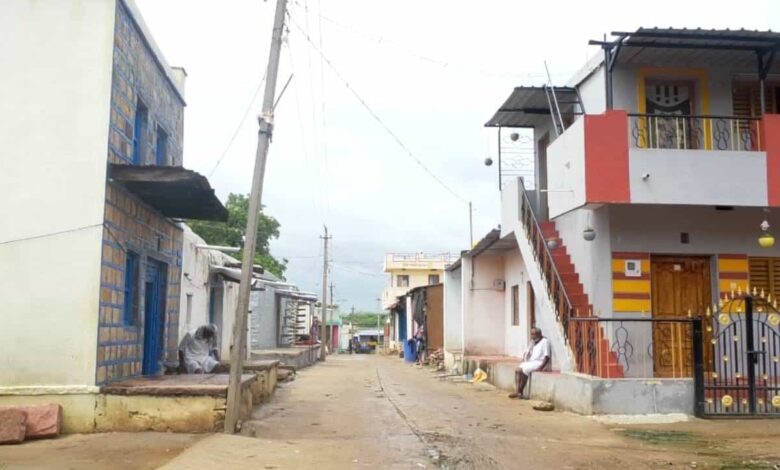
A deepening drought has transformed Lingapur village in Karnataka’s Bagalkot district into a place of silence, with most families leaving their homes behind in search of work. Failed monsoon rains have disrupted farming, leaving fields barren and forcing residents to migrate to other parts of the state and neighboring regions to earn a living.
The impact is visible throughout the village. Streets that once bustled with daily activity are now lined with locked houses, while only a few elderly residents remain behind. With younger family members away for work, many senior citizens spend their days waiting and hoping for better rainfall and improved conditions.
Lingapur, located in Guledagudda taluk, has been among the worst affected areas after the monsoon failed to bring sufficient rainfall. Farmers either could not begin sowing this season or watched their crops wither after planting. With agriculture coming to a standstill, employment opportunities in the village have almost disappeared.
Residents say the lack of farming activity has also reduced opportunities for agricultural laborers. Many villagers claim that employment under government rural job schemes has not been available consistently, making survival even more difficult. As a result, entire families have moved to cities and states such as Mangaluru, Udupi and Goa in search of daily wage work.

According to local estimates, nearly 80 percent of the homes in the village are currently locked. Lingapur has more than 300 houses and a population of around 1500 to 2000 people. Since most residents depend directly on farming and agricultural labor, the drought has affected almost every household. Families have packed their belongings and left with their spouses and children, while in some cases elderly parents have stayed back to look after their homes.
The emotional toll is equally severe. Elderly villagers say they have been left behind because younger members had no option but to migrate for work. They describe the village as unusually quiet, with very few young people remaining. The absence of rain has not only damaged crops but also disrupted the social fabric of the community.
The migration is not limited to Lingapur alone. Reports indicate that residents from several nearby villages including Teggi, Kelavadi, Karadigudda, Hamsanur, Muttalagere, Mushtigere and Adagal have also left their homes due to the worsening drought. Local communities say the crisis has spread across more than a dozen villages in the region.
Villagers are now urging government officials and elected representatives to visit the affected areas, assess the situation firsthand and provide immediate financial relief to struggling farmers. They believe timely assistance is essential to help families cope with the ongoing crisis and prevent further migration.
Many residents have also stressed the need for long term solutions instead of temporary relief measures. They argue that the region requires more industries and manufacturing units to create stable employment opportunities beyond agriculture. According to locals, the presence of factories could provide an alternative source of income during years when rainfall fails and farming becomes impossible.
As drought conditions continue to affect rural Karnataka, Lingapur has emerged as a stark reminder of how climate uncertainty can reshape entire communities. With livelihoods disappearing and villages steadily emptying, residents hope authorities will respond quickly with both immediate support and sustainable development plans to reduce future dependence on seasonal rainfall.