Middle East war hits cardamom garland trade in Haveri

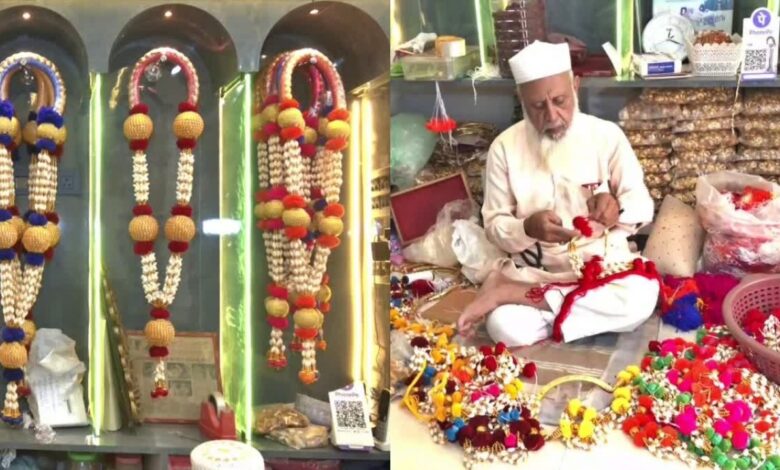
Haveri: The ongoing tensions and conflict involving Iran, Israel and the United States are beginning to affect livelihoods far beyond the war zone. In Karnataka’s Haveri district, artisans who make traditional cardamom garlands say their business has sharply declined due to disruptions caused by the crisis in the Middle East.
With tensions escalating, shipping routes in the strategic Strait of Hormuz have been affected, leading to uncertainty in the movement of ships carrying oil and other commodities. Several countries, including India, which rely on Gulf nations for crude oil and LPG supplies, are facing supply concerns.
The Indian government has also issued guidelines to ensure smooth distribution of LPG cylinders and warned of strict action against black marketing, illegal hoarding and attempts to create artificial shortages.
However, the ripple effects of the Middle East crisis have reached an unexpected sector — the traditional cardamom garland industry. These garlands are commonly used to honour Muslim pilgrims before they depart for the Umrah pilgrimage.

Due to the ongoing tensions in the region, flights to Saudi Arabia have been severely disrupted, affecting Umrah travel. Muslim pilgrims usually visit the holy cities of Mecca and Medina during the pilgrimage, where they perform religious rituals including circumambulation of the Kaaba.
With many flights cancelled, pilgrims who had travelled to international airports such as Mumbai to begin their journey are now returning home. As a result, traditional farewell ceremonies organised for pilgrims have almost come to a halt.
In these ceremonies, family members and friends usually honour pilgrims with multiple cardamom garlands before they depart. According to local traders, when one person left for Umrah, more than 50 garlands would often be sold.
Cardamom garland maker Usman Saab said the current situation has severely hit their seasonal business. “During these months, thousands of cardamom garlands used to be sold. Now only a few are being sold for small local events. Earlier, pilgrims would even carry these garlands as gifts for people in Saudi Arabia, but demand has dropped sharply,” he explained.
Another artisan, Haider Ali Patwegar, said the war has almost brought their trade to a standstill. “Earlier we used to sell between 1,000 and 2,000 garlands a month during the Umrah season. Now we are barely selling even one. Meanwhile, petrol prices have increased and the cost of materials has risen by nearly 20 per cent. Despite this, we are forced to sell at old prices because customers are fewer,” he said.
Local traders say the crisis has highlighted how global conflicts can impact even small, traditional businesses in distant regions. The cardamom garland makers in Haveri now hope that peace returns soon so that international travel resumes and their seasonal trade can recover.