Hippopotamus that killed vet dies at Shivamogga safari after health complications

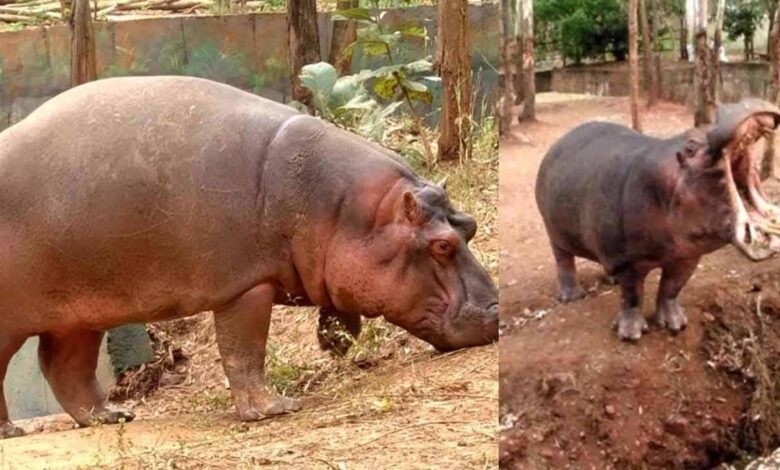
Shivamogga : In a significant development, Hamsini, the hippopotamus that had attacked and killed a veterinarian last month, has died at the Tyavarekoppa Safari in Shivamogga.
The 12-year-old animal had been under intensive medical care after its health deteriorated in recent days. According to zoo authorities, Hamsini died on Tuesday afternoon at around 3:08 pm despite continuous treatment efforts by a team of expert veterinarians.
Hamsini had come into the spotlight following the tragic death of Dr. Sameeksha Reddy, who was fatally attacked by the animal on March 19 while administering treatment. The incident had shocked the state and raised concerns about safety protocols in wildlife facilities.
Following the attack, it was discovered that Hamsini was pregnant. However, the unborn calf died inside the womb, reportedly leading to severe infection and complications. Officials believe this condition significantly worsened the animal’s health in the days that followed.


Zoo Executive Director Amaraksan (as per officials) confirmed that despite sustained efforts, the animal could not be saved. A team of specialists had been monitoring Hamsini closely, providing treatment for infection and related complications.
Hamsini’s life had been marked by repeated reproductive challenges. The animal had previously given birth twice, but both calves died shortly after birth. This time, too, despite special care from zoo staff, the pregnancy ended tragically with the calf dying before birth.
The Tyavarekoppa Tiger and Lion Safari, a popular tourist destination in Shivamogga, had already been under scrutiny after the fatal attack on the veterinarian. The death of Hamsini has further deepened concerns regarding animal health management and safety measures at such facilities.
Authorities are expected to conduct a post-mortem examination to determine the exact cause of death. Meanwhile, officials have reiterated their commitment to reviewing safety and veterinary protocols to prevent similar incidents in the future.