Ravi Kumar questions govt on Quran verses, madrassa education in legislative council

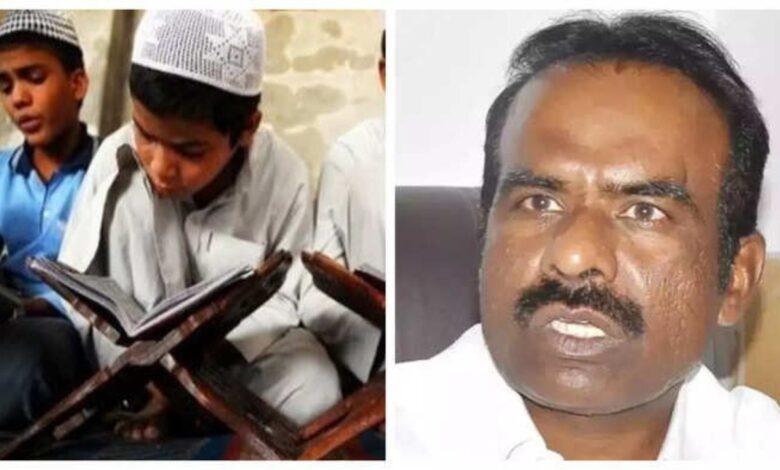
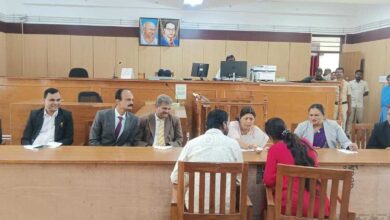
Bengaluru: BJP member of the Karnataka Legislative Council, N. Ravikumar, has sought clarification from the state government regarding certain verses in the Quran and their alleged contradiction with the principles of the Constitution of India.
Ravikumar raised the issue through an unstarred question and asked the government to explain its stand on whether specific Quranic verses could be interpreted as being against the constitutional values of a secular country.
In his first question, the BJP legislator referred to verses such as Surah Ayat 3:85, 9:5, 3:118, 3:28, 9:23 and 66:9. He asked the government to clarify whether these verses were being taught in madrassas and to provide the meanings and context of the passages.
Responding to the question, the state’s Department of Minority Welfare, Haj and Waqf stated that madrassas impart religious education and that the Constitution of India is based on secular principles. The department said the question regarding interpretation of religious scriptures does not fall within its jurisdiction.
In his second question, Ravikumar asked whether the government had taken note of concerns that children aged between three and ten studying in madrassas could be exposed to teachings that may create hostility towards people of other religions and potentially disturb social harmony.
The Minority Welfare Department replied that madrassas in the state provide value-based religious education and that the government has not received any information indicating that such education has caused disturbance to peace or law and order in society.
Ravikumar also raised a third question asking whether the government had come across instances where children receiving such religious education at a very young age later became involved in anti-social activities or destruction of public property.
He further asked whether the government had taken any action against madrassas or teachers if such cases had been reported. However, the department responded briefly stating that such a situation “does not arise.”
Speaking to reporters later, Ravikumar said he had raised the questions to seek clarity on the nature of education being imparted in madrassas, especially when institutions receive government facilities or benefits.
According to him, there should be transparency in the curriculum followed in such institutions. He also alleged that madrassas were not adequately promoting a sense of nationalism among children and called on the government to conduct an inquiry into the type of education provided there.
He further urged the government to constitute a committee of the legislature to examine madrassa education in the state.
Reacting to the issue, Congress MLA Rizwan Arshad criticised Ravikumar’s remarks, stating that such questions could affect harmony between communities.
In another question, Ravikumar sought details about the number of mosques in the state. The department replied that 10,859 mosques are registered with the Karnataka State Waqf Board.
The government also clarified that there are no separate rules under the Waqf Board specifically governing mosque construction and that mosques are built after obtaining necessary permissions from local authorities as per civic regulations.
The department further informed that no applications seeking permission for mosque construction had been submitted to the Waqf Board in the last three years.