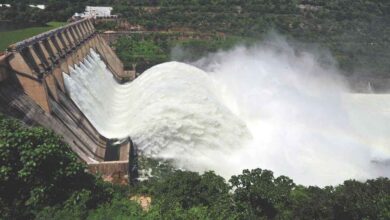
Karnataka Reservoir Water Levels on September 24
Karnataka reservoir levels on September 24 show varying storage across KRS, Kabini, Hemavathi and Almatti, with inflows and releases changing according to regional water management needs.

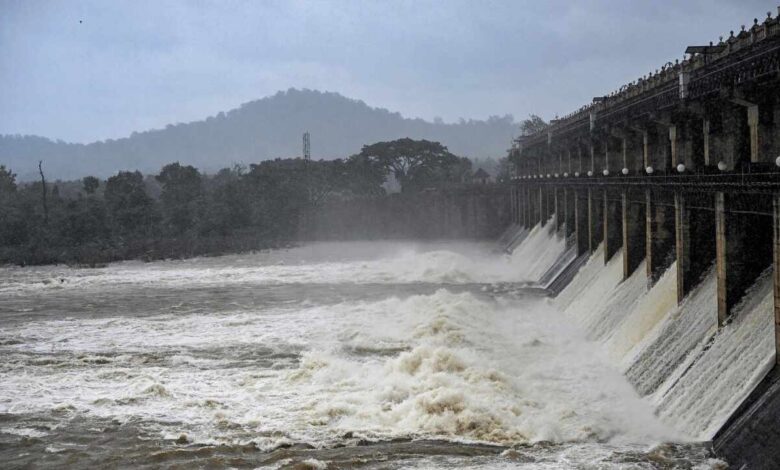
Water levels in Karnataka reservoirs continue to be closely watched as irrigation and water management activities remain dependent on storage conditions. Among the major reservoirs, KRS, Kabini, Hemavathi and Almatti are important indicators for the Cauvery and Krishna basin regions.
The latest figures for September 24 show noticeable differences between the four reservoirs. While Almatti is close to its maximum storage level, the Cauvery basin reservoirs are holding varying amounts of water and continuing to receive and release water at different rates.
The KRS reservoir in Mandya recorded a water level of 105.74 feet against its maximum level of 124.80 feet. The reservoir has a total storage capacity of 49.452 TMC, while the current storage stands at 27.653 TMC.
KRS is receiving an inflow of 2,546 cusecs, while the reported outflow is 4,078 cusecs. The difference between inflow and outflow indicates that water is currently being released from the reservoir at a higher rate than the amount entering it.


The Kabini reservoir in Mysuru district is another important storage point in the Cauvery basin. Its maximum level is 84 feet, while the current water level is reported at 68.63 feet.
Kabini has a total capacity of 19.52 TMC and currently holds around 11.02 TMC of water. The reservoir is receiving an inflow of 646 cusecs, while the total outflow is reported at 500 cusecs. No water is being released to canals according to the supplied figures. The area also recorded 2 millimetres of rainfall.
The Hemavathi reservoir in Hassan district is showing a different storage position. Its maximum level is 2,922 feet, corresponding to a capacity of 37 TMC. The current level is reported at 2,891.40 feet, with storage of 14.839 TMC.
Hemavathi is receiving around 895 cusecs of inflow. The reported releases include 300 cusecs into the river and 4,200 cusecs through canals. These releases make the reservoir an important part of ongoing water management in the Cauvery basin.
The current Hemavathi storage is also lower than the corresponding figure reported for the same date last year. At that time, the reservoir stood at 2,919.23 feet and held around 34.456 TMC. Last year, the reported inflow was 4,558 cusecs, with 1,400 cusecs released to the river and 4,875 cusecs released through canals.
The Almatti reservoir in Vijayapura district presents a different picture. Built across the Krishna River in Nidagundi taluk, the Lal Bahadur Shastri Sagar reservoir is currently close to its maximum level.
Almatti has a maximum level of 519.60 metres. The September 24 reading provided for the reservoir is 518.94 metres, placing the water level close to the full reservoir level.
The reported inflow into Almatti is currently zero cusecs, while the outflow stands at 13,172 cusecs. Despite the absence of inflow in the supplied reading, the reservoir continues to release a significant quantity of water.
Recent reservoir reports also show that water conditions can change quickly depending on rainfall, upstream inflows and scheduled releases. A September 23 report, for example, recorded Almatti at 519.01 metres with an outflow of 13,172 cusecs, while KRS and Kabini were also recording substantial storage.
Daily reservoir information is particularly important during the monsoon and irrigation seasons. The National Water Data Portal maintains daily reservoir data collected from observation stations established by the Karnataka Water Department, providing a longer term record of water levels.
For farmers and communities dependent on these reservoirs, the figures provide an indication of the water available for irrigation and other requirements. However, a single days reading does not determine the overall water situation because storage can change with rainfall, inflow and planned releases.
The four reservoirs also serve different regions and river systems. KRS, Kabini and Hemavathi are closely connected with the Cauvery basin, while Almatti is a major reservoir on the Krishna River. Their water releases therefore have significance for agriculture and downstream water management in different parts of Karnataka.
The September 24 figures show that Karnataka reservoirs are not experiencing identical conditions. Almatti remains very close to its maximum level, while KRS, Kabini and Hemavathi have lower storage levels relative to their respective capacities.
Water levels will continue to change as rainfall and inflows fluctuate. For this reason, farmers, local authorities and other users generally need to follow updated reservoir data rather than relying on an earlier reading.