CAG Report Raises Concerns Over Bengaluru Metro Ridership and Revenue
Bengaluru Metro has fallen short of several passenger and revenue targets, while rising land acquisition costs and weak last mile connectivity have added financial pressure on the project.

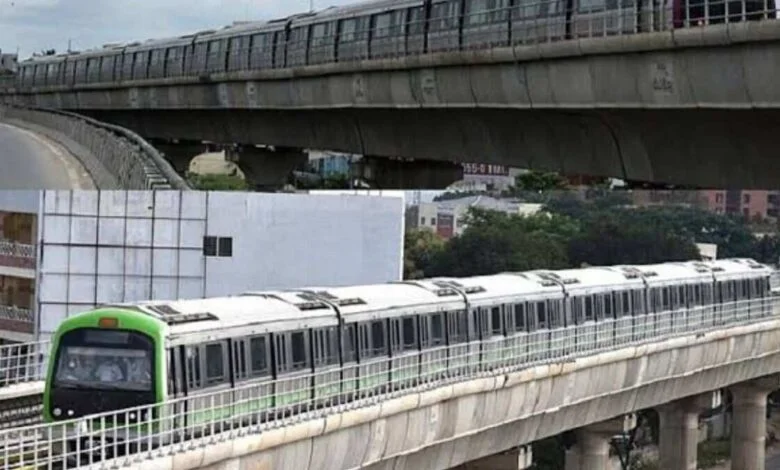
The Bengaluru Metro has come under scrutiny after a performance audit by the Comptroller and Auditor General of India highlighted a significant gap between projected passenger numbers and the actual traffic recorded on the network. The report, which examines the implementation of Phase 1 and Phase 2 of the Bangalore Metro Rail Project, has also pointed to substantial increases in land acquisition expenses and weaknesses in connectivity around several stations.
According to the audit findings, the metro system did not achieve the passenger levels that had been projected during the planning stages. The lower ridership had a direct impact on fare revenue, leaving the Bangalore Metro Rail Corporation Limited with a considerable gap between expected and actual earnings.
The report noted that between 2016 and 17 and 2022 and 23, the metro was expected to generate fare revenue of Rs 7,736.70 crore. However, the actual collection during the period stood at only Rs 1,758.13 crore. This means the system achieved just 22.72 percent of the revenue projection.
Passenger traffic was another major concern raised by the audit. In 2021, the peak hour peak direction traffic ranged between 6,429 and 8,852 passengers. The figure was considerably below the benchmark of 15,000 passengers that was considered for a heavy metro system. The CAG also observed that the original passenger target prepared in 2007 had still not been achieved by 2023.
The report suggests that the issue is not simply about the number of people using the metro. The ease with which passengers can reach stations and continue their journey after getting off the train also plays an important role. In several areas, the lack of convenient last mile transport, limited integration with BMTC services and inadequate parking facilities have made metro travel less convenient for some commuters.
This connectivity issue is particularly important in a city such as Bengaluru, where daily travel often involves multiple modes of transport. A passenger may reach a metro station easily but still face difficulty getting from the station to home, school, college or workplace. Better coordination between metro services, buses, feeder transport and other forms of public mobility could therefore have a direct impact on ridership.
The CAG report has also raised questions over the sharp increase in land acquisition expenses. The total additional cost identified under Phase 1 and Phase 2 was Rs 6,603.39 crore. Of this amount, Rs 835.81 crore was linked to Phase 1, while Phase 2 accounted for Rs 5,767.58 crore.
The audit found differences between the land originally estimated as necessary and the land eventually acquired. For Phase 1, the requirement was initially estimated at 45.24 hectares, while 62.67 hectares was acquired. In Phase 2, the estimated requirement stood at 165.09 hectares, compared with 145.16 hectares eventually acquired.
Delays connected with land acquisition also increased the financial burden. The report pointed to an additional interest cost of Rs 186.86 crore resulting from delays. Another Rs 294.72 crore was identified as additional compensation paid for land.
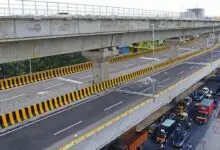
Access to some metro stations has also emerged as a concern. The audit specifically mentioned stations such as Nagasandra, Peenya, Peenya Industrial Area, Jalahalli and Dasarahalli, where suitable pedestrian facilities for crossing national highways were found to be lacking. The absence of adequate foot overbridges or underpasses can create difficulties for passengers, particularly those who depend on walking or public transport to reach stations.
The financial health of the metro corporation has also attracted attention. The CAG stated that BMRCL recorded losses during the period from 2013 and 14 to 2021 and 22. Since its own revenue was not sufficient to meet external debt repayment obligations, the corporation continued to depend on the state government.
The audit further highlighted the underuse of metro related properties. Around 2.23 lakh square feet of metro property remained vacant, according to the report. The unused space represented a potential commercial opportunity that was not fully utilised. The CAG estimated that BMRCL could have generated about Rs 38.53 crore in lease revenue from such assets.
The findings underline a broader challenge for Bengaluru Metro. Expanding the network is only one part of building an effective public transport system. Getting more people to use the network regularly also requires convenient station access, reliable feeder services, adequate parking and better coordination with other public transport options.
The revenue figures make the issue particularly significant. A metro system depends heavily on passenger traffic to support its operating and financial commitments. When ridership remains below projections, the pressure on other sources of funding naturally increases.
The CAG observations are therefore likely to renew attention on how Bengaluru can improve the overall metro experience rather than focusing only on adding new routes. Better station connectivity and stronger integration with BMTC could make metro travel more practical for commuters who currently depend heavily on private vehicles.
For BMRCL, the report provides several areas that may require attention as the network continues to expand. Improving access to existing stations, making better use of commercial properties and strengthening financial planning could help the corporation address some of the concerns raised by the audit.
The figures highlighted by the CAG present a clear picture of the challenges. Against the projected fare revenue of Rs 7,736.70 crore, the actual collection was Rs 1,758.13 crore. Land acquisition costs increased by Rs 6,603.39 crore, while additional compensation and interest added further expenses.
With Bengaluru continuing to experience heavy traffic and growing demand for dependable public transportation, improving metro ridership remains important. The audit findings suggest that future success will depend not only on constructing more kilometres of metro lines but also on making the existing system easier, more accessible and financially sustainable for everyday passengers.