Motorola Edge 70 Max vs Samsung Galaxy A57 5G vs OnePlus 15R Which Premium Smartphone Offers the Best Value
Motorola Samsung and OnePlus are competing strongly in the premium smartphone segment with powerful processors advanced cameras large batteries and smooth displays giving buyers several impressive choices under Rs 60000.

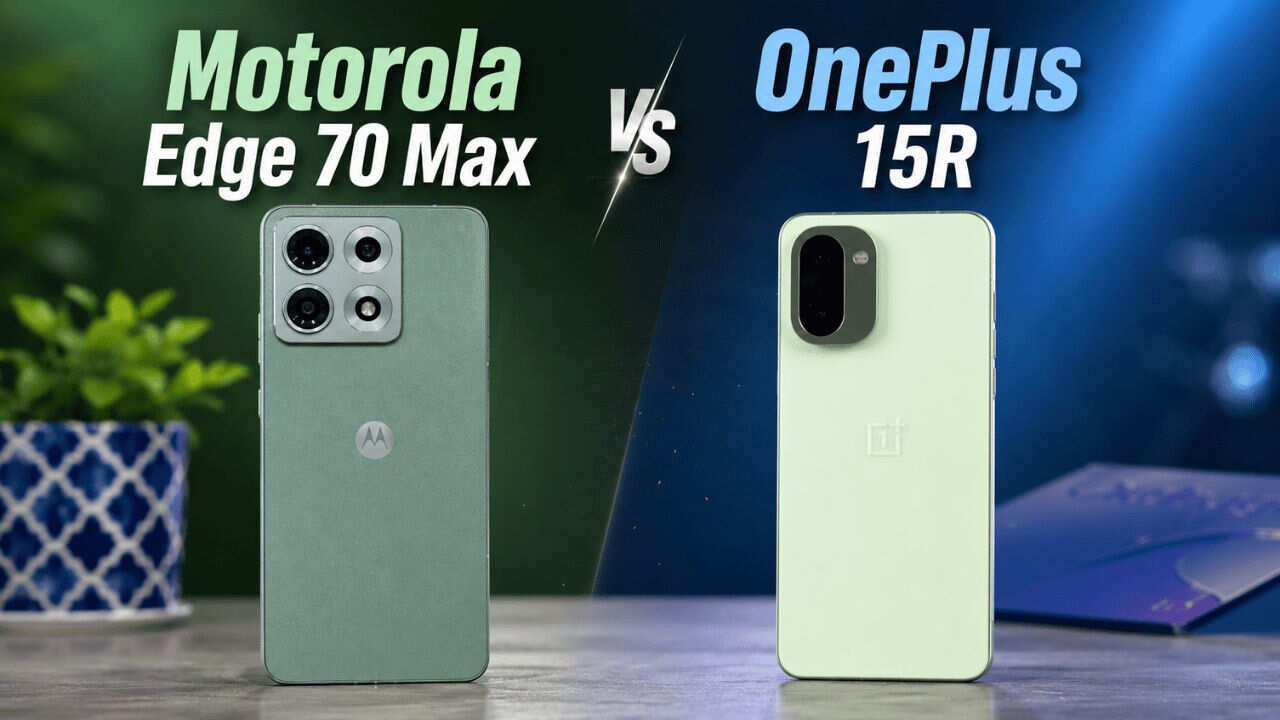
The premium smartphone market has become more competitive with the arrival of the Motorola Edge 70 Max, which now takes on the Samsung Galaxy A57 5G and OnePlus 15R. All three devices target users looking for flagship level performance, premium displays, advanced cameras and long battery life without crossing the Rs 60000 price range. While each smartphone brings its own strengths, the final choice depends on what users value the most.
Motorola has positioned the Edge 70 Max as a performance focused flagship with premium hardware. Powered by the Qualcomm Snapdragon 8 Gen 5 processor, the phone runs Android 16 with the Hello UX interface. It features a 6.8 inch Quad HD Plus Extreme AMOLED display with a 144Hz refresh rate and an impressive peak brightness of 7000 nits, making it suitable for gaming, multimedia and outdoor viewing.
Samsung continues to focus on balanced performance with the Galaxy A57 5G. The smartphone is equipped with the Exynos 1680 processor and runs Android 16 with One UI 8.5. It features a 6.7 inch Full HD Plus Super AMOLED Plus display offering a 120Hz refresh rate. While it may not match the higher resolution or brightness of Motorola, Samsung continues to deliver a polished software experience backed by its display expertise.
The OnePlus 15R also enters the competition with the Snapdragon 8 Gen 5 chipset and OxygenOS 16 based on Android 16. It offers a large 6.83 inch AMOLED display with 1.5K resolution and a variable refresh rate of up to 165Hz. This combination makes it an attractive choice for users who prioritize smooth visuals and responsive performance.


Battery capacity is another area where these smartphones differ significantly. Motorola includes a 7100mAh battery with support for 90W wired charging and 25W Qi2 magnetic wireless charging, providing both speed and convenience. OnePlus takes the lead in capacity with a massive 7400mAh battery paired with 80W fast charging, making it ideal for users who want extended battery life. Samsung, on the other hand, offers a more conventional 5000mAh battery, focusing on balanced daily usage rather than maximum endurance.
Camera performance remains a key factor for buyers. The Motorola Edge 70 Max features a 50 megapixel primary camera with optical image stabilization, supported by an 8 megapixel ultrawide and macro sensor. Samsung equips the Galaxy A57 5G with a 50 megapixel main camera, a 12 megapixel ultrawide lens and a 5 megapixel macro camera, offering greater versatility for different shooting situations. OnePlus also relies on a 50 megapixel primary sensor with optical image stabilization alongside an 8 megapixel ultrawide camera.
For selfies and video calls, Motorola and OnePlus both include 32 megapixel front cameras designed to capture detailed images, while Samsung opts for a 12 megapixel selfie shooter that focuses on reliable everyday performance.
Storage and pricing remain closely matched across the three smartphones. Motorola Edge 70 Max starts at Rs 54999 for the 8GB RAM and 256GB storage version, while the 12GB RAM variant is priced at Rs 59999. Samsung Galaxy A57 5G begins at Rs 53999 for the 8GB and 256GB model, with the higher variant costing Rs 57999. OnePlus offers its 12GB RAM and 256GB storage configuration at Rs 59999.
Connectivity features are equally modern across all three devices. Motorola includes dual SIM support, 5G, Wi Fi 7, Bluetooth 6.0, NFC, GPS and a USB Type C port. Samsung offers 5G, Bluetooth 6.0, NFC, GPS and USB Type C connectivity, while the OnePlus 15R also supports Wi Fi 7, Bluetooth 6.0, NFC, dual 4G VoLTE, 5G and USB Type C.
Each smartphone serves a different type of user. Motorola stands out with its high resolution display, fast charging and wireless charging support. OnePlus focuses on exceptional battery life and premium performance, while Samsung appeals to users looking for a refined software experience and dependable overall balance. With all three devices offering competitive specifications, buyers can choose the one that best matches their priorities and daily usage.