Moon Mystery Deepens After Scientists Trace Massive Impact Crater
A new scientific study suggests a giant asteroid nearly 260 kilometers wide slammed into the Moon billions of years ago, creating a colossal crater and uncovering clues about the Moon’s hidden interior layers.

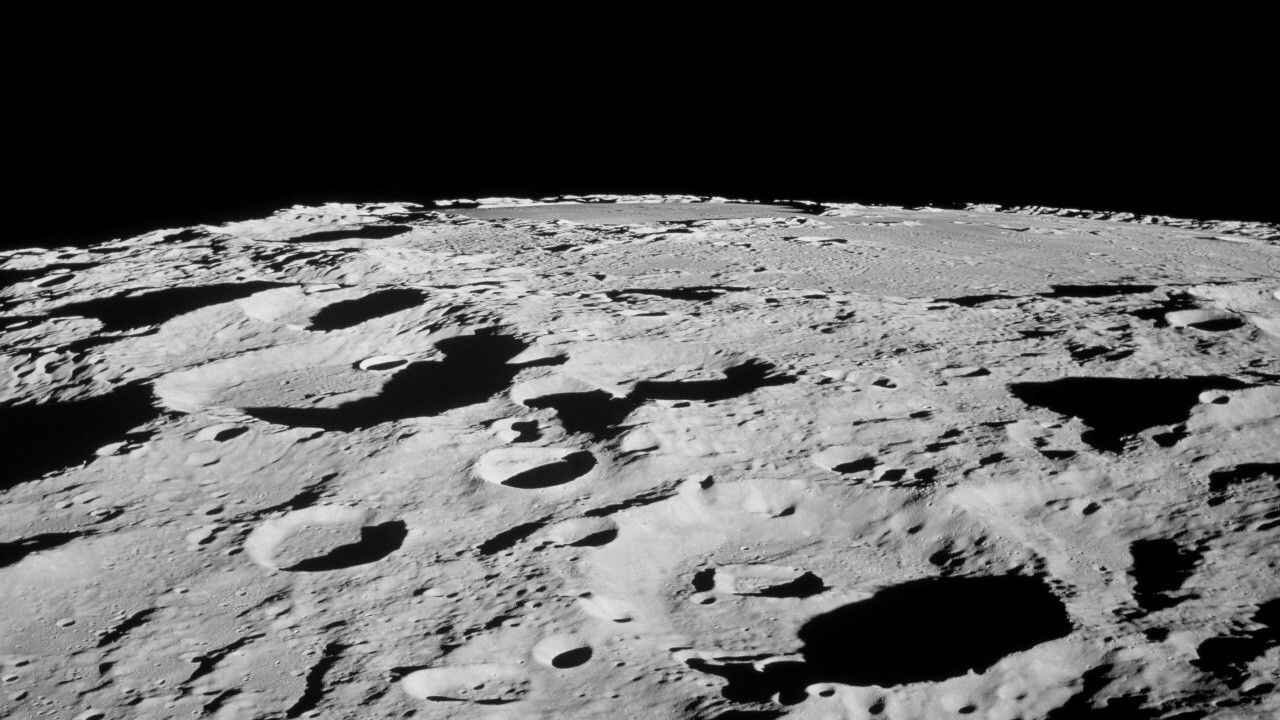
The Moon has always fascinated scientists with its giant scars and deep impact basins visible even through ordinary telescopes. Among them, the South Pole Aitken Basin stands out as the largest and most mysterious crater ever discovered on the lunar surface. Stretching nearly 2500 kilometers across, this enormous structure has once again become the center of global scientific attention after fresh research revealed how it may have formed.
According to recent findings, researchers believe a gigantic asteroid made of iron and rocky material crashed into the Moon at incredible speed, triggering one of the most violent events in lunar history. Scientists estimate the asteroid measured nearly 260 kilometers in width, making it one of the largest known objects to ever hit the Moon.
The latest conclusions were drawn after researchers carried out advanced 3D simulations to recreate the ancient collision. The study indicates that the asteroid likely struck the Moon at an angle of around 30 degrees while traveling at nearly 13 kilometers per second. The impact was so powerful that it may have blasted deep material from beneath the Moon’s crust toward the lunar south pole region.
Experts say this basin is not just another crater. It could contain valuable fragments from the Moon’s mantle, the hidden inner layer scientists rarely get a chance to study directly. These underground materials may help researchers better understand how the Moon formed and evolved over billions of years.


The findings have also increased excitement around future lunar missions. Scientists believe astronauts could potentially collect rock fragments from the South Pole Aitken Basin during upcoming Moon expeditions planned later this decade. Studying those samples on Earth may reveal the exact timeline of the asteroid collision and offer deeper insight into the early history of the solar system.
Researchers say every new discovery about the Moon opens another chapter in understanding space itself. While humanity has explored the lunar surface for decades, mysteries hidden beneath its craters continue to surprise even the world’s top astronomers.
The study has once again highlighted how a single cosmic event can reshape an entire planetary surface. For scientists, the giant basin is more than just a crater. It is a natural record of violent space history frozen on the Moon for billions of years.