Karnataka set for fresh liquor price hike under new AIB policy

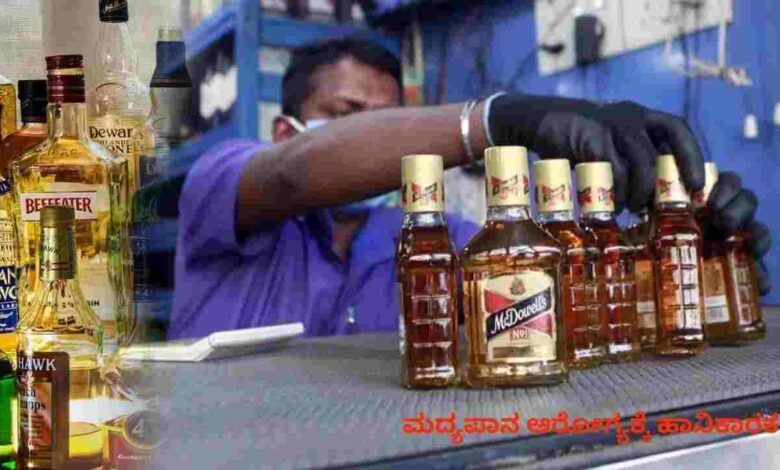
Bengaluru : Liquor prices in Karnataka are likely to rise once again, with the state government preparing to revise excise duty for the fifth time in the last few years. The new pricing structure, expected to come into force from May 1, is set to put additional financial pressure on regular consumers.
As per the draft notification, the government plans to introduce an Alcohol-in-Beverage (AIB)–based taxation system, under which the tax will be directly linked to the alcohol content in liquor. This means beverages with higher alcohol percentage will attract higher taxes, marking a shift from the existing slab-based approach.
While officials claim the move will bring more scientific and structured taxation, the immediate fallout is expected to be a price surge in commonly consumed liquor. Industry estimates suggest that the cost of popular categories like whisky, rum, brandy, and gin could increase by nearly 20 percent, particularly affecting lower and mid-range segments.


The first four slabs, which contribute nearly 80 percent of the state’s excise revenue, are likely to witness the steepest hikes. Prices of quarter bottles are expected to go up by ₹15 to ₹25 across these categories. Revised estimates indicate slab-1 prices may increase from ₹80 to ₹95, slab-2 from ₹95 to ₹110, slab-3 from ₹120 to ₹135, and slab-4 from ₹150 to ₹170.
For full bottles, consumers may have to shell out an additional ₹50 to ₹100 depending on brand and alcohol strength. The burden is expected to be even higher in bars and restaurants due to added service charges and taxes.
The proposed hike has drawn sharp reactions from consumers and traders alike. Many have criticised the government for frequent revisions, stating that repeated increases are straining household budgets. “Prices are going up every few months. It’s becoming unaffordable for common people,” said a customer.
Liquor vendors have also voiced concern, warning that higher prices could impact sales and push some consumers towards illegal alternatives. At the same time, there is a growing perception that the government is relying heavily on excise revenue to support its welfare schemes.
However, government sources maintain that the revision is aimed at streamlining the taxation system and improving revenue efficiency rather than targeting any specific group.
With the final notification awaited, the proposed changes are expected to significantly alter the liquor pricing landscape in Karnataka, while reigniting debates over taxation policies and their impact on consumers.