Low supply pushes mango prices up in haveri; Farmers, consumers feel the pinch

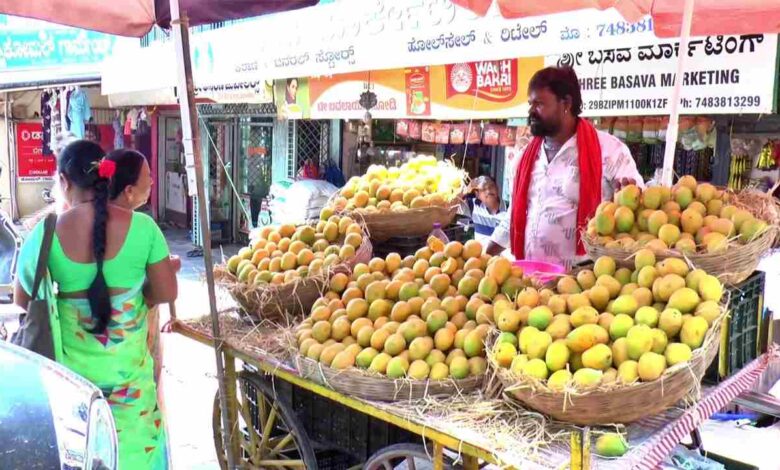
Haveri: Mango season has officially begun in Haveri, but soaring prices and low supply have cast a shadow over the typically associated with the fruit. Markets across the city, including busy stretches like M.G. Road, are witnessing brisk sales, even as customers react to higher costs.
More than 30 retail outlets and roadside stalls have sprung up, offering a range of mango varieties such as Alphonso, Neelam, Totapuri, and Ratnagiri. Prices currently range between ₹100 and ₹300 per kg, with premium and organic varieties costing even more.
“The season has just started, so supply is limited. Prices are high, but this is normal at the beginning,” said a trader. “Customers are surprised by the rates, but many still buy because mango is a favourite.”


The underlying issue, however, is a sharp drop in production. Mango cultivation in the district spans around 5,300 hectares, with Hanagal, Shiggaon, and Hirekerur being the main producing regions. This year, adverse weather and crop diseases have significantly reduced output.
“A new disease affecting mango flowers has damaged crops badly. Unseasonal rains and excessive moisture have worsened the situation,” said a farmer. “We are struggling even to recover our cultivation costs.”
Farmers say the losses are severe, with some reporting that even household consumption needs cannot be met. Traders who invest in orchards annually are also facing setbacks due to lower yields.
Consumers, meanwhile, are feeling the impact. “We used to buy more mangoes earlier, but now we are buying less due to high prices,” said a customer. “Even apples are cheaper this time.”
Despite the challenges, traders are optimistic that the situation will improve soon. “Supply will increase in the coming weeks, and prices are expected to drop,” a vendor noted.
The current trend highlights the vulnerability of seasonal fruits to climatic changes and market fluctuations. With mangoes available only for a limited period each year, both farmers and consumers are closely watching how the season unfolds in the coming weeks.