Independent Hindu candidate wins Muslim-majority ward in Godhra, sends strong message of social harmony

Ahmedabad : In a striking and symbolic outcome, the 2026 local body elections in Godhra have delivered an unexpected result, with an independent Hindu candidate securing victory in a ward where the entire electorate comprises Muslim voters.
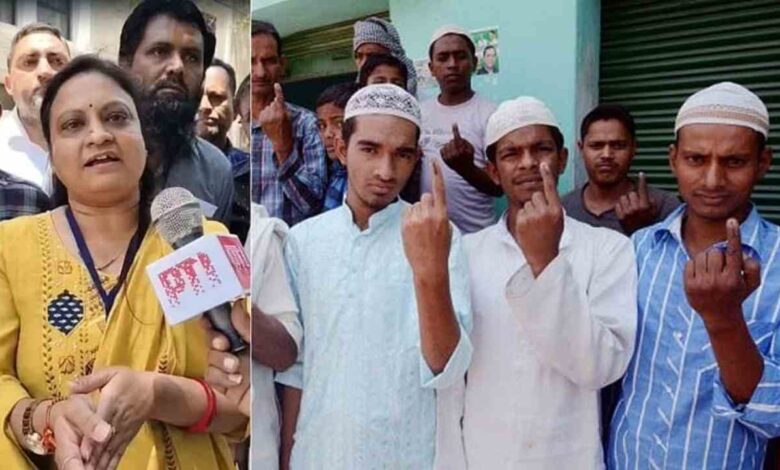
The result from Ward No. 7 of the Godhra municipality has drawn widespread attention, with political observers calling it a rare example of voters rising above religious lines. Independent candidate Apekshaben Naineshbhai Soni registered a convincing win, marking a historic moment in the town’s political landscape.
What makes the victory particularly noteworthy is that the ward is said to have nearly 100% Muslim voters. Despite this demographic reality, voters chose a candidate from a different community, signalling a shift in voting behaviour and priorities.


Analysts say the result challenges long-held assumptions about identity-based voting in sensitive regions like Godhra, which has often been in the news due to its communal history. The electorate, instead of aligning along religious lines, appears to have prioritised local issues, governance, and personal credibility.
“This is a significant departure from conventional patterns. Voters have demonstrated maturity by choosing a candidate they believe will serve their interests, regardless of religion,” a political analyst noted.
Interestingly, reports suggest that Apekshaben Soni was not even a registered voter in the ward, yet managed to build trust among residents through local engagement and outreach.
The outcome is being seen as a powerful message of communal harmony and social cohesion. By electing a Hindu woman from a Muslim-majority ward, voters have underlined that governance and trust can transcend identity divisions.
Observers believe this could serve as a model for other parts of the country, where elections are often influenced by caste and religious considerations.
Meanwhile, the broader results of the Gujarat local body elections indicate a strong performance by the Bharatiya Janata Party (BJP), which has tightened its grip across urban local bodies.
In Ahmedabad, the BJP won 146 out of 192 seats, leaving the Indian National Congress (Congress) with just 18. A similar trend was observed in Surat, where the BJP secured 115 seats, while the Aam Aadmi Party (AAP) managed only four.
In cities like Rajkot and Vadodara, the BJP continued its dominance, winning around 65 seats in each, while the Congress struggled to reach double digits.
While the BJP’s sweeping victory reflects its continued electoral strength in Gujarat, the Godhra result stands out as a unique and symbolic development. It highlights a changing voter mindset, where performance and trust may be beginning to outweigh traditional identity factors.
Political observers say the result could have long-term implications for electoral strategies, especially in regions with diverse populations.
Overall, the Godhra Ward No. 7 outcome is being described as a milestone in local politics—one that underscores the potential for unity and progressive thinking in democratic processes.