Karnataka Reservoir Levels Show Mixed Picture as Almatti Nears Full Capacity
Heavy inflows have pushed Almatti close to full capacity while Basavasagar remains stable but major Cauvery basin reservoirs continue to hold significantly lower water compared with last year.

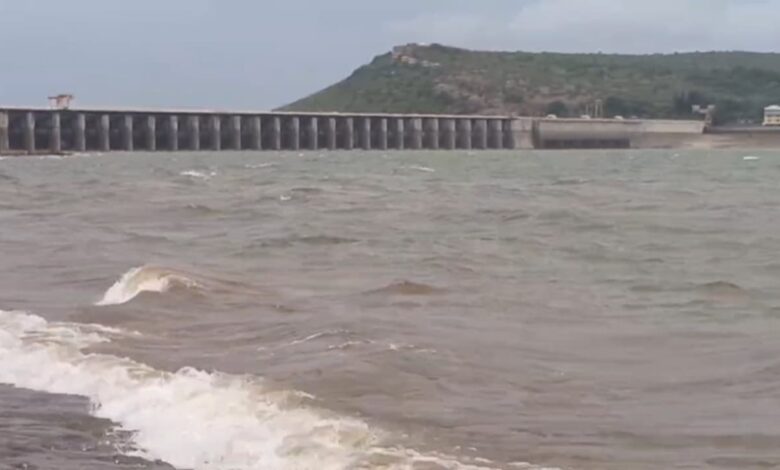
The water storage situation across Karnataka presents a mixed picture, with reservoirs in the Krishna river basin witnessing healthy inflows while several major dams in the Cauvery basin continue to lag behind last year’s levels. Among them, Almatti Dam is just a few feet away from reaching its full storage capacity, reflecting the impact of steady monsoon rainfall in northern parts of the state.
Almatti Reservoir in Vijayapura district has almost reached its maximum level. Built across the Krishna River near Nidagundi, the reservoir currently stands at 519.30 metres against its full reservoir level of 519.60 metres. The dam is receiving an inflow of more than 55000 cusecs, while authorities are releasing over 21000 cusecs downstream as a precautionary measure to regulate water levels and ensure safety.
Basavasagar Reservoir near Narayanpur in Yadgir district is also maintaining a strong storage position. The reservoir is currently at 492.20 metres, just below its maximum level of 492.25 metres. Around 25000 cusecs of water is flowing into the reservoir, with nearly 20500 cusecs being discharged into the river to manage the continuous inflow.
The situation is quite different in southern Karnataka. Hemavathi Reservoir near Gorur in Hassan district has recorded a noticeable decline in storage compared with the same period last year. Although the reservoir can hold up to 37 TMC of water, it currently contains only 23.753 TMC. Water levels stand at 2905.98 feet, well below last year’s 2920.89 feet, while inflows have dropped sharply to 6390 cusecs from more than 25700 cusecs recorded during the corresponding period last year.


Kabini Reservoir in Mysuru district has also experienced a significant reduction in both storage and inflow. The present water level is 75.28 feet compared with 81.97 feet on the same date last year. Water storage has fallen to 14.42 TMC from 18.22 TMC, while inflows have declined dramatically to 3594 cusecs compared with more than 31600 cusecs a year ago. Only 300 cusecs of water is currently being released from the reservoir, reflecting the reduced availability of inflows.
Krishnarajasagar Reservoir in Mandya district continues to remain well below its capacity. The reservoir has a maximum storage capacity of 49.452 TMC, but current storage is only 17.039 TMC. Water levels are at 91.80 feet, still below the 100 foot mark. The reservoir is receiving 2552 cusecs of inflow, while 1745 cusecs is being released downstream. Officials are hoping for improved rainfall across the Cauvery catchment area to boost storage in the coming weeks.
The latest reservoir data highlights the uneven distribution of monsoon rainfall across Karnataka. While northern districts have benefited from strong inflows into Krishna basin reservoirs, the Cauvery basin continues to await heavier rains to improve water availability. The coming weeks of the monsoon season will be crucial for increasing storage levels in the state’s key reservoirs and ensuring adequate water for irrigation, drinking needs and power generation.