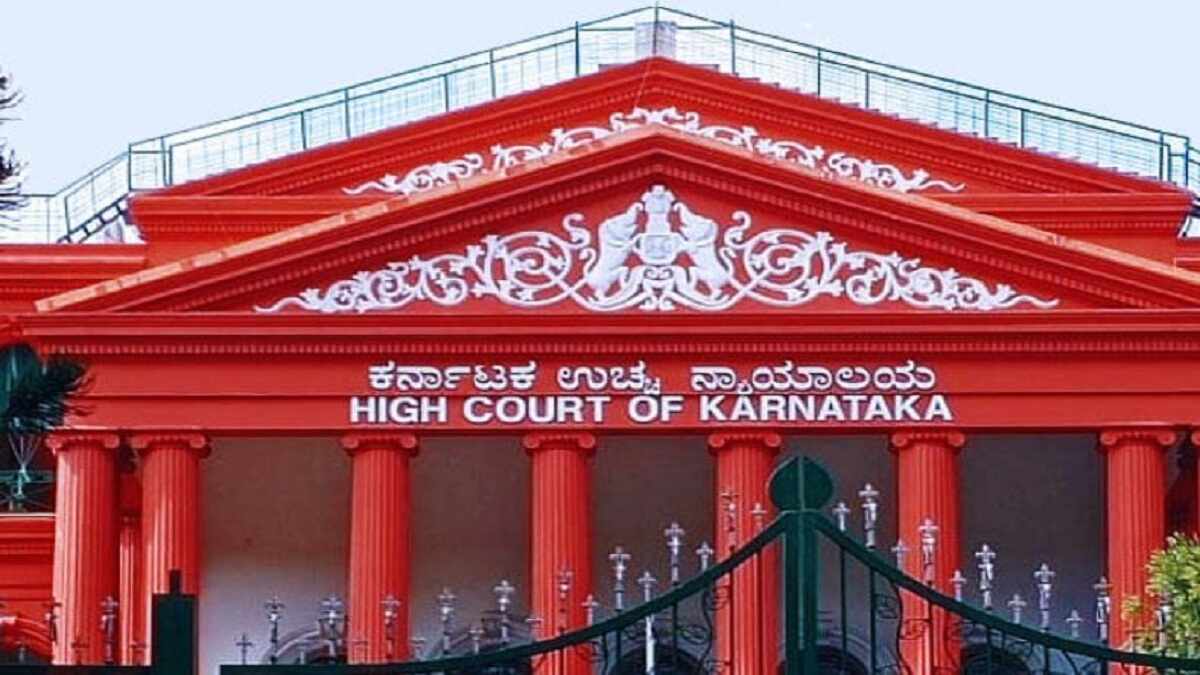
In a significant judgment, the Karnataka High Court has struck down the state government’s law and notification that increased reservation for Scheduled Castes (SC) and Scheduled Tribes (ST). The court ruled that the government’s decision to raise the overall reservation limit from 50% to 56% is unconstitutional.
The judgment was delivered by a Division Bench comprising Chief Justice Vibhu Bakhru and Justice K.S. Hemalekha. The previous state government had enacted a law increasing reservation for Scheduled Castes in educational institution admissions and state government recruitment from 15% to 17%, while reservation for Scheduled Tribes was raised from 3% to 7%.
As a result, the total reservation in Karnataka increased from the Supreme Court-prescribed ceiling of 50% to 56%. Challenging this decision, Mahendra Kumar Mishra and several others filed a Public Interest Litigation (PIL) before the Karnataka High Court, arguing that the increase violated constitutional limits.
While hearing the matter, the Division Bench referred to the Supreme Court’s landmark Indra Sawhney judgment, which laid down that the total reservation should ordinarily not exceed 50%, except in extraordinary circumstances.
The High Court observed that the state government had failed to establish exceptional circumstances or produce adequate empirical data to justify exceeding the constitutional ceiling. Holding that the increase lacked constitutional validity, the court struck down the relevant provisions of the law that enhanced the SC and ST reservation.
The ruling is expected to have a significant impact on ongoing recruitment processes and admissions to educational institutions across Karnataka where the revised reservation policy was being implemented. The Karnataka government is expected to challenge the High Court’s verdict by filing an appeal before the Supreme Court.