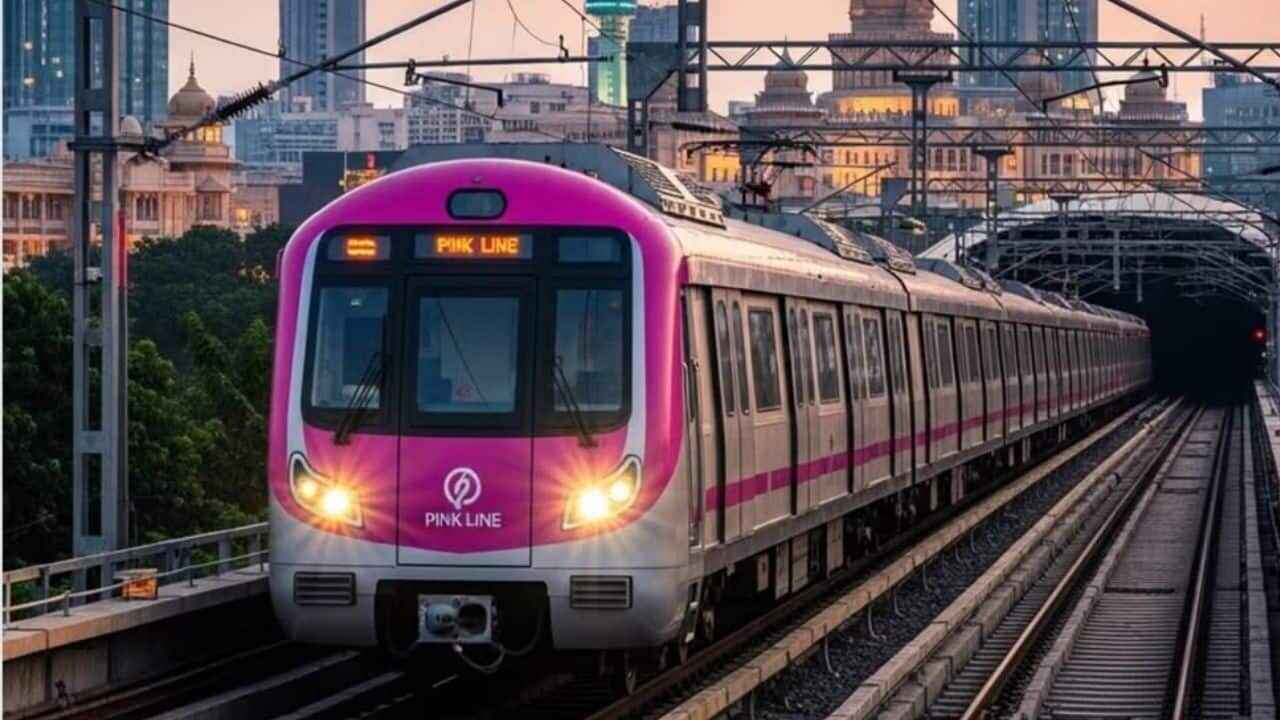
The long awaited elevated section of Bengaluru’s Namma Metro Pink Line is moving closer to commercial operations after the Railway Board gave temporary approval for the new BEML manufactured trains. The development removes one of the important regulatory hurdles before passengers can begin using the corridor.
The section covers about 7.5 kilometres between Kalena Agrahara and Tavarekere along Bannerghatta Road. BMRCL has been preparing the stretch for opening and has previously indicated that the corridor was ready for the required statutory inspections and approvals.
The next major step is the inspection by the Commissioner of Metro Railway Safety. Once the CMRS completes the inspection and provides the required safety clearance, BMRCL can move towards starting passenger services, subject to the remaining government procedures.
The Railway Board approval relates to the six coach trains that will operate on this section. The new train sets have been manufactured by Bengaluru based BEML and are designed to support modern signalling and automated train operation systems. BMRCL had earlier said the trains were undergoing prescribed testing before being deployed for passenger service.
According to the reported approval conditions, the trains will initially operate under Grade of Automation 2. GoA2 refers to a system where train operations are automated to a significant extent while an operator remains involved in the service.
The approved operating speed will also depend on the condition of the train’s secondary air suspension system. Under normal conditions, the permitted maximum speed is 80 kilometres per hour. If the secondary suspension system is deflated, the speed limit will be reduced substantially.
The Railway Board has kept the initial operation within the GoA2 framework rather than immediately allowing a fully unattended service. This approach allows the railway authorities to assess the performance of the trains and associated systems before moving towards higher levels of automation.
BMRCL has been working with advanced signalling technology on the Pink Line. The corridor uses communication based train control technology, which is designed to support automated train operation and closer control of train movements. The trains are also capable of supporting more advanced unattended operation in the future.
However, a move to higher levels of automation will require additional testing and approvals. The Unattended Train Management System will have to demonstrate its full capabilities, while the risks associated with remote and unattended operation will need to be assessed before a separate approval is considered.
The Pink Line has attracted attention because of its advanced technology as well as the difficult construction environment along the Bannerghatta Road corridor. The elevated section includes six stations and is expected to provide a new Metro connection for several busy southern Bengaluru neighbourhoods.
BMRCL has also planned frequent services on the section. Earlier reports indicated that trains could operate at intervals of around six minutes once the corridor becomes operational. The corporation has also been conducting mandatory trials before allowing the new trains to carry passengers.
The opening has been delayed several times in the past, making the latest Railway Board approval an important step for the project. The elevated portion was originally expected to open earlier, but train testing, statutory procedures and other requirements pushed back the launch schedule.
The Pink Line is part of the larger Kalena Agrahara to Nagawara corridor. While the elevated portion is being prepared for an earlier opening, the underground section involves considerably more construction work and is being developed separately.
For commuters in southern Bengaluru, the opening of the elevated stretch could provide another public transport option along one of the city’s heavily travelled corridors. The route includes the interchange at Jayadeva, which connects with the Yellow Line and provides an additional link within the expanding Metro network.
The new BEML trains are another notable part of the project. BMRCL officials have highlighted their high level of local content and their ability to work with advanced automated systems. The trains are expected to form an important part of Bengaluru’s future Metro operations as more automated corridors are introduced.
For now, the focus remains on completing the safety process. The CMRS inspection will be crucial before the Pink Line can begin carrying passengers. BMRCL has indicated that it is prepared to start services once the necessary clearances and government approvals are completed.
If the remaining procedures are completed as expected, the 7.5 kilometre elevated Pink Line section could soon move from testing and inspections to regular passenger operations. For Bengaluru commuters, the Railway Board approval marks another step towards finally bringing the new corridor into everyday use.