Voter List Revision Sparks Fresh Debate Over Reducing Greater Bengaluru Civic Corporations
Special voter list revision has triggered fresh discussions over Bengaluru civic restructuring as concerns grow about governance costs administrative efficiency and the future of five municipal corporations.

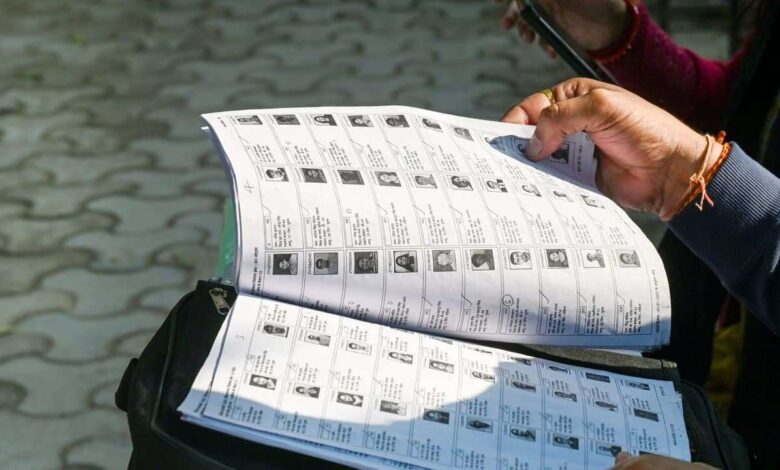
A fresh political and administrative debate has emerged in Karnataka after the ongoing Special Intensive Revision of the electoral rolls raised questions about the future of the five municipal corporations functioning under the Greater Bengaluru Authority. With estimates suggesting a sharp reduction in the city’s voter count following the revision exercise, several political leaders and civic observers have begun questioning whether maintaining five separate corporations remains financially and administratively practical.
The Greater Bengaluru Authority was introduced with the objective of transforming urban governance in the rapidly expanding metropolitan region. Replacing the earlier Bruhat Bengaluru Mahanagara Palike framework, the new authority was expected to decentralize administration, improve civic services and bring governance closer to residents by creating five independent municipal corporations.
However, nearly a year after the new administrative structure came into effect, the model is facing renewed scrutiny. The ongoing voter list verification process has become an unexpected factor influencing the discussion. According to estimates being circulated during the revision exercise, a significant number of names could be removed from the electoral rolls after verification, reducing the overall voter base in Bengaluru considerably.
If those estimates become reality, many believe the current administrative arrangement may require another review. Officials and political leaders have started debating whether five separate corporations are justified if the eligible voter population and corresponding administrative requirements decline substantially.


The Special Intensive Revision aims to ensure that electoral rolls remain accurate and free from duplicate, shifted or ineligible entries. While the exercise is intended purely for electoral purposes, its possible impact on population based administrative planning has become a major talking point in political circles.
Bengaluru currently functions under the Greater Bengaluru Authority with five municipal corporations managing civic responsibilities across different zones. The restructuring was expected to improve efficiency by allowing each corporation to focus on localized infrastructure, sanitation, road maintenance, public health and urban planning.
Supporters of the existing model argue that Bengaluru continues to grow geographically and economically despite fluctuations in voter numbers. They believe decentralization remains essential for handling the city’s expanding infrastructure demands, traffic congestion, waste management challenges and increasing population density.
On the other hand, critics argue that maintaining multiple corporations involves significant recurring expenditure. Administrative offices, staffing, salaries, operational expenses and infrastructure costs have increased considerably since the formation of the new governance system.
Several observers point out that some of the corporations are already facing financial challenges. Meeting routine administrative expenses, including salaries for officers and employees, has reportedly become difficult in certain areas. This has prompted discussions about whether a smaller number of corporations could function more efficiently while reducing operational costs.
Political discussions on the issue are no longer limited to one party. Opinions supporting a possible merger of corporations have reportedly emerged from leaders across both ruling and opposition camps. While no formal proposal has been announced, the conversation has gained momentum following the voter list revision exercise.
Those supporting consolidation believe that reducing the number of corporations from five to two could help improve financial sustainability. They argue that fewer administrative units would reduce duplication of departments, simplify governance and allow available funds to be directed toward public infrastructure instead of administrative overhead.
Others, however, caution against making decisions solely based on voter statistics. Urban planners emphasize that civic administration depends on multiple factors including population growth, geographical expansion, service delivery requirements, transportation networks and future development plans rather than electoral data alone.
The Greater Bengaluru Authority itself was created after years of discussions about improving governance in one of India’s fastest growing metropolitan regions. The previous civic structure often faced criticism over delays in project implementation, centralized decision making and uneven development across different localities.
The introduction of multiple corporations was intended to make governance more responsive by allowing local administrators to address area specific issues more quickly. Officials hoped that smaller administrative units would improve accountability while ensuring faster execution of civic projects.
Despite those expectations, the restructuring has remained a subject of political debate since its inception. Some welcomed the move as a long overdue reform, while others questioned whether creating additional administrative bodies would increase expenditure without delivering proportionate improvements in public services.
The latest voter revision has once again brought those concerns back into focus. Estimates suggesting that nearly half of the city’s earlier voter count could undergo changes after verification have intensified demands for reassessing the existing governance framework.
Experts note that any decision regarding the future of Bengaluru’s municipal corporations would require careful analysis rather than immediate political reactions. Administrative efficiency, financial sustainability, population projections and urban development priorities would all need to be examined before introducing structural changes.
Government officials have not yet announced any proposal to merge or reduce the number of corporations. The Special Intensive Revision process is still underway, and final voter figures will become available only after verification is completed. Until then, discussions remain largely speculative.
Meanwhile, civic groups have urged the government to maintain transparency throughout both the voter revision exercise and any future administrative decisions. They argue that residents deserve clarity regarding how electoral revisions might influence urban governance and public service delivery.
For Bengaluru, a city that continues to expand as India’s technology and innovation hub, governance remains one of the most important challenges. Whether the existing five corporation model continues or undergoes modification, experts agree that efficient administration, financial discipline and improved civic services should remain the primary objectives.
The coming weeks are expected to provide greater clarity as the voter verification exercise progresses. The final electoral data could influence future policy discussions, but any major restructuring of the Greater Bengaluru Authority will ultimately depend on broader administrative, financial and developmental considerations rather than voter numbers alone.
As debates continue, the focus remains on finding a governance model that balances administrative efficiency with the needs of millions of Bengaluru residents while ensuring sustainable urban development in the years ahead.