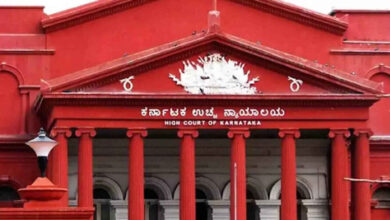
Karnataka High Court Grants Bail to Vinay Kulkarni in Yogesh Gowda Murder Case
The Karnataka High Court suspended Vinay Kulkarni’s sentence and granted bail bringing major legal relief while reopening discussions over his political future and possible return as legislator.

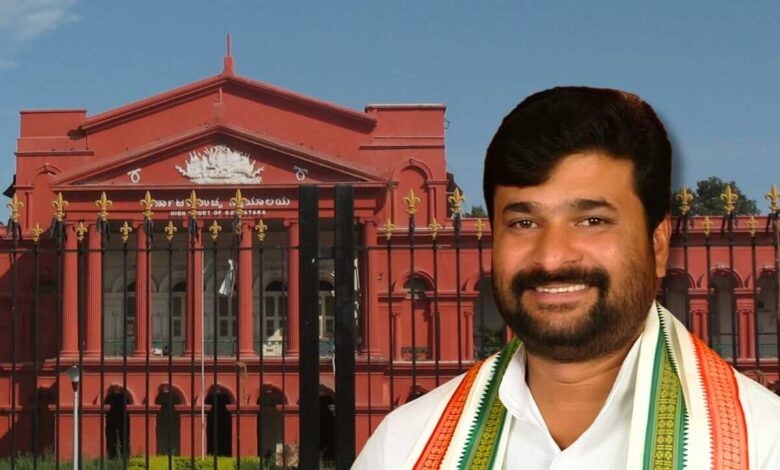
In a significant development in the high profile Yogesh Gowda murder case, the Karnataka High Court has granted bail to former minister and Congress leader Vinay Kulkarni while also suspending the sentence imposed on him by the trial court. The order has provided major legal relief to the senior politician and has immediately triggered political discussions across the state regarding the future of his legislative career.
The High Court delivered its order after hearing Kulkarni’s appeal challenging the conviction and sentence awarded by the special court earlier this year. Along with granting bail, the court also stayed the operation of the judgment that had declared him guilty. Legal experts believe this interim relief could have important implications until the final appeal is decided.
The bench comprising Justice Mohammad Nawaz and Justice G Basavaraja directed Vinay Kulkarni to execute a personal bond of Rs 5 lakh along with the required surety. The court also imposed conditions on his release, including a restriction preventing him from leaving the country without prior permission from the court.
The relief was not limited to Kulkarni alone. The High Court also granted bail to ten accused connected with the same case. Those who received bail include Chandrashekar Indi alias Chandu Mama, Dinesh, Ashwath, Sunil, Nazir Ahmed, Shanawaz, Nuthan, Harshith and Channakeshava Tingarikar. Their release is subject to compliance with the conditions imposed by the court.


The latest order marks a major turning point in a case that has remained one of Karnataka’s most closely watched criminal and political matters over the past decade. The murder of BJP leader Yogesh Gowda in Dharwad had sparked widespread attention, with allegations eventually leading investigators to examine the possible involvement of several individuals, including Vinay Kulkarni.
The incident dates back to June 15, 2016, when Yogesh Gowda was murdered in Dharwad. The seriousness of the allegations prompted authorities to transfer the investigation to the Central Bureau of Investigation. The CBI conducted an extensive inquiry before filing charges against multiple accused in the case.
Following years of investigation and court proceedings, a special court in Bengaluru delivered its judgment on April 17, 2026. The court held that charges relating to murder and criminal conspiracy against Vinay Kulkarni had been proved. Based on its findings, the court sentenced him to life imprisonment.
Apart from the life sentence, the special court also imposed seven years of imprisonment for charges relating to destruction of evidence. A financial penalty of Rs 30000 was also imposed. The court further directed that compensation amounting to Rs 16 lakh should be paid to the children and family members of the deceased BJP leader Yogesh Gowda from the penalty and compensation awarded under the judgment.
Following the conviction, Vinay Kulkarni lost his position as a legislator under the applicable legal provisions. The verdict also raised questions about his immediate political future and participation in public life. However, Kulkarni challenged the conviction before the Karnataka High Court, arguing that the trial court judgment required detailed judicial scrutiny.
After examining the appeal, the High Court decided to suspend the sentence during the pendency of the appeal and granted bail to the former minister. The court’s decision means that the conviction will now remain under judicial examination until the final disposal of the appeal. The suspension of the sentence does not amount to an acquittal, but it allows the appellant to remain on bail while the legal process continues.
Legal observers note that the suspension of the conviction and sentence could influence Kulkarni’s political prospects. Since his disqualification as a legislator followed the conviction, the High Court’s order has revived discussions about whether he may become eligible for restoration of his legislative position, depending on the applicable legal procedures and further judicial developments.
The order has generated mixed political reactions. Supporters of Vinay Kulkarni described the High Court decision as an important legal victory and expressed confidence that the appeal would ultimately establish his innocence. They argued that the court’s willingness to suspend the sentence reflected the need for a closer examination of the evidence presented during the trial.
On the other hand, political opponents maintained that the legal process is still underway and emphasised that the High Court has only granted interim relief pending the final outcome of the appeal. They stressed that the merits of the criminal case will ultimately be decided after a detailed hearing before the High Court.
The Yogesh Gowda murder case has remained politically sensitive because of the prominence of both the victim and the accused. Over the years, the proceedings have attracted considerable public attention, with each stage of the investigation and trial drawing widespread interest across Karnataka.
The High Court’s latest order now shifts the focus to the next phase of the legal battle. The appeal against the conviction will continue, during which both the prosecution and the defence will present detailed arguments before the court. The final judgment in the appeal will determine whether the conviction is upheld, modified or set aside.
For now, Vinay Kulkarni has secured substantial interim relief through the suspension of his sentence and the grant of bail. While the legal proceedings are far from over, the High Court’s decision has significantly altered the immediate course of one of Karnataka’s most closely followed criminal and political cases. The coming hearings are expected to play a decisive role in shaping both the legal outcome and the political future of the former minister.