Bengaluru to Use AI and Robotics to Strengthen Cauvery Water Supply Monitoring
Bengaluru Water Supply Board is preparing an AI driven pilot project using robotic technology to detect pipeline leaks contamination and faults early improving water quality reliability and distribution efficiency across selected areas.

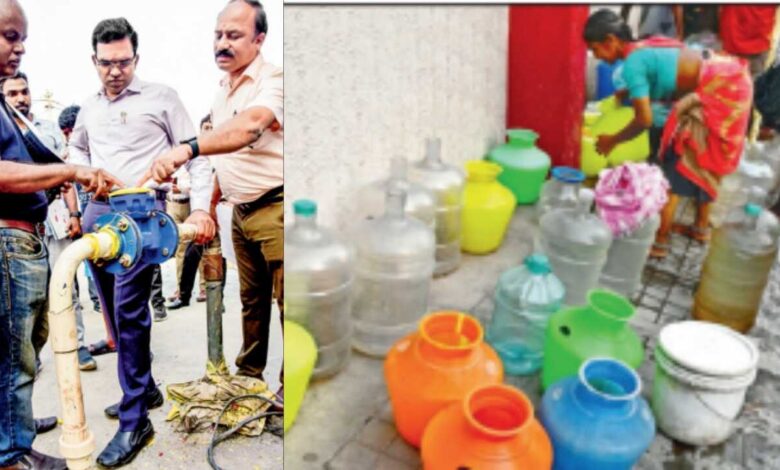
Recent reports of contaminated Cauvery water in parts of Bengaluru have prompted the Bengaluru Water Supply and Sewerage Board to adopt advanced technology for monitoring the city’s water distribution network. Residents in localities such as Katriguppe and parts of Yelahanka had raised concerns after sewage reportedly mixed with drinking water, affecting households and highlighting the need for a stronger monitoring system.
To prevent similar incidents in the future, the water utility has announced plans to introduce an Artificial Intelligence based monitoring system along with robotic inspection technology. The initiative is aimed at identifying leaks, pipeline damage and possible contamination before they become major public health concerns. Officials believe that early detection will significantly improve the reliability of the city’s drinking water network while reducing emergency repair work.
The project will initially be implemented as an 18 month pilot in Bengaluru South. During this phase, advanced robotic equipment will be deployed to inspect underground water pipelines that are otherwise difficult to access through conventional methods. These robots will travel through sections of the network, collecting data that can be analyzed by AI systems to detect irregularities with greater accuracy.
According to officials, the technology will continuously monitor the condition of pipelines and quickly identify signs of leakage, structural damage or contamination. Whenever a problem is detected, the system will automatically alert the concerned engineering teams, allowing them to respond before the issue spreads to a larger section of the network. Faster response times are expected to reduce disruptions in water supply and improve service for consumers.


Water losses caused by hidden leaks remain a major challenge for urban utilities across the country. By introducing AI powered analysis, the board hopes to reduce the amount of treated water lost through damaged pipelines. Lower water loss can also improve operational efficiency and help protect valuable water resources during periods of increasing demand.
The initiative is not only focused on preventing contamination but also on improving maintenance planning. Instead of relying only on complaints from residents or routine inspections, engineers will have access to real time information generated by intelligent monitoring systems. This shift toward predictive maintenance could help extend the lifespan of water infrastructure while lowering repair costs over time.
BWSSB Chairperson Manjula N stated that the new technology is expected to detect leaks, pipeline faults and contamination risks at an early stage. She said proactive monitoring will enable officials to resolve issues quickly and ensure safer drinking water reaches consumers without unnecessary delays. The board considers the pilot project an important step toward building a smarter and more resilient water supply network for Bengaluru.
The project is being implemented in collaboration with private technology partners. It is supported through Titan Company Limited Design Impact Award grant, meaning the pilot will not place any additional financial burden on the water board. This partnership allows the utility to test advanced solutions without increasing operational expenses.
Urban infrastructure experts have increasingly recommended the use of digital technologies to modernize water distribution systems in growing cities. AI powered monitoring combined with robotic inspections has the potential to improve efficiency, reduce maintenance costs and strengthen public confidence in municipal water services. If the Bengaluru pilot delivers positive results, similar systems could eventually be introduced in other parts of the city.
The move also reflects a broader shift toward technology driven governance in public utilities. As Bengaluru continues to expand, maintaining a safe and uninterrupted drinking water supply has become more challenging. Smart monitoring solutions could play a key role in helping authorities manage complex underground infrastructure while minimizing service disruptions.
Although the pilot is limited to selected areas in its first phase, officials will closely evaluate its performance before considering wider implementation. Residents are hopeful that the initiative will reduce incidents of contaminated water, improve response times and ensure a safer and more dependable water supply across the city in the years ahead.