Cauvery Basin Reservoir Levels Raise Fresh Concerns Amid Water Sharing Dispute
Low monsoon rainfall has reduced water storage across key Cauvery reservoirs in Karnataka even as the state prepares to challenge the latest water release order before authorities urgently

A severe shortfall in monsoon rainfall has once again brought Karnataka’s water resources into sharp focus, with storage levels in the state’s major Cauvery basin reservoirs remaining under pressure. The situation has become more sensitive after the Cauvery Water Regulation Committee directed Karnataka to release 3500 cusecs of water to neighbouring Tamil Nadu for the next 15 days, triggering widespread concern across the state.
The Karnataka government is preparing to challenge the directive before the Cauvery Water Management Authority, arguing that the current reservoir levels and rainfall deficit make additional water releases difficult. Officials are expected to present updated data on reservoir storage and inflows to explain the state’s position.
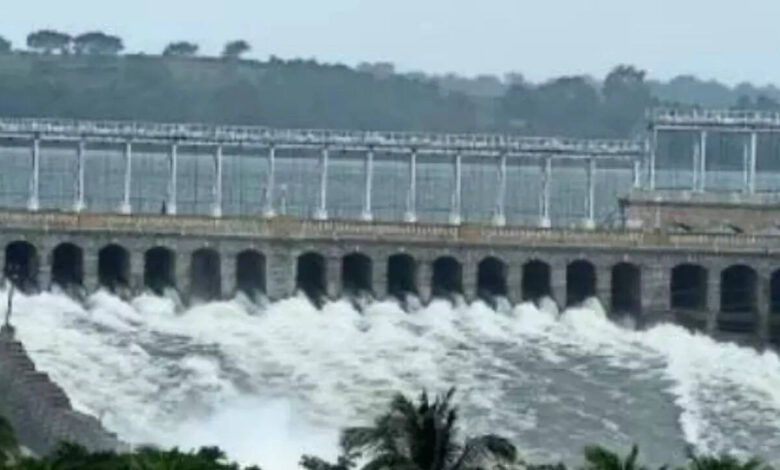
Among the four major reservoirs in the Cauvery basin, the Krishna Raja Sagara reservoir remains one of the biggest concerns. The dam has a maximum water level of 124.80 feet, but the current level stands at only 91.94 feet. Although the reservoir has a total storage capacity of 49.452 TMC, only 17.126 TMC of water is presently available. Out of this, nearly 5 TMC is classified as dead storage, leaving only around 12 TMC of usable water. The reservoir is currently receiving an inflow of 2842 cusecs while releasing 1747 cusecs downstream.
Kabini Reservoir in Mysuru district is also reporting lower than usual water levels compared to the same period last year. The present water level stands at 75.79 feet, whereas it was 81.66 feet on the corresponding date a year ago. The reservoir currently holds around 14.70 TMC of water. It is receiving an inflow of 3805 cusecs and releasing about 500 cusecs. Water resource officials continue to monitor the situation closely as rainfall remains below seasonal expectations.


The Hemavathi Reservoir near Gorur in Hassan district has shown relatively better storage than some other reservoirs but still remains below last year’s level. With a total storage capacity of 37 TMC, it currently contains 24.195 TMC of water. The reservoir is recording an inflow of 5690 cusecs while releasing 500 cusecs. During the same period last year, storage had reached nearly 35.992 TMC, highlighting the significant impact of the weaker monsoon this season.
Harangi Reservoir in Kodagu district is currently among the better performing reservoirs in terms of water level. Against its maximum level of 2859 feet, the present level is measured at 2858.88 feet. The reservoir is receiving an inflow of 3221 cusecs and releasing 1895 cusecs. Despite its relatively healthy level, officials remain cautious because rainfall patterns across the Cauvery catchment continue to fluctuate.
Experts believe that reservoir management will be critical over the coming weeks as Karnataka balances drinking water requirements, irrigation needs and interstate water sharing obligations. Farmers in several districts have already expressed concerns about water availability if rainfall does not improve significantly during the remainder of the monsoon season.
The ongoing debate over Cauvery water sharing has once again highlighted the importance of adequate rainfall in the basin. With reservoir storage remaining below expectations in several locations, the Karnataka government is expected to continue pressing its case before the Cauvery Water Management Authority while closely monitoring rainfall and inflow trends in the coming days.