Cyber Expert Suggests AI Driven Reforms to Stop Exam Paper Leaks Across India
Cybersecurity expert proposes AI driven monitoring hybrid examinations biometric verification encrypted question banks and stricter accountability measures to prevent paper leaks restore trust and strengthen fairness in competitive examinations nationwide

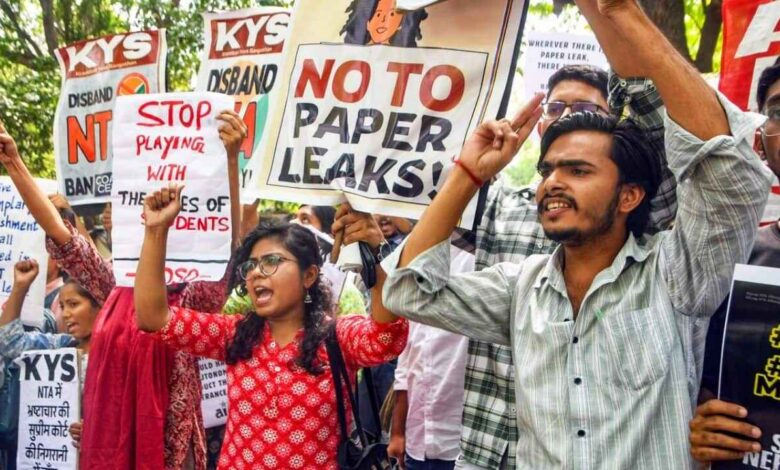
Repeated incidents of question paper leaks in major competitive examinations have once again raised serious concerns about the security of India’s testing system. Following nationwide debates over examination integrity, cybersecurity expert Dr Ananth Prabhu has outlined a comprehensive set of recommendations aimed at preventing future leaks and restoring confidence among students.
According to the expert, national level examinations such as NEET, JEE and UPSC should adopt advanced technology supported by stronger administrative safeguards. He believes artificial intelligence, secure digital systems and a hybrid examination model can significantly reduce the chances of malpractice while ensuring fairness for millions of candidates.
One of the key suggestions is to replace printed question papers with secure digital delivery. Instead of distributing physical papers, candidates could receive questions on dedicated laptops or computer terminals, while still marking their answers on physical OMR sheets. This hybrid approach would reduce the risk of question papers being leaked during printing or transportation while maintaining a reliable paper based record.
Dr Prabhu also stressed that the biggest weakness in any examination system is often not technology but human involvement. Most security breaches occur because of insiders with authorized access rather than external hackers. He recommended strict background verification of staff, periodic transfers, separation of responsibilities and stronger accountability at every stage of the examination process.


He further proposed the creation of a massive encrypted national question bank. Final question papers should be generated only a few hours before the examination in a completely isolated offline environment using predefined syllabus and difficulty standards. Military grade encryption and multiple layers of digital protection should safeguard the database from unauthorized access.
To eliminate impersonation, the expert suggested mandatory biometric verification using Aadhaar linked fingerprint and facial recognition technology both at the time of entering examination centres and before answer sheets are submitted. This would help ensure that only registered candidates appear for the examination.
Artificial intelligence powered surveillance is another major recommendation. Examination halls should be equipped with AI enabled CCTV systems and radio frequency monitoring that can instantly detect suspicious activities such as unauthorized electronic devices, unusual movement, answer sheet exchanges or attempts at impersonation. Any irregularity should immediately trigger alerts to a central monitoring team.
The recommendations also include securing every stage of the examination lifecycle from question preparation and printing to storage, transportation, evaluation and declaration of results. A Zero Trust security framework should be implemented, where every action requires authentication, authorization and complete digital tracking instead of relying on blind trust.
To strengthen transparency, candidates should be allowed to view scanned copies of their OMR sheets before final results are announced. The expert also recommended independent third party security audits and an efficient grievance redressal mechanism to improve public confidence in the examination process.
Another proposal is to conduct highly competitive examinations like NEET multiple times a year instead of relying on a single attempt. Rather than considering only the highest score, the final result could be calculated using the average of two attempts, reducing pressure on students while ensuring a more balanced assessment.
Dr Prabhu also emphasized the need for a secure digital chain of custody for answer sheets. Every OMR sheet should carry a unique encrypted QR code and serial number, with digital signatures, timestamps and cryptographic verification applied immediately after submission. Any attempt to alter or tamper with the records would then become instantly detectable.
Calling examination fraud a crime against the country’s future, the expert urged authorities to introduce swift investigations, fast track trials, lifetime bans for offenders, heavy financial penalties and strict criminal punishment for everyone involved in organized cheating or paper leaks regardless of their position or influence.
With millions of students depending on competitive examinations for their academic and professional future, experts believe combining modern technology with strict governance could significantly improve security, transparency and public trust in India’s examination system.